Railway cities staying on track


 |
|
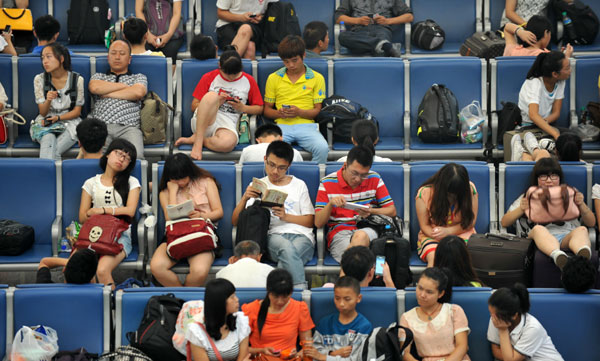
Shijiazhuang Railway Station at peak time as students start their summer vacations. [Photo / Xinhua] |
The original beneficiaries of China's railway system are still reaping the rewards and hoping for continued success in the future, reports Zheng Jinran in Shijiazhuang.
In 1902, when the Empress Dowager Cixi of the Qing Dynasty (1644-1911) returned to Beijing after her panicked flight from the capital in the face of an invasion by the allied armies of eight countries, she decided to emphasize her return to power by riding on China's new railway system.
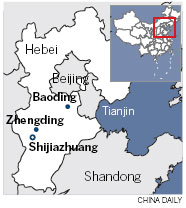
Cixi, who ruled for almost five decades, started her trip at Zhengding in Hebei province, which at that time was a bustling metropolis, equal to Beijing in economic, cultural and military importance.
Meanwhile, just 15 kilometers away, in Shijiazhuang, a village so small that the empress is unlikely to have even known of its existence, the 200 households were thrilled but apprehensive about the long iron rails that extended far into the distance and the noisy steam engines that belched smoke as they traveled back and forth.
Few of the residents could have imagined that a second railway would arrive five years later, when the line connecting the village with Taiyuan in Shanxi province opened in 1907. Equally unimaginable was the notion that the hamlet, named after the locally renowned Shi family, would overtake its stronger neighbor to become more prosperous and populous.
The railway made Shijiazhuang. The village's first factory, which made and repaired railway carriages, opened in 1905. Inns were established to cater for the rising number of rail passengers who thronged the sidewalks close to the station. By the time the Qing Dynasty fell six years later, the village had been transformed into a booming business center.
That was just the start, though. During the course of the 20th century, the local economy boomed and the population mushroomed spectacularly; it has more than quadrupled in the past 30 years.
By 2012, Shijiazhuang, now the capital of Hebei, the province with sixth-strongest GDP in China that year, had a population of more than 10 million. By contrast, Zhengding became a county under the administration of Shijiazhuang, which is known as "a city that was pulled by the train".
Shijiazhuang was not the only urban center to benefit from the advent of rail transport. Many other cities rose as the network attracted businesses and workers. Zhengzhou, the capital and largest city in Henan province; Zhuzhou a strong economic center in central China's Hunan province; and Shenzhen in Guangdong province, all enjoyed unprecedented rapid growth, fueled by the industries that evolved from the railways.
However, growth also resulted in problems, mainly those associated with urban planning, as floods of workers migrated to the cities in search of work.
Home from home
The railway still plays an important role in the lives of Shijiazhuang's residents. On Friday afternoon, Zhang Chao called his wife to tell her that he would be joining the family for dinner that evening. After taking the bullet train from Beijing, the 26-year-old arrived at the family home at around 7:30 pm, seeing his wife and parents for the first time in five days.
Zhang's routine hasn't changed for the past two years; he leaves Shijiazhuang every Monday morning to travel to his job in Beijing and returns every Friday.
"It once occurred to me to buy an apartment in Beijing to save time traveling back and forth," said Zhang, who works as a legal consultant for the Beijing Railway Bureau. "But I can't afford the high property prices in Beijing - the average price was more than 17,000 yuan ($2,800) per square meter in June."
Zhang began his nomadic lifestyle soon after he started his job. "The journey only takes 70 minutes on the high-speed train, and at most two hours for the entire one-way trip including the bus from the railway station to my residential community. But sometimes Beijing residents spend just as long trapped in their cars in traffic jams, so it's quite acceptable."
His case is by no means unique, as many young people choose to remain in their hometowns because of the lower property prices, but work in Beijing because the wages are higher and there is a greater number of opportunities.
Businesspeople also benefit. "It's a great time for local companies to do business in Beijing," said Li Kang a manager at Jingkang Co, a chemical company that sells commodities, mainly in Shijiazhuang and Xingtai city, where Li lives.