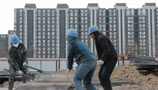
BEIJING - In China's southern manufacturing hub Dongguan, a shoe factory is shutting down and laying off 1,900 employees.
A subsidiary of Stella International Holdings, the factory is one of the most important production and processing bases for brands like Nike, Prada and ECCO.
"With demand shrinking and wages rising, we had no choice but to shut down," said Zhong Weijie, a human resource manager of Stella International Holdings. "The capacity will move to Southeast Asia."
But it is not all doom and gloom.
An hour's drive from Dongguan in Shenzhen, smartphone maker Huawei announced sales revenue of $60.1 billion in 2015, and predicted $81.8 billion this year. Huawei is now the world's third biggest smartphone maker after Samsung and Apple, and rapidly expanding.
These two stories are a snapshot of what's happening in Chinese factories: traditional manufactures battle overcapacity, while new industries blossom.
Huawei has achieved its success through continual innovation. Every year, 10 percent of revenue is plowed back into R&D. Almost half of its employees engage in R&D in some way or another.
The shift of manufacturing pattern is seen in China's exports. Processing, labor-intensive and using little technology, is being replaced by general trade, which involves domestic products and technology. General trade now accounts for 58.4 percent exports.
In May 2015, China rolled out the "Made in China 2025" plan to shift away from low-end manufacturing to more value-added production. Local governments have offered tax incentives to high-tech companies and guided private funds into innovative projects.
As tech-intensive production becomes lucrative, traditional manufactures are adapting.
"It's true that fields with overcapacity problems have operational difficulties, but by improving energy efficiency, we also see many opportunities," said Yin Jianan, chairman of Shanxi Blower Machinery Company.
Opportunities also lie in international cooperation. By establishing factories overseas, many Chinese manufacturers have found ways to digest excess capacity with lower labor-costs abroad.
Overseas mergers by Chinese firms increased by 40 percent in 2015, most of which led by private manufacturers buying out foreign businesses tech advantages of valuable brands, according to PricewaterhouseCoopers (PwC).
"We believe the trend will continue," said Liu Yanlai, a partner with PwC, "China-led multinationals are going onto the world stage."
Just as China relied on manufacturing to rise in the past, the sector is still a pillar industry. Chinese manufacturing is not fading, it's just changing.

Copyright 1995 - . All rights reserved. The content (including but not limited to text, photo, multimedia information, etc) published in this site belongs to China Daily Information Co (CDIC). Without written authorization from CDIC, such content shall not be republished or used in any form. Note: Browsers with 1024*768 or higher resolution are suggested for this site.
License for publishing multimedia online 0108263 Registration Number: 130349