|
|

Home
> Opinions
|
Take the global imbalance seriouslyBy Zhu Qiwen (China Daily)
Updated: 2009-09-21 07:55
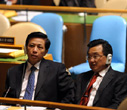
If global leaders are to make the coming G20 summit in Pittsburgh an effective response to the global financial and economic crisis triggered by the collapse of Lehman Brothers a year ago, they should whole-heartedly take to the table the issue of balancing the world economy. Though the strong rebound in China and emerging "green shoots" in major developed countries have apparently prevented the world economy from falling off the brink for the moment, policymakers cannot afford to just tinker at the edges of an outdated global financial and economic system. Without addressing global imbalances immediately, the current recovery will be neither solid nor sustainable. However, media reports show that Western countries are still using the issue of global imbalance merely as a red herring. Worse, by paying only lip service to their promise of opposing protectionism, they are actually discouraging necessary domestic industrial restructuring as part of the global efforts to restore balance to the world economy. It was reported last week that the United States and European nations tried to hammer out a framework for tackling global imbalances to be agreed upon in Pittsburgh. At the first glance, that sounds good news for the world economy since coordinated efforts to reduce global imbalances will underpin the recovery from recession and ensure that the future pattern of global growth is more sustainable. Yet, by interpreting global imbalances as "big gaps between savings and investment rates among countries, reflected in big current account surpluses and deficits", they revealed a lack of sincerity to fix the long-term problems in the global financial and economic system. Clearly, some people in the West still consider a savings glut from surplus nations as the main culprit of the global crisis. But such self-justification goes against the grain of both trade history and the ongoing course of globalization. As long as international trade had bridged economies from different parts of the globe many centuries ago, trade surpluses for some countries and trade deficits for some others have become the norm instead of a balanced current account for everyone. Historically speaking, it makes no sense to blame one country's trade surplus gained through fair competition, the conditions for fair competition being secured against great odds. The ongoing globalization, characterized by unprecedented labor division and specification, has brought the world economy in recent years to a new phase that witnessed rapid accumulation of trade surpluses in some manufacturing and resource-rich countries, and a surge of current account deficits in consumer-centerd economies. If world leaders recognize that globalization, as a whole, has increased and will continue to add to consumer welfare and productivity, they must then understand that the current global imbalances will be not reduced significantly before trade-deficit countries can adjust their own economic structures in line with the global demand to bring their current account in the black. To be serious about global imbalances means that G20 leaders should agree on a realistic approach to cut rich countries' trade deficits. Given the comparative advantages China enjoys, it is only natural that the country will continue to excel in trade of manufacturing goods no matter how well its domestic consumption is boosted. Hence, blaming China's trade surplus as a synonym, or even a symbol, of "global economic imbalances" will not help towards fixing the problem. Instead, developed countries should help their high-tech and service sectors to seize the opportunity that China offers for pursuing greener growth and expanding domestic consumption. To that end, developed countries need to not only adjust their trade policies but also overhaul their financial systems. Slapping protectionist duties on imports from China only hinders industrial restructuring in related countries to slow the pace of a global recovery. G20 leaders must stand up to rising protectionism for tackling the global imbalance. Established in 1945 under the UN Charter, the General Assembly (GA) occupies a central position as the chief deliberative, policymaking and representative organ of the UN.
In the past few years while adhering to the Scientific Outlook on Development Hu promotes, China has been working towards rigorous targets - which it had set for itself - to promote clean energy, push for energy efficiency and cut greenhouse emissions.
|
     |
主站蜘蛛池模板: 祁门县| 五河县| 都江堰市| 石嘴山市| 扎兰屯市| 江安县| 得荣县| 大城县| 长子县| 缙云县| 淮南市| 隆德县| 五华县| 文安县| 扶沟县| 平远县| 楚雄市| 寿光市| 罗平县| 门头沟区| 永定县| 吉林省| 关岭| 崇左市| 肇州县| 天津市| 瑞昌市| 台江县| 历史| 沛县| 株洲县| 汉中市| 华阴市| 彰化县| 黄大仙区| 永德县| 合江县| 洛扎县| 漳平市| 新干县| 吉安县| 阳原县| 五河县| 广河县| 太仆寺旗| 孙吴县| 墨脱县| 阿拉尔市| 临城县| 中卫市| 周口市| 邵东县| 屏东县| 龙门县| 奉贤区| 广平县| 蒙山县| 泗洪县| 华坪县| 登封市| 中西区| 高州市| 扬中市| 义马市| 始兴县| 黄平县| 个旧市| 高雄县| 吉水县| 阿城市| 阿勒泰市| 隆昌县| 彩票| 大厂| 新邵县| 肥乡县| 五大连池市| 嘉善县| 山西省| 广平县| 淄博市| 渑池县|