CHINA> Focus

|
CHINA> Focus
|
|
Race is on to halt trade war
By Mark Hughes, Si Tingting and Yu Tianyu (China Daily)
Updated: 2009-09-24 07:38 One of the most outspoken critics of the new US tariff has been Fan Rende, chairman of the China Rubber Industry Association, who urged the central government to take mandatory retaliatory measures targeting US exports of agricultural and auto products to China.
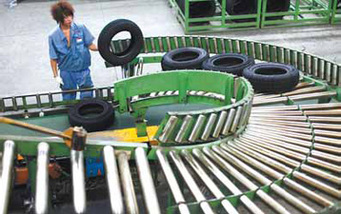
Fan's association, along with the China Chamber of Commerce of Metals, Minerals and Chemicals Importers and Exporters, and some affected companies, have already written to the White House and are planning to contact the US Court of International Trade, he said. United Steelworkers, which is based in Pittsburgh and is the largest labor union in North America with more than 700,000 members, say Chinese tire imports had caused the loss of at least 5,000 tire plant jobs since 2004. Four plants closed since 2006 and another three are set to shut down this year. And, according to the US Trade Representative's Office, imports of Chinese tires more than tripled in the US between 2004 and last year, with China's market share rising from 4.7 percent to 16.7 percent. However, China's Ministry of Commerce issued a two-page statement saying there had been "no obvious increase" in tire exports to the US in the past two years, citing a moderate increase of 2.2 percent last year and a 16-percent fall in exports overall in the first half of 2009.
US tire manufacturers, meanwhile, have failed to support the raised tariffs, mainly because the majority shifted operations to countries like China to save labor and production costs. Of the 20 tire producers in China, four are US-owned and they, too, will be subject to the tariffs if they sell products to the US. Officials from the international Tire Industry Association, based in the US, also said tariffs could not save jobs that were already lost and would simply prompt firms to relocate production away from China. The recent row is a topic presidents Obama and Hu will be unable to avoid at the G20 summit and Gregory T. Chin, an assistant professor at York University in Toronto, Canada, said the situation is a perfect example of how domestic issues affect global discussions. "This bilateral trade dispute could have a negative effect on the G20 meetings. Even if the two sides can avoid the issue during the summit and avoid it creeping onto the agenda, it will be the elephant in the room no one refers to," he said. "It shows, to some degree, G2 coordination (between the US and China) is necessary and unavoidable. The others in the G20 must make sure it happens in concert with the summit." He explained that the G20 agenda should include "open but careful discussion" on macro imbalances and currencies, and called for global multilateral measures to avoid an escalation of trade wars, which could threaten to be regular occurrences if trade and exchange rate issues are not resolved. "One lesson from the financial crisis is that the status quo is not an option. Serious changes are needed to avoid getting back into the same position as we have been in for the past year," he said. "It is important China and the US demonstrate far-sighted international leadership and help bring the dispute under control, avoiding a drive toward protectionism. "If these trade matters are not properly addressed, we risk heading toward a world of increasing geo-economic and inter-state rivalry." Almost all mainstream economists support free trade, including Alan Greenspan, former chairman of the US Federal Reserve, who said the protectionist route would mean "newer, more efficient industries have less scope to expand, and overall output and economic welfare will suffer". Protectionism has been accused of being one of the major causes of war, with many historians citing the trade policies in the run-up to World War I and II, as well as the American Revolution in the 18th century, which was caused primarily by taxes and tariffs levied by the British. The 19th century French political economist, Frederic Bastiat, once said: "When goods cannot cross borders, armies will."
|
主站蜘蛛池模板: 江陵县| 沂南县| 津南区| 阳曲县| 芦溪县| 文安县| 金堂县| 白银市| 明水县| 九寨沟县| 开封县| 那坡县| 定襄县| 邛崃市| 景德镇市| 涟源市| 鲁甸县| 咸阳市| 城口县| 东丽区| 姚安县| 武清区| 宜丰县| 三河市| 恭城| 江陵县| 湟中县| 郎溪县| 广丰县| 永福县| 九龙坡区| 东宁县| 沈阳市| 刚察县| 通江县| 木里| 潼南县| 泰来县| 祁门县| 西乡县| 广丰县| 雷州市| 阳朔县| 浦北县| 衡阳县| 赤水市| 潜山县| 丹东市| 陇川县| 景宁| 合江县| 马山县| 密云县| 丽江市| 乌拉特后旗| 轮台县| 铁岭市| 辉县市| 石屏县| 大邑县| 乌拉特前旗| 泾阳县| 石渠县| 淳安县| 淮北市| 怀宁县| 星座| 康乐县| 上蔡县| 调兵山市| 西和县| 穆棱市| 邻水| 牙克石市| 凤凰县| 旬邑县| 勐海县| 湖口县| 远安县| 门头沟区| 葫芦岛市| 兴业县|