CHINA> China and World

|
CHINA> China and World
|
|
Global brands turn to China's young amid slump
(Agencies)
Updated: 2009-08-23 13:45
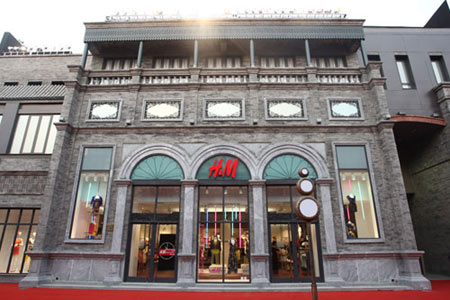
BEIJING: In her Vans cap, Quiksilver shirt and Adidas shorts, 19-year-old Terry Zhong is a walking checklist of sports brands as she sets out on a weekly shopping trip with a 500-yuan (US$73) budget. Global economic gloom has barely dented her willingness to spend. "I don't think it has anything to do with me," Zhong said, striding through Beijing's bustling Xidan commercial district carrying bags from H&M and Zara. Young Chinese shoppers like Zhong are still spending freely, and major brands ranging from Nike Inc. to Barbie doll maker Mattel Inc. are courting them eagerly to shore up revenue as demand elsewhere slumps.
China has 200 million potential consumers aged 15 to 24, according to the national census bureau - a group nearly twice the size of Japan's entire population. Their spending has been buttressed by China's resilience in the face of plunging exports and foreign investment. With the help of a 4 trillion yuan (US$586 billion) government stimulus plan, economic growth accelerated in the latest quarter to 7.9 percent over a year earlier, up from 6.1 percent the previous quarter. Retail spending rose 15 percent in the first half of 2009. Young Chinese make especially attractive customers because "one child" birth limits and rising incomes mean many are only children with more disposable income. A 20-year-old might be living rent-free while getting money from two parents and four grandparents. Major brands are expanding energetically in China and developing products and marketing aimed at young Chinese consumers. Nike created lighter-weight basketball shoes for Asian players and a model dubbed the Nike Zoom Kobe IV Beijing in tribute to its pitchman Kobe Bryant's role on the gold medal-winning US Olympic team. In July, Beaverton, Oregon-based Nike flew Bryant, 2009 NBA Finals most-valuable player honoree, to the western city of Chengdu for a promotional event. He was greeted by thousands of young Chinese fans chanting "MVP! MVP! MVP!" Rival Adidas AG, based in Herzogenaurach, Germany, created an online basketball community named "Basketball Superstar." Adidas spokeswoman Sabrina Cheung said it has attracted more than 600,000 registered users. China is Nike's second-largest market after the United States, and the company says that while sales in its home US market in its March-May quarter fell 2 percent from a year earlier, they rose 6 percent in China. That was all the more impressive because it was a gain over the same period in 2008, when the Beijing Olympics sparked sports mania that helped to push up Nike's sales by 60 percent. Companies are pushing ahead with expansion in China even as some cut back abroad. Quiksilver Inc. opened its 47th and biggest outlet in China in April - a 330-square-meter (3,300-square-foot) flagship store in Shanghai. The Huntington Beach, California-based company sells sports-oriented clothing, shoes and other products. "The China market is extremely important to Quiksilver. It's huge," said the company's Greater China general manager, Cathey Curtis, in an e-mail. Curtis said Quiksilver plans to open more outlets in China this year. Quiksilver's worldwide revenue plunged 17 percent from a year earlier in its latest quarter to US$494.2 million. Curtis declined to give figures for China but said the global slump has had little impact on its market. Wang Wei, 22, a Beijing college student, goes shopping once or twice a week, spending 500 yuan (US$73) each time. He gets money from his parents on top of his wages from a weekend sales job in an appliance store. "I think foreign products are high quality and their stuff is just cool," Wang said. Zhong gets a monthly allowance of 1,000 to 2,000 yuan (US$146 to US$293) from her parents, a sum that is unchanged despite the global crisis. In the United States, the weak economy has caused fashion spending by teenagers to fall by 14 percent over the past year, according to investment bank Piper Jaffray, which surveyed 8,100 adolescents with an average age of 16. Barbie, the gm Inc., launched "ChinaToon," an one-hour program of Chinese animation in July. The channel beamed to 13 Asian countries is the first region-wide showcase for Chinese animators. Some popular Western brands have had less success. Taco Bell, a Mexican-themed fast food chain owned by Yum! Brands, Inc., opened three outlets in Shanghai and the southern business center of Shenzhen starting in 2003 serving its distinctive spicy, salty food. All three restaurants had closed by last year, though a company spokesman in Shanghai, Sky Yu, said he had no details why. China is still an unusual market that can be a challenge for some brands, said Kathleen Gasperini, senior vice president of Label Networks, a youth culture research firm in Los Angeles. Sports such as surfing and skateboarding that are mainstream in the West are considered too dangerous by Chinese parents, Gasperini said. "This is a very, very different marketplace," she said. |
主站蜘蛛池模板: 嘉善县| 大姚县| 石景山区| 灵石县| 赞皇县| 涿鹿县| 积石山| 兴隆县| 仪陇县| 林州市| 葵青区| 高雄县| 阜城县| 丰台区| 中超| 武威市| 宿迁市| 云林县| 万山特区| 金川县| 明光市| 峨眉山市| 疏附县| 双辽市| 德昌县| 包头市| 芦溪县| 鸡泽县| 沈阳市| 胶南市| 敦煌市| 榆社县| 嘉荫县| 叶城县| 延安市| 隆安县| 哈密市| 镇宁| 连州市| 思茅市| 桦甸市| 泰兴市| 区。| 山西省| 新野县| 厦门市| 来宾市| 夏邑县| 红原县| 阿鲁科尔沁旗| 甘谷县| 连江县| 青田县| 耒阳市| 灵武市| 苏尼特右旗| 东城区| 云阳县| 手机| 凉城县| 梅河口市| 林口县| 黄大仙区| 南阳市| 保康县| 东丽区| 专栏| 濉溪县| 凤山市| 广水市| 柘荣县| 定边县| 榆社县| 永寿县| 原阳县| 双柏县| 巴林左旗| 大方县| 都兰县| 城口县| 旅游| 金秀|