Profiles
Ma Weidu and his timeless collection
By Qin Zhongwei (China Daily)
Updated: 2010-11-21 09:18
 |
Large Medium Small |
 |
|
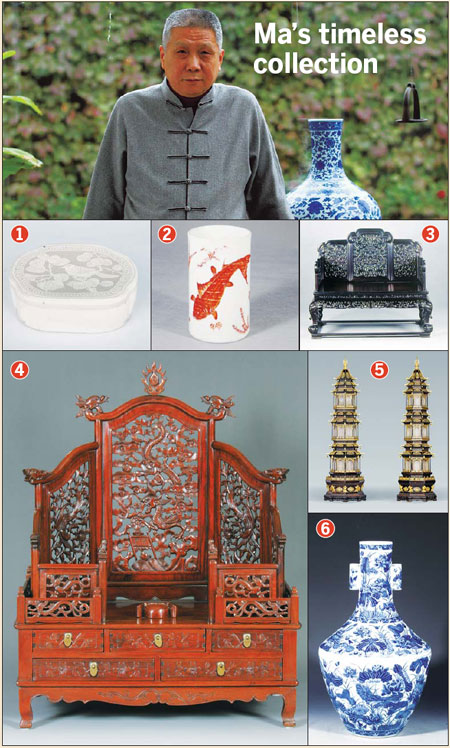
1.Porcelain head-rest with floral and bird motifs Period: Song Dynasty (960-1279) Introduction: Ancient Chinese head-rests were first made of natural stones and later, wood, jade, bronze, bamboo and porcelain were used. Porcelain pillows remained the most common. The porcelain head-rest that Guanfu Museum collected was made in Cizhou kiln. Carved with beautiful bird and flower motifs, it was very representative of the culture, customs and social life of the Song Dynasty. 2.Porcelain pen holder with fish motifs Period: Qing, Emperor Kangxi's reign (1654-1722) Introduction: This was a necessary item on the scholar's desk and part of the "four-treasures" in the study. The pen holder was used daily, especially when calligraphy was practised every day. Emperor Kangxi, who was known as a lover of calligraphy, pushed for the production of an enormous volume of pen holders during his reign. This pen holder is 15 centimeters tall and shows three vermilion fishes chasing one another. The word for fish in Mandarin, yu, is often associated with auspicious connotations. 3.Rare rosewood five-screen throne Period: Qing, Emperor Qianlong's reign (1711-1799) Introduction: Furniture made from rosewood, or zitan in Chinese, is extremely rare and usually reserved only for the use of the emperors as the color of this slow-growing tropical hardwood is considered imperial. And this well-crafted throne is special as its four legs are all carved with elephants. 4.Fragrant rosewood dressing table with dragon and phoenix motifs Period: Ming Dynasty (1368-1644) Introduction: Huanghuali, or fragrant rosewood, is the hardwood grown mainly in the Guangdong and Hainan provinces. The timber is red and has a fragrance that the Chinese liken to incense. The antique dressing table is rare for its intricate carvings and inlaid decoration. And the patterns of the dragon (representing the king) and phoenix (the queen) show it was used for the imperial household. 5.A pair of rare rosewood seven-tiered pagodas Period: Qing Dynasty (1644-1911) Introduction: This was a gift that the Emperor Qianlong sent to his mother, who was a faithful Buddhist. It was also an expression of the emperor's filial piety. Originally there were 48 Buddhist statues placed on the pagodas, The pair of pagodas were bought at a Sotheby's auction in Hong Kong. 6.Qinghua porcelain vase decorated with lotus patterns Period: Qing, Emperor Qianlong's reign (1711-1799) Introduction: The 55.3-cm tall vase from the royal collection is very rare because of its size and its dense lotus motifs. At its broadest, it measures about 1 meter in circumference. It is also embossed with the six-character Qianlong mark and fired at Jingdezhen, the porcelain capital of China. There are only two such vases in the world, and the other is with the Palace Museum in Beijing's Forbidden City. [Photo by Zou Hong / China Daily] |
 主站蜘蛛池模板:
瑞昌市|
金阳县|
芮城县|
丰县|
红原县|
嘉善县|
兴城市|
县级市|
武平县|
重庆市|
屏东县|
靖安县|
五原县|
崇礼县|
萨嘎县|
望城县|
内黄县|
南陵县|
阜城县|
资兴市|
新沂市|
富阳市|
石河子市|
贡山|
子长县|
南充市|
马公市|
德阳市|
芒康县|
南投市|
鹤岗市|
留坝县|
额济纳旗|
湘潭市|
会昌县|
沙坪坝区|
葵青区|
富源县|
登封市|
盱眙县|
寿阳县|
双辽市|
文水县|
曲阳县|
武邑县|
广德县|
湖南省|
开远市|
理塘县|
鄄城县|
蒲城县|
武鸣县|
保德县|
文安县|
丹江口市|
巩留县|
镇康县|
岳池县|
五寨县|
肇庆市|
万盛区|
弥勒县|
永泰县|
濮阳市|
阜南县|
安达市|
石柱|
金山区|
蛟河市|
江口县|
东乌珠穆沁旗|
武陟县|
安丘市|
延长县|
从化市|
桐柏县|
福海县|
岳西县|
昌图县|
铁力市|
黑龙江省|
洛南县|
主站蜘蛛池模板:
瑞昌市|
金阳县|
芮城县|
丰县|
红原县|
嘉善县|
兴城市|
县级市|
武平县|
重庆市|
屏东县|
靖安县|
五原县|
崇礼县|
萨嘎县|
望城县|
内黄县|
南陵县|
阜城县|
资兴市|
新沂市|
富阳市|
石河子市|
贡山|
子长县|
南充市|
马公市|
德阳市|
芒康县|
南投市|
鹤岗市|
留坝县|
额济纳旗|
湘潭市|
会昌县|
沙坪坝区|
葵青区|
富源县|
登封市|
盱眙县|
寿阳县|
双辽市|
文水县|
曲阳县|
武邑县|
广德县|
湖南省|
开远市|
理塘县|
鄄城县|
蒲城县|
武鸣县|
保德县|
文安县|
丹江口市|
巩留县|
镇康县|
岳池县|
五寨县|
肇庆市|
万盛区|
弥勒县|
永泰县|
濮阳市|
阜南县|
安达市|
石柱|
金山区|
蛟河市|
江口县|
东乌珠穆沁旗|
武陟县|
安丘市|
延长县|
从化市|
桐柏县|
福海县|
岳西县|
昌图县|
铁力市|
黑龙江省|
洛南县|