What to watch in China's political reform?
(Xinhua)
Updated: 2012-11-11 14:01
 Comments()
  Print
Print  Mail
Mail  Large Medium Small
BEIJING - Political mass gatherings in China often revoked painful memories of elder Chinese who went through the violent "class struggle sessions" during the "cultural revolution" in the 1960s and 1970s.
People labeled "class enemies" - in many cases heads of government offices, schools, state institutes - were dragged to the crowd with hands tied to the back, got kicked and sometimes beaten to death.
But the mass gathering that took place late October in the town of Yongledian, like many others in today's rural China, was of completely different political dimension and showed how far China has marched on in the past four decades in the political system.
At the Yongledian public square, on the southeast outskirts of Beijing, Ding Jianhua delivered his annual work report to about 5,000 villagers sitting on stools. Everyone had a questionnaire on the hand that would decide the 53-year-old's political career.
Now the third time to face the crowd, Ding said he has grown accustomed to this performance assessment sessions held once a year. If his performance was rated "unsatisfactory" by the majority of villagers twice sessions in a row, he had to resign as secretary of the Nanxi village committee of the Communist Party of China (CPC), regardless of the term tenure.
Yu Xuehe, secretary of the Yongledian Township Party Committee, said over the past six years, nine village Party chiefs in Yongledian had been sacked over poor performance ratings.
"I feel pressured, not because I am afraid to be bolted out but because I have a re-election to win next month," Ding said. "I want the villagers to vote for me."
The vibrant CPC-led grassroots democracy, from direct elections to various checks-and-balance mechanism, has fundamentally changed the political culture in rural China, where for the centuries of dynasties, people used to call their administrators "parent officials".
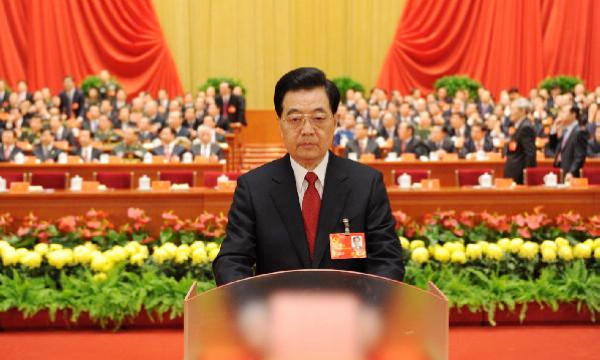
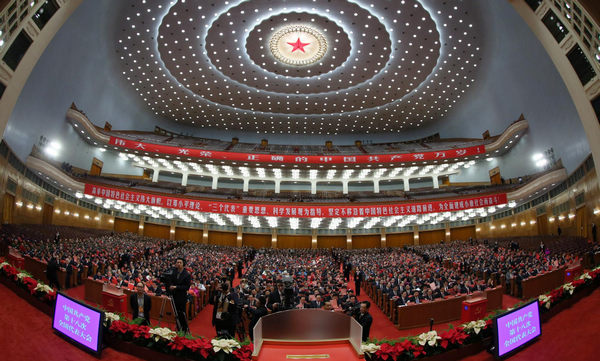
More than a week after the mass gathering in Yongledian, the CPC, the world's largest ruling party with 82 million members, convened its 18th CPC National Congress in Beijing.
In a report to set the development agenda for the next five years or beyond, Hu Jintao called for both active and prudent efforts to "carry out the reform of the political structure and make people's democracy more extensive, fuller in scope and sounder in practice."
Though it remains unsaid when to expand the vibrant democracy like in Yongledian to upper levels of the Party hierarchy, political experts interviewed by Xinhua including those involved in the drafting of the report said the Party is sincere in pursuing democracy and positive changes, though might not be imminent, can be expected.
Related Stories
Election methods of CPC National Congress approved 2012-11-10 19:44
CPC National Congress gets world attention 2012-11-08 16:12
Key national congresses in CPC history 2012-11-07 11:13
How CPC National Congress delegates elected 2012-11-06 21:30
Makeup of delegates to 18th CPC National Congress 2012-11-06 20:49
CPC determined in political reform: official 2012-11-09 21:04
Communists walk fine line in reform 2012-11-09 19:57
Top News
Xi emphasizes adherence to CPC Congress spirit
Top legislator urges implementation of congress spirit
Moderately prosperous China brings chances to world
Video