Comments
  Print
Print  Mail
Mail  Large Medium Small
The Qiang Mu masks of the Nyingma Sect (Red Teaching) have their own features. They are best represented by the Luohantang Temple in Guide County, Jidong Temple in Gonghe County, Langjia Temple in Tongren County, and Qionggong Temple in Jianglong County. Qiang Mu in these temples are diversified, and best known for the death’s head facial makeup. For example, Lianhuasheng Baminghao is the most famous mask dance of the Nyingma Sect. It is shown only in Luohantang Temple.
The Dangka Temple in Yushu, of unique features, belongs to the Kagyu Sect (White Teaching). It treasres up the gilded copper Lianhuasheng Baminghao mask. The Longen Temple of Gande County, Guoluo Prefecture keeps the gilded copper Gesar King mask, developing a school of its own among temples in Tibetan regions in Qinghai. The facial makeup models and techologies are treasures in the mask art in Qinghai.
The Qiang Mu masks largely represent in the forms of Satyadevata, guardian divinities, and companion divinities. They are the main symbols of Qiang Mu facial makeup.
 |
Satyadevata: It is used to refer to the reincarnation of Buddha, often appearing in the images of good looks, angy looks, and good-and-angry looks. The good-look Satyadevata include Manjusri Bodhisattva, Avalokitesvara Bodhisattva, and Tara. The angry-looking Satyadevata are represented by Vajrabhairava, Vajrakila, Hayagriva, and Vajrapani. The good-and-angry-looking Satyadevata are Guhyasamaja, Samvara, Hevajra, Kalachakra and Vajravarahi. A good many Satyadevata come forth in the form of angry-looking Satyadevata in the Esoteric Vajradharma dance, because the ghastful image contributes to remove bothers and evils. This is related to the ultimate goal of Vajradharma dance.
Guardian divinities: They refer to the guardian gods who are faced down by the Buddha and pledge allegiance to and protect the power of Buddha. They are also known as Protector thunderbolts. The dances are called Vajradharma dance.
Companion divinities (animal facial makeup): They are the companions to the guardian divinities. They constitute the largest number in Vajradharma dance. They manifest the various styles of facial makeup in temples of all sects. In Vajradharma dance, a throng of companions would show up first, dancing around the chief divinity who comes forth in the end. The companion divinities are largely shown in the images of animals.
The divinities of the primitive Ben religion generally have three heads and six arms. Their heads look like pigs, dogs, cattle or tigers. The biggest guardian divinity of Ben religion is the nine-head bird Maquesibajiemao, which means the best mother. Crow divination, bird divination, and pied magpie divination of the witchery culture features, remain to appear in Qiang Mu in some temples. Therefore, the chief Guardian divinity and some secular divinities in Tibetan Buddhism spell dances are often shown in the facial makeup integrating all sorts of animals and humans, presenting rich national and religious colors.
It must be noted that there is a type of masks exclusively designed to hang in temples than used in dances. The roles expressed by the masks are largely guardian divinities of the temples, and their subordinates. They are obstinate, hot tempered, and sharp eyed. These divinities are originally shown in sculptures and portraits in all scripture halls, enjoying same offerings like the Buddha. In addition to Buddhas, Bodhisattvas, eminent monks and sages, the facial makeup present all sorts of immortals and apparitions in the two major types of guardians of Satyadevata Yixiba and man-and-ghost Jideba. The first type is an abstract creation of the divinity and Buddha spirits. Most of them look stately, infuriated, ferocious, bearing death’s-head.
They are decorated with human skull, heart and blood. They express in a unique way the beauty and kindness of the religious art. The latter stresses realistic reflection, granting them more human features and personalities. In some cases, some natural divinities and secular divinities relating to good or ill lucks show up as sages of delicate features or secular femme fatale.
Besides, there is a special type in Qinghai Qiang Mu masks, which are made of double or diversified layers. They are represented by the Zhangsong four-face beast mask in Jidong Temple in Hainan Gonghe County; Rakshasa mask in Luohantang Temple in Guide County, and the nine-luminary divinity mask in Jianglong Qionggong Temple and Langjia Temple in Tongren County. They are triangular prism shaped solid masks, with three layers and nine heads in one countenance. Such a multi-side image divinity sculpt is seldom in the facial makeup field.
Qiang Mu masks are classified into the divinity type, hero type and secular type. The divinity type comprise good divinities and evil divinities. The good divinity facial makeup presents the features of loving countenance, big ears, broad face, and kindly smiles, painted in mild colors, to show sanctity and goodness. The evil divinity facial makeup exaggerates in sculpt, largely to show mighty and maneating divinity roles (guardian divinities). Some dart fierce looks of hate. Others bear curved horns on head, round eyes in angry look, show buckteeth, brimming aggressive vigor and deterrent. Therefore, such facial makeup stresses distortion, exaggeration, and free imagination to create monstrosity. Such a mode of turining inanimated materials into zoetic divinities should be a reflection of primitive religious awareness in the facial makeup culture.
 |
Tibetan drama masks
As shown in the culturology, Tibetan drama originates from Qiang Mu. In history, Gelug, Nyingma, Kagyu and Sakya sects integrated some popular stories, dances and ballad literature of the folks and sutras to shape today’s Tibetan drama of rich and unique ethnic and regional features, in order to enlighten more people with their Buddhism doctrines. As the Tibetan drama keeps improving, Tibetan drama masks have become a major pattern in Tibetan drama stage art. In Tibet, there emerged the schools of white masks and blue masks. In Qinghai, the Anduo Tibetan drama has turned into a major school of the Tibetan drama, as it was heavily influenced by the latter in history. Therefore, Tibetan drama masks present unique and diversified styles to become an important symbol of various schools of Tibetan drama in Qinghai.
As indicated in surveys, Qinghai Tibetan drama masks are largely separated in Langjia Temple of Tongren County, Deqian Temple of Jianzha County, Huangnan Tibetan Autonomous Prefecture; and Zhugu Temple of Menyuan County, Haibei Tibetan Autonomous Prefecture. The first is known as Regong Tibetan drama, while the latter is called Huare Tibetan drama. The Gesar masks from Longen Temple, Gande County, Guoluo Prefecture are used both as Tibetan drama masks and Qiang Mu dances.
 Grannies turn streets into strange dance floors
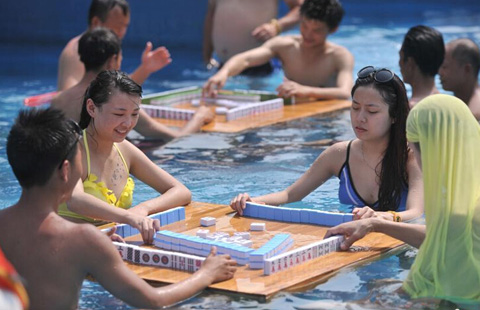 Beating the heat with mahjong, water fights and massage
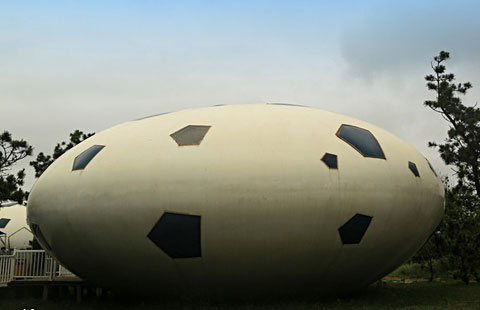 Architect's dream ... or nightmare
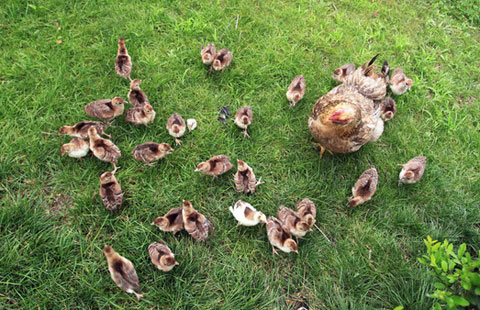 Mother hens for newborn peacocks
 Students out to make their mark in Chinese calligraphy
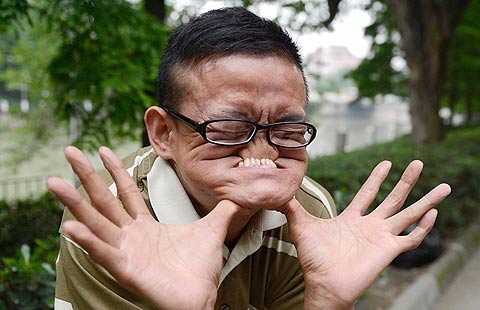 Strange, offbeat and really silly stunts
 Samba heats up Hangzhou
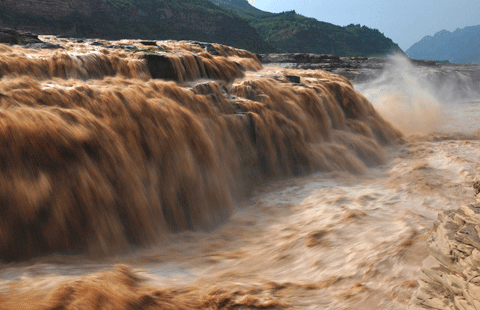 Yellow River churns with seasonal rainfall
Copyright 1995 - . All rights reserved. The content (including but not limited to text, photo, multimedia information, etc) published in this site belongs to China Daily Information Co (CDIC). Without written authorization from CDIC, such content shall not be republished or used in any form. Note: Browsers with 1024*768 or higher resolution are suggested for this site.
License for publishing multimedia online 0108263 Registration Number: 20100000002731