 |
|
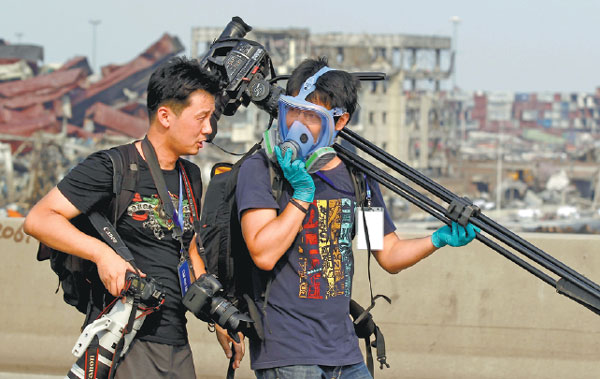
Journalists prepare to take pictures and conduct interviews near the scene of the blasts at Tianjin Port on Monday. Zhu Xingxin / China Daily |
More than 40 kinds of hazardous chemicals have been confirmed as being present near the blast site in Tianjin, including potassium nitrate, ammonium nitrate and sodium cyanide, Niu Yueguang, deputy chief of the fire department of the Ministry of Public Security said on Monday.
There are about 800 tons of ammonium nitrate and 500 tons of potassium nitrate on the site which, together with more than 700 tons of sodium cyanide, meaning the overall amount of hazardous chemicals will exceed 2,000 tons.
Both ammonium nitrate and potassium nitrate are hazardous and flammable, and are explosive oxidizers rather than toxic persistent compounds.
Sodium cyanide however is the exception.
Fatal if inhaled, sodium cyanide is commonly used in the mining industry to extract gold from ore - a gold leaching agent that "could largely lower the cost of the extraction process", Chen Jinghe, CEO of Zijin Mining told China Business News.
It is possible there is a residue from the chemicals in residential buildings near the blast site which could be dangerous, said Bao Jingling, chief engineer of Tianjin's bureau of environmental protection on Tuesday.
He also warned the public not to touch any residues and especially not try to mix them with water.
Here are some quick Q & As about sodium cyanide
1. What is sodium cyanide?
It appears as a white crystal or powder. Sodium cyanide is a systemic agent which releases hydrogen cyanide gas, a highly toxic chemical compound that affects the body's ability to use oxygen.
2. Why is sodium cyanide dangerous?
Seven drops of sodium cyanide could be lethal for a 70 kg person. Sodium cyanide will release highly toxic hydrogen cyanide gas when in contact with water or acid. It can lead to asphyxiation.
3. How can sodium cyanide spread?
It can be released into the air with the help of wind as fine droplets. According to the US Centers for Disease Control and Prevention, downstream danger could spread up to 5 km away.
Sodium cyanide can also contaminate water, which cannot be easily purified by traditional methods such as carbon. Bottled water or using reverse osmosis systems are preferable for people when using water.
Sodium cyanide can contaminate agricultural products and food.
4. What are the symptoms if exposed?
Inhalation: headaches, vomiting, convulsions, irregular heartbeat or death.
Ingestion: burning sensation, nausea, diarrhea, vomiting.
Eye contact: irritation, burning sensation
Skin contact: burns, ulcers, same symptoms as inhalation
5. Will a mask help?
Popular masks such as N95 produced by 3M are used to protect against particulates rather than chemicals. Carbon-based filters are effective in sufficient amounts. According to monitored data, local authorities confirmed that the air quality around the site was normal.
6. What should you do?
Limit outdoor exposure for the next two weeks if within the affected zone. Stay indoors and keep windows and doors closed.
If you must go out, wear a mask containing carbon.
Wash clothing and items that may have been exposed to chemical residue spread by wind or rain.
Cyanide gas does most harm to people if inhaled. You must go to an open area to get fresh air and a supply of oxygen if needed.
Seek medical help for severe cases of inhalation and avoid mouth-to-mouth resuscitation to an affected person as it could be hazardous.
Dispose of contaminated clothing or items.
Rinse eyes with water for 15 minutes and wash irritated skin and cover with anti-bacterial cream.
Wash and peel all fruits and vegetables which could be contaminated before eating.
7. What are the long-term health effects of cyanide exposure?
Heart, brain and nerve damage.


Copyright 1995 - . All rights reserved. The content (including but not limited to text, photo, multimedia information, etc) published in this site belongs to China Daily Information Co (CDIC). Without written authorization from CDIC, such content shall not be republished or used in any form. Note: Browsers with 1024*768 or higher resolution are suggested for this site.
License for publishing multimedia online 0108263 Registration Number: 130349