


 Comments
  Print
Print  Mail
Mail  Large Medium Small
|
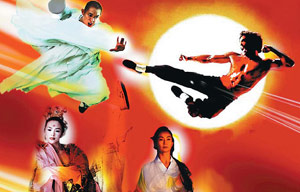 |
Earlier this year, Time magazine critic Richard Corliss listed Hong Kong director Peter Chan's Dragon (also titled Wu Xia) as the eighth-best film of 2012, praising it as "a sophisticated, stand-alone delight".
"It is exciting news," says Jia Leilei, a researcher of Chinese National Academy of Arts and expert on wuxia cinema. "But I'm not surprised. Action is a universal language, and the dazzle of Chinese martial arts provides strong, direct visual impact."
However, the old genre's exposure in the West, especially in the United States, may not be as wide as Chinese filmmakers expect.
"Most Chinese wuxia films cannot make it into mainstream theaters, but end up in cinemas in Chinese communities," says Stanley Rosen, professor of political science at the University of Southern California. "A few renowned directors, such as Zhang Yimou, can have their films released in art-house theaters, but most Chinese directors won't have any (US) theatrical release at all."
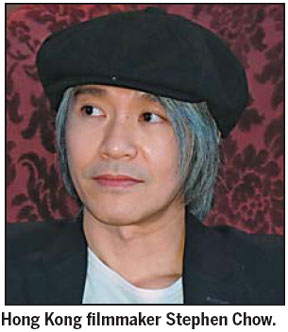
Stephen Chow's Kung Fu Hustle was, according to Rosen, the most widely distributed Chinese martial-arts film in North America, opening with 2,500 screens in 2004. When Crouching Tiger, Hidden Dragon premiered in 2000, it was released in only 16 locations in the first week.
Some US distributors also shorten the films or change the music, which they think will make the film more acceptable by the audience.
DVD is an effective way for many wuxia films to reach their US audiences. Successful examples include Yuen Woo-ping's Iron Monkey and some old works of the Shaw Brothers.
A major reason why Chinese martial-arts films did not have a wide theatrical release in the US is the language barrier. It's a problem for all foreign films that want to be released in the country, where people are known for being parochial about film soundtracks.
According to Boxofficemojo.com, only two of the 20 highest-grossing martial arts films were made in Chinese, namely Crouching Tiger, Hidden Dragon and Zhang Yimou's Hero. The top players are mostly English-language ones, such as Rush Hour 2 and The Karate Kid (2010).
Crouching Tiger, Hidden Dragon represents a milestone, as well as a special case hard to copy, which sets a bar high for followers.
"Ang Lee was well-known, so was Chow Yun-fat. And the film's marketing techniques were very effective, including the promotion among the young hip-hop community and the attention to word-of-mouth effect," Rosen says.
 |
The film was released first in art-house theaters, but its reviews were so overwhelmingly positive that it entered commercial theaters later.
Other filmmakers have tried to duplicate that success, such as Zhang Yimou, whose Hero was an immediate beneficiary, but none has achieved the same popularity and critical appreciation.
In addition to the language barrier and the US editing, the repetition of genre and visual style also play a hindering role.
While back in 2000 Crouching Tiger, Hidden Dragon was something new to the US audience, they have seen too many imitations, both from China and the US since.
"Martial-arts films are still the most famous genre of Chinese cinema," Rosen says. "But since 2006, the impact of those films is much less, because not only Chinese films, but also many US pictures, are imitating them, too."
And few characters of the Chinese wuxia films are well-remembered by the Western audiences, Rosen adds.
"Characters in Crouching Tiger, Hidden Dragon made a stir, but cinema-goers are mainly young people who find it hard to remember that well a Chinese film's characters 12 years ago."
 |
One way out might be shooting the film in English from the very beginning, or making it a co-production, Jia says.
"But combining the Chinese martial arts into a story accessible to the global audience has a long way to go," he says. "While we have a universal language, we need to explore further on universal values."
Aki Aleong, president of the Media Action Network for Asian Americans, is optimistic. "Wuxia is an easy way to go, because action sells. But Chinese need to make more films that touch people emotionally," he says.
"When more young Chinese filmmakers who study in the US and work in the community go back to China, they will look at filmmaking and marketing them in the West differently and do it more effectively."
liuw@chinadaily.com.cn


Copyright 1995 - . All rights reserved. The content (including but not limited to text, photo, multimedia information, etc) published in this site belongs to China Daily Information Co (CDIC). Without written authorization from CDIC, such content shall not be republished or used in any form. Note: Browsers with 1024*768 or higher resolution are suggested for this site.
License for publishing multimedia online 0108263 Registration Number: 20100000002731