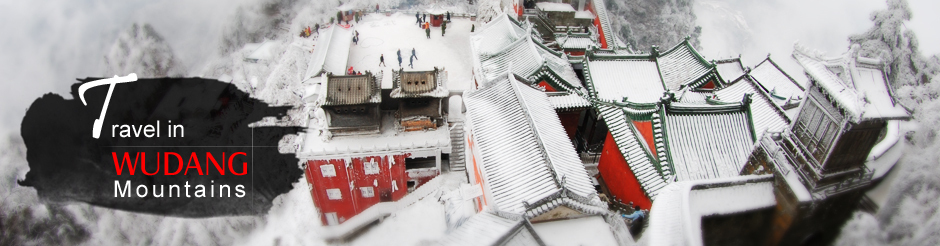
Wudang Mountain is famous for its perfect combination of natural and cultural scenery. It is also renowned for its magnificent ancient buildings, profound traditional Taoist culture and Wudang kungfu.
Wudang Mountain wushu, noted for its exercise of the internal organs and breathing techniques, developed along with Wudang Mountain Taoism. Taoist priests put equal emphasis on religious practice and promotion of the health.
Wudang Mountain wushu, noted for its exercise of the internal organs and breathing techniques, developed along with Wudang Mountain Taoism. Taoist priests put equal emphasis on religious practice and promotion of the health.
Wudang Mountain wushu, noted for its exercise of the internal organs and breathing techniques, developed along with Wudang Mountain Taoism. Taoist priests put equal emphasis on religious practice and promotion of the health.
At the foot of Stretching Flag Mount sits magnificent and boundless Purple Cloud Palace. Here, with the cluster of hills guarding the peaks, the wood of pine and green cypress deep and remote, and the surroundings elegant and weather comfortable, the place is thought the Blessed Place in Purple Cloud Palace View-site.
The Golden Palace of on the top of Heavenly Pillar Peak is the essence and symbol of Wudang Mountain, the sign of Wudang Taoism coming to the highest peak under the support of the imperial families.
In Yongle period of Ming Dynasty, the emperor ordered the construction of Forbidden City in Beijing of north and the large scale of construction project in Mount Wudang of south.
The South Cliff, also called Purple Cloud Cliff, was given the name since it faces south. With magnificent mountains and dense forests, here are the most perfectly collaborated building group by both artificial and natural scenery among the 36 cliffs in Wudang Mountain.
Taoism is a religion native to China. Laozi, (also spelled Lao-Tse, Lao Tsu, Lao Tzu, etc.) a famous thinker living in 6th Century BC, established this philosophy and came to be regarded as the father of Taoism. It formed mainly during Eastern Han Dynasty (AD 25-220). Many Taoist ideas and thoughts are greatly reflected in Taoist architecture.
Taoism is a religion native to China. Laozi, (also spelled Lao-Tse, Lao Tsu, Lao Tzu, etc.) a famous thinker living in 6th Century BC, established this philosophy and came to be regarded as the father of Taoism. It formed mainly during Eastern Han Dynasty (AD 25-220). Many Taoist ideas and thoughts are greatly reflected in Taoist architecture.
Taoism is a religion native to China. Laozi, (also spelled Lao-Tse, Lao Tsu, Lao Tzu, etc.) a famous thinker living in 6th Century BC, established this philosophy and came to be regarded as the father of Taoism. It formed mainly during Eastern Han Dynasty (AD 25-220). Many Taoist ideas and thoughts are greatly reflected in Taoist architecture.
Taoism is a religion native to China. Laozi, (also spelled Lao-Tse, Lao Tsu, Lao Tzu, etc.) a famous thinker living in 6th Century BC, established this philosophy and came to be regarded as the father of Taoism. It formed mainly during Eastern Han Dynasty (AD 25-220). Many Taoist ideas and thoughts are greatly reflected in Taoist architecture.
Copyright 1995 - 2011 . All rights reserved. The content (including but not limited to text, photo, multimedia information, etc) published in this site belongs to China Daily Information Co (CDIC). Without written authorization from CDIC, such content shall not be republished or used in any form. Note: Browsers with 1024*768 or higher resolution are suggested for this site.