World dialogue on the Chinese Dream
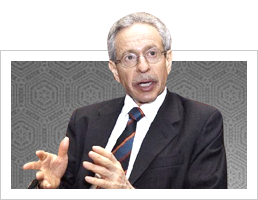
Dr. Robert Lawrence Kuhn, author of How China’s Leaders Think and the biography of former President Jiang Zemin, has long-term relationships with China’s leaders and the Chinese government.
2. Personal
The “Personal Chinese Dream” focuses on the well-being of individual Chinese citizens and thus modifies traditional notions of the primacy of the collective over the individual. The dream of the Personal is balanced with the dream of the National. In fact, the fulfillment of The Personal Chinese Dream constitutes a good part of what it means to fulfill the National Chinese Dream. In other words, to properly fulfill the National Chinese Dream is to fulfill properly the Personal Chinese Dream. Thus the Personal Chinese Dream refutes the foreign stereotype that China sacrifices individuals to serve the purposes of the collective.
The Personal Chinese Dream can be explicated by two subcategories: (i) material or physical well-being, and (ii) mental or psychological well-being.
Material Well-Being encompasses all the necessities of life and assures that all are being well taken care of; these include education, healthcare and retirement in addition to the obvious necessities of safe food, decent housing and public security. Beyond the necessities, material well-being also includes good jobs, rich family lives, access to entertainment, among other facets of life, and to proper protections of personal rights under the law.
Psychological Well-Being can best be explained in terms of “positive psychology, the science of happiness developed under the leadership of the American psychologist Martin Seligman, who transformed the fuzzy notion of happiness into a scientific discipline, with reproducible results and professional standards.
Positive psychology uses science-based intervention to build thriving individuals, families, and communities. As such, positive psychology aligns with the Chinese Dream. Seligman explains that positive psychology stresses well-being, the content of people’s dreams and the methods that can help them to realize their dreams. Seligman outlines five pillars of well-being (described with the acronym PERMA): positive emotion (stressing what’s good), engagement (being committed, having passion for tasks), relationships (positive human interactions), meaning (being part of something larger than oneself) and achievement (clear and definable accomplishments). He argues that PERMA (and all positive psychology) is expressed by what free people choose to pursue when not oppressed. Importantly, well-being is broader than happiness, though both ideas seem to correspond to the same Chinese word “xingfu.” A person with higher well-being has higher success, innovation, spirituality and harmony. Positive psychology facilitates social stability and harmony. Well-being brings not only personal and emotional benefits, but also moral and social benefits. For example, people with higher well-being are more altruistic. A flourishing person is more likely to help others. Happier people have less racial discrimination, make fewer social comparisons and are more ready to forgive. In short, higher well-being makes better citizens. A China higher in well-being would be a China higher in creativity. When you are frightened, stressed or depressed, your mind is filled with analytical, critical thinking. When your emotions are more positive, you are better with creative tasks. How to make China’s next generation more creative? Improve their well-being!
Well-being’s rewards are also economic. People with higher well-being have better work performance, less unemployment, and care more for others. They are also healthier and require less medical care. Positive psychology resonates well with traditional Chinese values like interpersonal relationships and morality.
President Xi stressed that “well-being has to be created by diligent work and labor.” This aligns with Seligman’s rationale to expand well-being from the popular yet narrow notion of positive emotion to include engagement and achievement.
The “Chinese dream” is for individual Chinese people to flourish. As the science of flourishing, positive psychology can increase well-being and thus make Chinese people more resilient and fulfilled and Chinese society more stable and prosperous.
Connotations of Chinese Dream
Inspired by the Chinese Dream, more and more people have begun to chase their own dreams, including dreams to receive better education, start businesses, purchase homes and get rich. People firmly believe that as long as they work hard, their dreams would come true. [more]

Chinese dream and China's governance
A great deal will depend on how Xi Jinping will actually implement the core features of the program he has laid out and how he will seek to create incentives and constituencies to support his programmatic goals.In sum, President Xi has now made very clear where he stands and where he wants the country to go under his leadership, and he has achieved wide-ranging endorsement of this overall program. [more]
Chinese Dream includes strong PLA
The PLA as a pillar of State security follows the trend of the times and follows a principle that is different from colonial aggression and expansion. And China firmly believes in the principles of peace, cooperation and development of military ties with other countries. [more]
The Chinese dream and peaceful development
The most difficult issue in the region now is the the relationship between China and Japan regarding overlapping claims on the Diaoyu, or Senkaku, islands group. The problem is residual from World War II, and the historical part of the issues is complicated. That is why Japan PM Abe’s revisionist statement on World War II and its impact does not help. [more]
The year of Chinese Dream
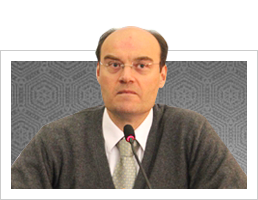
Distinct from the American Dream, the Chinese Dream cannot be a narrative of pure newness. It is the imagining of a better future with the memory of 4,000 years of history, a movement of renaissance expressed in the vision of "civilizational China". [more]
Defeat challenges, realize Chinese Dream
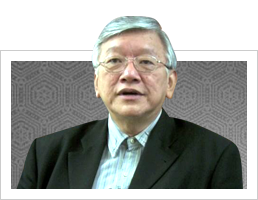
High economic growth in recent decades may have made China more confident of realizing the Chinese Dream, but the country's new leaders face serious challenges that could hamper their efforts to realize the goal.First and foremost is the need to fight widespread corruption. Making this his main priority, President Xi warned that corruption could lead to "the collapse of the Party and the downfall of the State". [more]
World dialogue on the Chinese Dream
The “Personal Chinese Dream” focuses on the well-being of individual Chinese citizens and thus modifies traditional notions of the primacy of the collective over the individual. The dream of the Personal is balanced with the dream of the National. In fact, the fulfillment of The Personal Chinese Dream constitutes a good part of what it means to fulfill the National Chinese Dream. [more]

Making a nation's dream come true
Promoting Chinese concepts in the rest of the world is not very difficult - stop translating key Chinese terminologies (at best, give the appropriate or closest meaning and continue with the Chinese terminology). If kung fu, wushu, rujia, shengren, junzi can be understood and accepted by the outside, why not zhongguo meng? Once you translate a Chinese term you give away the definition of thought. [more]