Chinese dream and China's governance

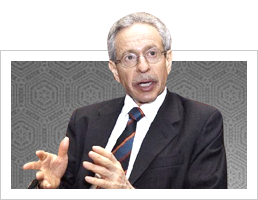
The author is senior fellow in Foreign Policy and Global Economy and Development at the Brookings Institution.
China's new leadership has sought to inspire the country with its call to realize the "Chinese Dream".
We know some things about the goals of that "dream":
? Overcome the legacies of the "century of humiliation"
? Successfully achieve a wealthy and strong country" (富強國家)
? Rejuvenate the Chinese folk (復興中華民族)-- something that goes beyond narrow national state boundaries
The "dream" is collective and is responsive to deep historical sentiments in China (as highlighted in the recent volume, Wealth and Power, by Orville Schell and John Delury)
? It is phrased in a way that to a significant extent each citizen can read his/her own deepest aspirations into this "dream" – that is, all may share the goals of the "dream," but there is a wide array of views about specific priorities and about the best path(s) to take to get from here to there.
? Scholars could have made comparable statements about China at almost any time over the past more than 100 years – perhaps the key difference is that the country is now feasibly closer to being able to realize this dream than it has been at any time since the beginning of the "century of humiliation."
While many specifics remain unclear at this point, the new Chinese leadership has provided some broad guidelines to major components of the Chinese Dream. A partial list of these includes:
? Fairer distribution of the benefits of economic development, including reducing urban-rural differences.
? Building an ecological civilization, where greater attention will be paid to addressing the major environmental issues of air pollution, water pollution, greenhouse gas emissions, etc.
? Shifting the development model to one that is based more on domestic household consumption, innovation, and efficiency and is less based on exports and investment.
? Creating the institutional capacity to provide the services and related requirements for dealing with a massive demographic transition to an elderly society over the coming two decades.
? Reducing the government's administrative interference in the economy so that by 2020 market forces will play a "decisive" role in the allocation of resources.
? Maintaining social stability in part though upholding the monopoly on political power of the CCP, with measures taken to improve the quality of the CCP itself (such as through fighting corruption) and increasing its skills at social governance.
China's leaders face an extraordinarily complicated set of obstacles in trying to achieve these and related goals that are central components of successfully pursuing the Chinese Dream. Most of these are well known, such as:
? The most rapid demographic transition in peacetime history, and the first that will produce a country whose population is old before the country in per capita terms is rich.
? Resource scarcity – especially the scarcity of usable water in the North China Plain but extending on a per capita basis to most types of natural resources – that is of staggering dimensions.
? A revolution in information technology that is producing rapid changes in society whose repercussions for governance are inevitably uncertain but potentially very consequential.
? The sheer magnitude of the social strains generated by simultaneous massive changes in terms of urbanization, marketization, globalization, growth of the non-state sector, and the information revolution. All are necessary for long-term success as a modern state and society, but each in the short run is a challenge to social stability.
? The particular challenges created when such rapid and multifaceted changes make it difficult to develop a settled sense of social ethics, which has always been a distinguishing characteristic of Chinese civilization. The Chinese political system is highly capable and pragmatic and has managed many major challenges in the past. I raise the above issues not to suggest that pessimism is warranted but rather to indicate the types of objective major obstacles that must be handled in order to satisfy national aspirations to achieve the Chinese Dream. Within this broad space, the specific issue I've been asked to address is "China's governance and the Chinese Dream." The "resolution" adopted by the Third Plenum provides the best vehicle for examining this topic.
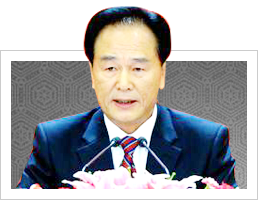
Connotations of Chinese Dream
Inspired by the Chinese Dream, more and more people have begun to chase their own dreams, including dreams to receive better education, start businesses, purchase homes and get rich. People firmly believe that as long as they work hard, their dreams would come true. [more]
Chinese dream and China's governance
A great deal will depend on how Xi Jinping will actually implement the core features of the program he has laid out and how he will seek to create incentives and constituencies to support his programmatic goals.In sum, President Xi has now made very clear where he stands and where he wants the country to go under his leadership, and he has achieved wide-ranging endorsement of this overall program. [more]
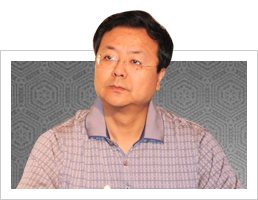
Chinese Dream includes strong PLA
The PLA as a pillar of State security follows the trend of the times and follows a principle that is different from colonial aggression and expansion. And China firmly believes in the principles of peace, cooperation and development of military ties with other countries. [more]
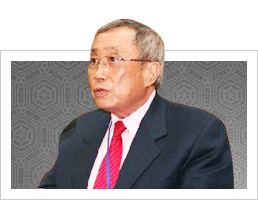
The Chinese dream and peaceful development
The most difficult issue in the region now is the the relationship between China and Japan regarding overlapping claims on the Diaoyu, or Senkaku, islands group. The problem is residual from World War II, and the historical part of the issues is complicated. That is why Japan PM Abe’s revisionist statement on World War II and its impact does not help. [more]

The year of Chinese Dream
Distinct from the American Dream, the Chinese Dream cannot be a narrative of pure newness. It is the imagining of a better future with the memory of 4,000 years of history, a movement of renaissance expressed in the vision of "civilizational China". [more]
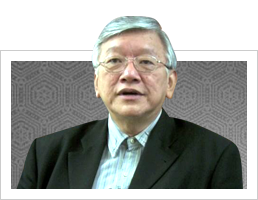
Defeat challenges, realize Chinese Dream
High economic growth in recent decades may have made China more confident of realizing the Chinese Dream, but the country's new leaders face serious challenges that could hamper their efforts to realize the goal.First and foremost is the need to fight widespread corruption. Making this his main priority, President Xi warned that corruption could lead to "the collapse of the Party and the downfall of the State". [more]
World dialogue on the Chinese Dream
The “Personal Chinese Dream” focuses on the well-being of individual Chinese citizens and thus modifies traditional notions of the primacy of the collective over the individual. The dream of the Personal is balanced with the dream of the National. In fact, the fulfillment of The Personal Chinese Dream constitutes a good part of what it means to fulfill the National Chinese Dream. [more]

Making a nation's dream come true
Promoting Chinese concepts in the rest of the world is not very difficult - stop translating key Chinese terminologies (at best, give the appropriate or closest meaning and continue with the Chinese terminology). If kung fu, wushu, rujia, shengren, junzi can be understood and accepted by the outside, why not zhongguo meng? Once you translate a Chinese term you give away the definition of thought. [more]