Chinese dream and China's governance
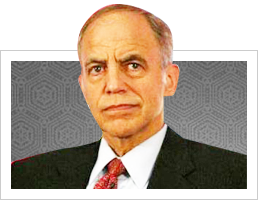
The author is senior fellow in Foreign Policy and Global Economy and Development at the Brookings Institution.
? The "reach" of the contemporary Chinese state is massive, and the ways it operates have a huge impact on developments in the economy, society, and most other spheres.
? The Third Plenum "resolution" lays out a substantive conception of directions of change in Chinese policy between now and 2020 that are exceptionally wide-ranging and complicated. On balance, these changes seek to enhance the importance of:
* market forces in determining the allocation and utilization of resources,
* the legal system in assuring basic rights and fair outcomes, o property rights in improving the assignment of responsibilities (e.g., in stewardship of natural resources),
* bureaucratic reforms (e.g., in leadership in the DIC system) to reduce corruption,
* and monetary and fiscal policy changes to shift incentives throughout the economy in order to create a more efficient, productive, fair, and sustainable set of economic and social outcomes.
The implications for governance of these changes are very complicated and in many cases potentially contradictory. I hope this is a topic that will receive substantial attention in the course of this conference.
? Nobody at this point can fully foresee either the changes necessary in the political system itself in order for these reforms to be implemented effectively or the impact on the political system of the outcomes of the reforms as they take hold and produce new economic and social realities.
One clear, consistent theme in this long and complicated "resolution" is that the Communist Part of China will strengthen its leadership in all spheres, the Party will enhance its policy of cadre management, and within the Party the Center will strengthen its role and its insistence on internal discipline.
? In short, the success of a more modern, well-educated, wealthy, internally and internationally connected Chinese population will depend on the wisdom, capabilities, and incorruptibility of Party cadres at all levels.
? This is a major challenge. It will require huge changes to the current realities within the Party, the current distribution of power within the political system, and the current incentives and practices throughout the polity.
? A great deal will depend on how Xi Jinping will actually implement the core features of the program he has laid out and how he will seek to create incentives and constituencies to support his programmatic goals. In sum, President Xi has now made very clear where he stands and where he wants the country to go under his leadership, and he has achieved wide-ranging endorsement of this overall program.
? But the polity is already massive, with complex internal structures, norms, incentives, principles, and existing policies and regulations.
? Navigating this terrain to produce the massive changes he has identified will require tremendous political skill and will inevitably generate many crises that will need to be managed and resolved.
? And the market itself will produce unpredictable and at times very unwelcome outcomes that will also require skillful political adjustments to keep things moving in the desired directions. Overall, the Third Plenum has given us in broad outline a fairly good idea of Xi's understanding of the Chinese Dream.
? This is a Dream that foresees massive adjustments in China's governance, even while maintaining the absolute supremacy of rule by the Party.
? It will require extraordinary skill to manage the politics of turning this broad Dream into operational programs that can successfully be implemented.
? And the implications for future governance – which cannot be predicted with any degree of confidence – will be determined not only by the strategy for implementing the Dream but also by the forces that develop as China's economy and society are themselves transformed.
Connotations of Chinese Dream
Inspired by the Chinese Dream, more and more people have begun to chase their own dreams, including dreams to receive better education, start businesses, purchase homes and get rich. People firmly believe that as long as they work hard, their dreams would come true. [more]
Chinese dream and China's governance
A great deal will depend on how Xi Jinping will actually implement the core features of the program he has laid out and how he will seek to create incentives and constituencies to support his programmatic goals.In sum, President Xi has now made very clear where he stands and where he wants the country to go under his leadership, and he has achieved wide-ranging endorsement of this overall program. [more]
Chinese Dream includes strong PLA
The PLA as a pillar of State security follows the trend of the times and follows a principle that is different from colonial aggression and expansion. And China firmly believes in the principles of peace, cooperation and development of military ties with other countries. [more]
The Chinese dream and peaceful development
The most difficult issue in the region now is the the relationship between China and Japan regarding overlapping claims on the Diaoyu, or Senkaku, islands group. The problem is residual from World War II, and the historical part of the issues is complicated. That is why Japan PM Abe’s revisionist statement on World War II and its impact does not help. [more]
The year of Chinese Dream
Distinct from the American Dream, the Chinese Dream cannot be a narrative of pure newness. It is the imagining of a better future with the memory of 4,000 years of history, a movement of renaissance expressed in the vision of "civilizational China". [more]
Defeat challenges, realize Chinese Dream
High economic growth in recent decades may have made China more confident of realizing the Chinese Dream, but the country's new leaders face serious challenges that could hamper their efforts to realize the goal.First and foremost is the need to fight widespread corruption. Making this his main priority, President Xi warned that corruption could lead to "the collapse of the Party and the downfall of the State". [more]
World dialogue on the Chinese Dream
The “Personal Chinese Dream” focuses on the well-being of individual Chinese citizens and thus modifies traditional notions of the primacy of the collective over the individual. The dream of the Personal is balanced with the dream of the National. In fact, the fulfillment of The Personal Chinese Dream constitutes a good part of what it means to fulfill the National Chinese Dream. [more]

Making a nation's dream come true
Promoting Chinese concepts in the rest of the world is not very difficult - stop translating key Chinese terminologies (at best, give the appropriate or closest meaning and continue with the Chinese terminology). If kung fu, wushu, rujia, shengren, junzi can be understood and accepted by the outside, why not zhongguo meng? Once you translate a Chinese term you give away the definition of thought. [more]