 |
|
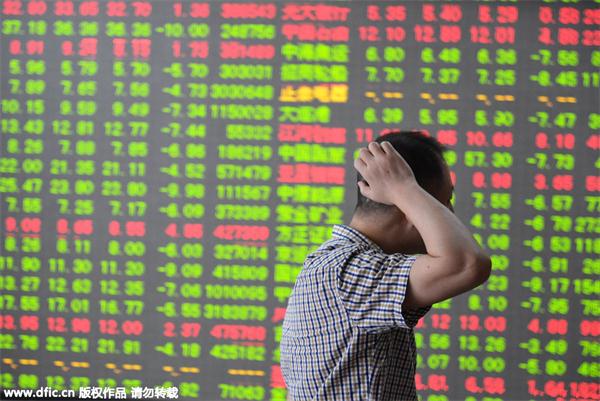
An investor at a brokerage house in Hangzhou,Zhejiang province. [Photo/IC] |
The Chinese equity market may soon serve as a standard case of what can go wrong in the financial sphere. But do we have to worry? Not much, at least not about China. The Chinese equity market does not have much to do with the real economy. It plays no major role in financing Chinese investment.
China's equity market is also not a leading indicator for the country's business cycle. It follows its own dynamics driven by liquidity, regulation and the usual panics and manias to which young financial markets are even more prone than established ones.
The 150 percent surge by the Shanghai Composite Index from mid-2014 to its peak on June 12, 2015, did not lead to a major surge in business investment and China's GDP growth. And the fact that the market erased roughly some gains will not herald a major decline in Chinese investment. However, there will be some impact on corners of the private sector - especially on the consumption of luxury goods.
The important point is that no massive hit to aggregate GDP is in sight, beyond perhaps a brief stumble. The country's leaders have all the means they need at their disposal to support aggregate demand, if it threatens to fall far below the gradually moderating trend line.
China is trying to modernize its overall economy and its financial sector. The equity boom's bust does show that some of the financial liberalization has gone wrong. At the same time, it is worth recalling that China is better able to contain the fallout from financial problems than any other major economy in the world.
The country has massive foreign exchange reserves, equal to about 35 percent of GDP; a domestic savings rate of some 40 percent of disposable income; and a balanced external sector and banking system that can respond fast to any central directive to increase lending, if aggregate demand needs a shot in the arm.
The real issue to watch out for is whether the temporary trouble in China's financial sphere causes contagion to other emerging markets far away. If a major outflow of money from many emerging markets (think Brazil) forces these countries to raise rates and restrict demand, this contagion could turn into a more significant problem. That is true for Europe and the world economy as a whole.
A serious emerging market crisis would be an argument for the US Federal reserve not to raise rates in September. At the moment, this risk of contagion among emerging markets seems to be a more potent risk for the world economy than the one of contagion from Greece.
The author is chief economist at Berenberg Bank in London. The Globalist