 |
|
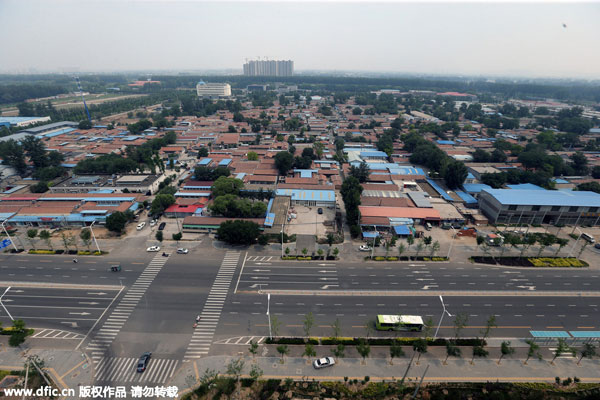
Lucheng town in Tongzhou where Beijing will relocate municipal administrative bodies. [Photo/IC] |
With Beijing deciding to focus on its role as China's capital, its southeastern Tongzhou district is expected to see remarkable real estate development by 2017 as it becomes the city's "subsidiary administrative center".
To relocate its non-capital functions, Beijing will shift many industries and organizations to suburban areas, and neighboring Hebei province and Tianjin municipality, boosting its integration with the two regions in the process.
As the de facto "administrative center" of Beijing, Tongzhou district should be able to take care of more than the city's political and cultural functions. Following the shifting of local administrative bodies and activities, Tongzhou is expected to ease the traffic congestion in and environmental pressure on the downtown area.
Besides, the district, now home to about 1.36 million people, will be able to provide more quality public services in the fields of education, healthcare and culture. With more capital flowing into the Tongzhou administrative district, top universities and schools, hospitals, and cultural centers, which used to be an urban privilege, will also become available to people living there.
The about 906-square-kilometer Tongzhou district can accommodate the business and other establishments which now crowd Beijing's central area, becoming a new pole of regional growth in the post-industrialization era.
Of course, Tongzhou district is supposed to have its own public facilities and services. But it does not necessarily mean that all administrative functions and superior public resources should be concentrated in one area. In essence, it should be different from major Chinese cities, including Beijing, and most provincial capitals.
Beijing's new "subsidiary administrative center" should avoid the functional mistakes of mono-centric cities. For instance, municipal departments for urban landscaping, cultural construction and traffic management can be located in other development zones and ecological conservation areas of Beijing to prevent Tongzhou from overflowing.
Primary schools and secondary schools, for example, have to be built near residential areas for students' convenience, but high schools can come up farther away from administrative institutions and densely populated neighborhoods. And universities do not have to and should not be concentrated in the new downtown area of Tongzhou. Instead, they can be small townships in themselves like Stanford University in the United States and Cambridge University in the United Kingdom.
Likewise, Grade III hospitals, or the best-rated ones such as the Xiehe Hospital, can be shifted, thanks to the increasingly convenient transportation, to remoter suburbs to boost local development.
To prevent the critical "urban diseases" that the capital has suffered from for long, Tongzhou needs to adopt a chessboard-type urban management featuring clear-cut division of functions and benign integration.
But Tongzhou is not yet ready to shoulder all the responsibilities because of its dependence on the traditional urban areas. So it is more than necessary to straighten out a few key concepts to guide Tongzhou through its mission.
A subsidiary administrative center should be independent of boundaries not only in terms of space but also urban functions. It should not be simply an expansion of downtown Beijing. If Tongzhou, as Beijing's de facto subsidiary administrative center, is not able to provide local residents better education and medical treatment, they will continue to flock to the urban districts for them.
Moreover, Tongzhou's industrial potential lies not in manufacturing but high-end services. Given the lack of water sources in Beijing, it should accommodate companies specializing in industrial design and technological innovation that consume less energy and yield high outputs.
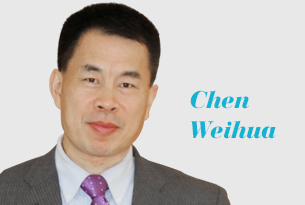
The author is director of the Institute of Urban and Environmental Studies at the Chinese Academy of Social Sciences.


I’ve lived in China for quite a considerable time including my graduate school years, travelled and worked in a few cities and still choose my destination taking into consideration the density of smog or PM2.5 particulate matter in the region.
Copyright 1995 - . All rights reserved. The content (including but not limited to text, photo, multimedia information, etc) published in this site belongs to China Daily Information Co (CDIC). Without written authorization from CDIC, such content shall not be republished or used in any form. Note: Browsers with 1024*768 or higher resolution are suggested for this site.
License for publishing multimedia online 0108263 Registration Number: 130349