 |
|
LI FENG/CHINA DAILY |
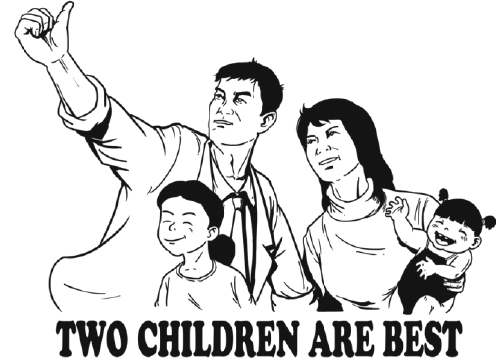
The communiqué issued after the Fifth Plenary Session of the 18th Communist Party of China Central Committee on Oct 29 said all couples can now have two children. The decision, aimed at balancing population development and solving the aging population problem, is the greatest change in China's family planning policy in three and half decades.
The CPC Central Committee decision ends the compulsory one-child policy for most couples in the country, bases the family planning policy on social fairness and justice, and reduces a family's risk of becoming childless after losing its only child in an accident or to illness. Thus the decision will help balance population development.
But the reform is not likely to make a big change in the trend of population growth. China will still face severe population challenges, including short of working-age population, distortion in population structure and unbalanced population growth.
Although the family planning policy reform is a key step forward, China cannot overnight rid itself of the established family planning concepts such as "family planning means birth control" and "China's population is very large". In this sense, allowing all couples to have two children is an incomplete reform strategy, because it cannot resolve the population crisis.
Population policy reform, in the true sense of the term, should be based on new concepts of population development and administration. To ensure better livelihood for the people and help the rejuvenation of Chinese nation, the family planning policy should respect people's fertility rights and encourage childbirth.
The decision to allow all couples to have two children has limited policy effect as far as achieving modest fertility levels and long-term and balanced development of population are concerned. In 2011, I first stated that China had fallen into the trap of a low fertility rate. Even if the fertility rate rebounds briefly, in the next two years or so, it will not lead to a baby boom, because the trend will gradually fade as an increasing number of women born in the 1970s cross the childbearing age.
According to eugenic theory, women born in the 1980s are close to the best childbearing age (35 years old), and women born after 1980s, especially in urban areas, are mainly the only child of their family. Over the past two years, husbands and wives of childbearing age have not responded "positively" to the policy of allowing couples one of whom is the only child of their parents to have two children. This suggests the decision of allowing all couples to have two children, too, is not likely to lead to a baby boom.
As to women born in the 1970s, even if they were allowed to have a second child, not many of them would seize the opportunity because they are already past the best childbearing age.
For women born in the 1980s, they are facing another fertility crisis. Although they are still in the best child-bearing age, many of them cannot afford or do not want to have a second child because of the huge cost of bringing up an "additional" (second) child. In fact, the high cost of rearing a child has forced many a couple to stick to the one-child social norm, even if they are eligible to have a second child.
And when it comes to women born in the 1990s, changed social situations have dampened their desire to have children, with the "no child" culture becoming increasingly popular among them.
Therefore, there is no reason to expect or fear a baby boom in China following the CPC Central Committee's decision. But going by demographic requirements, China needs a baby boom to, among others, cope with the aging population problem, correct the distorted population structure and build a promising and sustainable society.
The author is a professor at the Population Research Institute of Peking University.


I’ve lived in China for quite a considerable time including my graduate school years, travelled and worked in a few cities and still choose my destination taking into consideration the density of smog or PM2.5 particulate matter in the region.
Copyright 1995 - . All rights reserved. The content (including but not limited to text, photo, multimedia information, etc) published in this site belongs to China Daily Information Co (CDIC). Without written authorization from CDIC, such content shall not be republished or used in any form. Note: Browsers with 1024*768 or higher resolution are suggested for this site.
License for publishing multimedia online 0108263 Registration Number: 130349