 |
|
SONG CHEN/CHINA DAILY |
The dramatic fall in global poverty over the past two decades is the best news in the world today. For the first time ever, the percentage of people living in extreme poverty-now defined as living on less than $1.90 a day-is projected to fall below 10 percent this year, to 9.6 percent of the world's population. Unprecedented economic growth, especially in China, has allowed hundreds of millions of people to escape poverty.
But to effectively end extreme poverty by 2030-which is the goal of the World Bank Group and our 188 member countries-our aspirations must be higher still. Many tough decisions will have to be made before we can become the generation that ends extreme poverty.
The question we ask today is how can developing countries progress in the face of slow global growth, the end of the commodities super-cycle, pending interest rate hikes and capital flight from emerging markets? For the largely middle-income countries in East Asia and the Pacific, the challenge in this unfavorable global environment is to sustain rapid growth, improve social services and protect the vulnerable.
Our overarching strategy, based on more than 50 years of experience, is that three things must happen: Economic growth must lift all people. It must be inclusive.
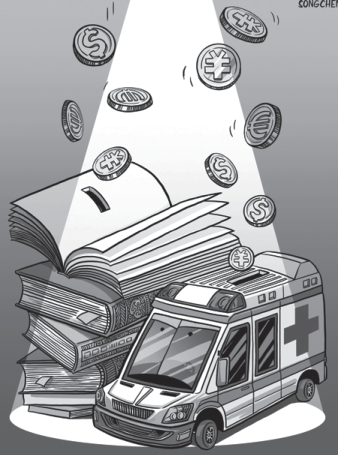
Investment in human beings is crucial-especially investing in their health and education. Malnourished and poorly educated children will never reach their full potential and countries, in turn, will fall short of their economic and social aspirations.
We must ensure that safety nets are provided to prevent people from falling back into poverty because of poor health, economic shocks and/or natural disasters.
To spur growth, every dollar of public spending should be scrutinized for impact. Every effort must be made to improve productivity. And in a period when banks are de-risking, we have to ensure that capital is accessible-especially for small business owners and entrepreneurs who will create jobs.
This is true all over the world, but perhaps especially true for sub-Saharan Africa. While Africa's poverty rate fell from 56 percent in 1990 to 43 percent in 2012, the number of people in extreme poverty actually grew. We estimate that there are 63 million more extremely poor people in Africa today than in 1990. Population growth has outpaced the impressive economic and social forces that reduced the extreme poverty rate.
Our new report, "Poverty in a Rising Africa", says these numbers don't tell the whole story of a region that has seen strong economic growth in the past couple of decades and made great progress despite many challenges.
But our report adds that data are sparse and inconsistent across the region and globally. Some 29 countries around the world had no poverty data from 2002 to 2011, so they could not track their progress. Another 28 had just one survey that collected poverty data during that time.
This is a situation that must change to improve the world's ability to tackle poverty. In fact, we can't accomplish our goal if we do not have enough information to know whether people are actually lifting themselves out of poverty. For that we need to address huge data gaps. We need robust data.
To fix this problem, we've launched a new initiative to step up data collection in 78 of the world's poorest countries. We've pledged to work with our partners in countries and international organizations, to do something that makes common sense and is long overdue-conduct surveys in all countries that will assess whether people's lives are improving.
As the world works to end extreme poverty in the next 15 years, it will be evermore important to have a solid foundation of data and evidence so that policies and programs reach people who have not benefited from strong growth since 200.
In a slowing global economy, governments must invest in quality education, health, sanitation and electricity for all, alongside effective social insurance policies that protect the vulnerable-not as an afterthought, but as a core part of their growth strategies.
In tough times, countries that do well have already made the difficult choices. But countries that haven't yet still can. It's not too late. Tough policy choices will send signals to the world that governments are serious about laying the groundwork for future growth.
The author is World Bank president.


I’ve lived in China for quite a considerable time including my graduate school years, travelled and worked in a few cities and still choose my destination taking into consideration the density of smog or PM2.5 particulate matter in the region.
Copyright 1995 - . All rights reserved. The content (including but not limited to text, photo, multimedia information, etc) published in this site belongs to China Daily Information Co (CDIC). Without written authorization from CDIC, such content shall not be republished or used in any form. Note: Browsers with 1024*768 or higher resolution are suggested for this site.
License for publishing multimedia online 0108263 Registration Number: 130349