 |
|
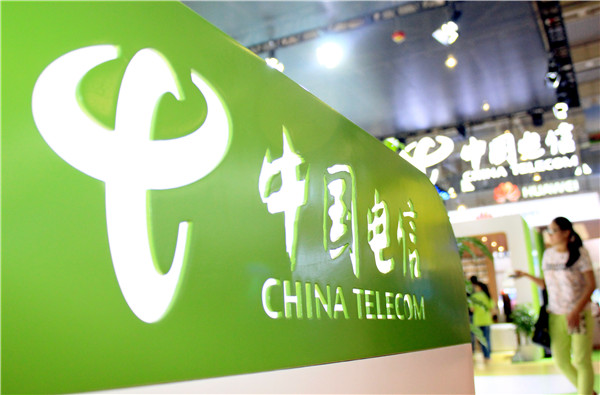
A China Telecom stand at an information industry expo in Nanjing, Jiangsu province. [Photo/China Daily] |
Digital transformation has become a buzzword, especially within the telecommunications industry that is in real need of change. While many sectors, including banking, airlines and even furniture and clothing, went digital long ago, telecom, despite being one with a significant technological advantage, stands still. It's time for us (the tech sector) to move too and shift into the digital gear. And the time is now.
While the need to transform and improve not only the services telecom companies provide, but the way they do business, is obvious, providers need to understand what they are doing and why. They need to establish what digital transformation means, embrace this vision and let it drive changes in the sector and empower the customer.
Looking at the fundamentals, digital transformation is dramatically changing the paradigm of "typical" way of working for telecom companies with three key dimensions driving this change: purpose, mindset and culture.
Purpose can be defined in one word-the customer. The customer should be the central component and driver of the change in the industry. There is an ongoing debate over virtualization and digitalization while the industry is stuck in outdated mentalities, and struggles to create disruptive innovations that answer customers' truly digital needs. Systems are layered over systems, and the valuable customer and application data lie somewhere buried below.
Telecom providers need to build an interface to free up that "customer data flow" which will allow them to tap into customers' digital universe. Take the network for example-it could be 2G, 3G, 4G, Wi-Fi-the customer doesn't care if providers combine bandwidth or switch to an available channel, as long as their experience is seamless.
The second dimension the industry needs to tackle in order to disrupt is mindset. To begin with, the incremental business models should be dropped. Having the fully programmed value chain in every country from design, planning and deployment to operations is not efficient in today's consumer era. The telecom industry should learn and even borrow from other industries, especially those that have undergone disruption-for example, retailers who centralize design, architecture and operations so that local stores benefit from the latest clothing designs, and can plan and order with fast turnaround times. I call it "clean sheet thinking": being fresh, innovative, agile and thinking outside the silos.
Finally, clean sheet thinking should become a part of a cultural change within global organizations. Disrupting the "continue to do what we did yesterday" mentality and really challenging people to think about new ways of looking at an issue or process will produce much more interesting results. A new spirit that encourages efficiency and enrichment is what will get people behind real change.
Today telecom service providers use large global technology suppliers to manage network upgrades and maintain infrastructure. If they keep running their networks, infrastructure and product development processes and systems the same way, the outcome will be the same. Those who continue to maintain old practices will be at a disadvantage, while agile competitors come out with new data services that are free and funded by advertising, or launch over-the-top video channels with broadcast quality that consumes a lot of network bandwidth.
Virtualizing the network and functions is not an easy task. But companies need to make their network assets work better for them, make them more cost efficient to run, and easier to maintain, upgrade and operate. They should be able to roll out new services more easily and faster. This is how networks operators will compete in the future.
The telecom industry is embarking on the journey of transformation to benefit from the opportunities digital disruption brings. To succeed, it will need to embrace three dimensions as fundamentals for all endeavors: focusing on the customer, adopting a mindset open to innovation and promoting a culture of openness and efficiency.
The author is chief technology officer of VimpelCom, headquartered in Amsterdam, one of the world's largest integrated telecommunications services operators


I’ve lived in China for quite a considerable time including my graduate school years, travelled and worked in a few cities and still choose my destination taking into consideration the density of smog or PM2.5 particulate matter in the region.
Copyright 1995 - . All rights reserved. The content (including but not limited to text, photo, multimedia information, etc) published in this site belongs to China Daily Information Co (CDIC). Without written authorization from CDIC, such content shall not be republished or used in any form. Note: Browsers with 1024*768 or higher resolution are suggested for this site.
License for publishing multimedia online 0108263 Registration Number: 130349