 |
|
SONG CHEN/CHINA DAILY |
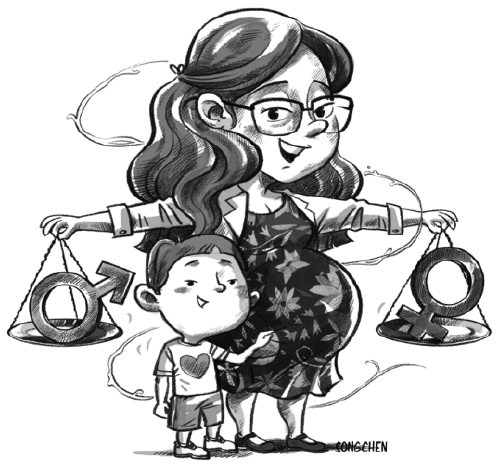
At the end of 2015, the Chinese mainland's population reached 1.37 billion, of which 704.14 million were males and 670.48 million females, according to the National Bureau of Statistics. This means tens of millions of men may not be able to get married.
The NBS data show the country's overall gender ratio is 105.02 males to 100 females and the gender ratio of newborns is 113.51 males to 100 females. As the normal range of the newborn population's gender ratio is between 103-to-100 and 107-to-100, the mainland has the most unbalanced gender ratio for newborns' population in the world. Worse, the unbalanced newborn gender ratio in the country has persisted for the longest period compared with other countries in the world. It started widening in the 1980s, with the 1982 figure being 108.47-to-100 and the 2004 figure 121.18-to-100.
The good news is that the newborn gender ratio declined year by year from 2008 to 2014, and dropped to 113.51-to-100 in 2015. But despite the improvement seen in the past seven years, the newborn gender ratio is still not satisfactory.
China, therefore, faces the double challenge of balancing the overall as well as the newborn gender ratio.
Theoretically, the imbalance in newborn gender ratio is the result of several factors, including the strong desire of couples to have a son, the restrictions imposed by the strict family planning policy (which has eased from Jan 1) and the pressure and cost of raising children. Under a strict family planning policy, couples in general choose to have a son.
Three factors explain why China still has an unbalanced gender ratio despite the improvement over the past few years. First, social and economic factors, especially a healthy gender culture, are the basis of gender equality. Better education and rising awareness of social values have prompted couples to not differentiate between a son and a daughter since 2009. Also, many policies such as extending the marriage age of men and women, the national girl-care project, and the ban on prenatal sex determination have promoted gender equality and reduced gender preference, even discrimination, to some extent.
But the fact that the newborn gender ratio is still far from satisfactory indicates that many couples still prefer having a son and a new childbearing culture is yet to mature.
The authorities' decision to allow all couples to have two children, however, is expected to restore the newborn gender ratio in the long run. This is because official figures show the government's November 2013 decision to allow couples either of whom was the only child of his/her parents to have a second child helped improve the newborn gender ratio much faster in 2014 and 2015 compared with the previous years. Since more couples are expected to have two children now, the newborn gender ratio is likely to improve further in 2016.
Studies show that in recent years many couples in rural areas have showed a distinct preference for the male child and followed the family planning policy mainly because of the high cost of raising children.
Investigation in the remote areas of Southwest China's Guizhou province also shows that the high cost of child-raising has had the "squeeze effect" on low-income families' gender selection. When people cannot afford the high cost of child-raising because of poverty, they prefer to have only one child and want it to be a boy.
This means gender selection will continue so long as poor families in underdeveloped areas are unable to afford the high cost of raising children. And we should realize that gender preference, the root cause of the unbalanced newborn gender ratio, results from the lack of social welfare and security.
The author is a professor at the Population Research Institute of Peking University.


I’ve lived in China for quite a considerable time including my graduate school years, travelled and worked in a few cities and still choose my destination taking into consideration the density of smog or PM2.5 particulate matter in the region.
Copyright 1995 - . All rights reserved. The content (including but not limited to text, photo, multimedia information, etc) published in this site belongs to China Daily Information Co (CDIC). Without written authorization from CDIC, such content shall not be republished or used in any form. Note: Browsers with 1024*768 or higher resolution are suggested for this site.
License for publishing multimedia online 0108263 Registration Number: 130349