 |
|
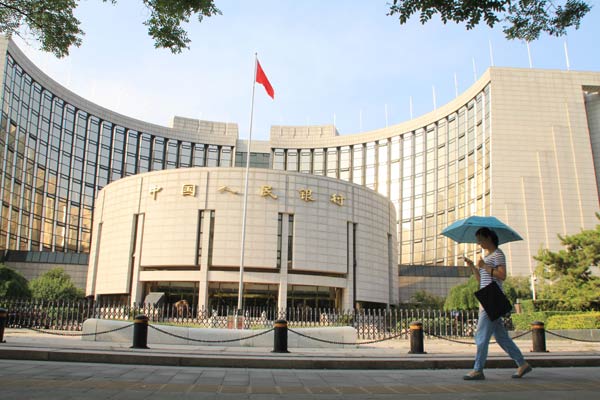
The headquarters of the People's Bank of China in Beijing. [Photo by Shi Yan/China Daily] |
The G20 Finance Ministers and Central Bank Governors Meeting, to be held later this week in Shanghai, should try to drive home the message that cheap money has not been able to resolve the 2008 global financial and economic crisis.
And to avoid a repeat of that disaster, major global policymakers must seize the opportunity the Shanghai meeting offers to generate a new sense of urgency. They should make coordinated policy efforts to boost real economic growth.
Last week, the Organization for Economic and Cooperation Development lowered its forecast of global growth in 2016 from 3.3 percent to 3 percent. For developed countries, the OECD cut growth forecast for the United States by 0.5 percentage point to 2 percent, eurozone by 0.4 percentage point to 1.4 percent and Japan by 0.2 percent to 0.8 percent. For emerging economies, while keeping its forecast for China at 6.5 percent, it trimmed that for Brazil by 2.8 percentage point to-4.0 percent.
Such a dim global growth outlook is in line with the disappointing start of all major stock markets so far this year as well as the shocking 70-percent plunge in the price of crude oil since early 2015.
But this is definitely not what the unconventional monetary measures adopted by the central banks of rich countries had promised to deliver.
By drastically cutting interest rates to abnormally low levels in the wake of the worst global recession in more than seven decades, developed countries' central banks once made a compelling case for cushioning their economies from a deep fall by easing the burden on home mortgages and other loans. More than seven years on, there is still no clear sign that the world economy is anywhere close to finding a solid footing amid an unprecedented flood of cheap money.
As more central banks have stepped into the uncharted zone of negative interest rates, the public is increasingly suspicious of the supposed effects of such monetary magic.
For instance, following similar policies in Europe, Bank of Japan introduced the negative-rate policy on Jan 29, under which commercial banks are charged 0.1 percent rate on certain deposits they have with the central bank. While the move is aimed at getting money to circulate more vigorously by encouraging banks to lend and consumers to spend, reports show that sales of safes in Japan have soared, a worrying sign that Japanese consumers may be hoarding cash-the opposite of what Japan's central bank had hoped. The scene is no better in Europe.
Worse than such failed monetary stimulus is central banks' manifested hesitation to call an end to those super loose monetary policies.
After claiming the strongest growth among developed economies for a while, the US Federal Reserve finally raised interest rates in December after several years of near zero interest rate. Yet just a few months later, the Fed has become cautious, indicating its inclination to abandon its forecast of four rate hikes in 2016 and giving rise to fears of quantitative easing being re-introduced.
If that is really the case, the credibility of central banks, not only their policies, will be at stake.
Given the increasing evidence of the ineffectiveness of cheap money in boosting productivity, policymakers who will gather in Shanghai should call for a thorough review of the possible short- and long-term effects of the cheap money therapy.
As the newly re-elected managing director of the International Monetary Fund Christine Lagarde recently suggested, while the "asynchronicity" of those loose monetary policies needs to be reviewed and practices better coordinated, the G20 ministers should examine the effects of their countries' fiscal policies and structural reforms.
This is important, for market confidence hinges more on better coordination of growth policies among major economies than mindless printing of currencies.
The author is a senior writer with China Daily. zhuqiwen@chinadaily.com.cn


I’ve lived in China for quite a considerable time including my graduate school years, travelled and worked in a few cities and still choose my destination taking into consideration the density of smog or PM2.5 particulate matter in the region.
Copyright 1995 - . All rights reserved. The content (including but not limited to text, photo, multimedia information, etc) published in this site belongs to China Daily Information Co (CDIC). Without written authorization from CDIC, such content shall not be republished or used in any form. Note: Browsers with 1024*768 or higher resolution are suggested for this site.
License for publishing multimedia online 0108263 Registration Number: 130349