 |
|
LI FENG/CHINA DAILY |
The Czech Republic can be seen as a logical partner for China's expansion in European Union markets because of the relative quality of its institutions and infrastructure, sound and stable banking, social stability, security and, most importantly, its advantageous geographical location, especially its proximity to the economic powerhouse of Germany.
The Czech Republic has a fairly good macroeconomic structure-one of the highest growth rates in Europe (4.3 percent in 2015), a low unemployment rate (5 percent in 2015) and low public debt (41 percent of GDP). While the basic axioms of the Czech foreign policy remain stable, quite a few high-ranking Czech politicians welcome Chinese partners and most Czech political parties are trying to have at least some "Chinese connection".
The evaluation of the future effects of President Xi Jinping's visit to the Czech Republic is more complex than what many external observers realize. Many agreements will be signed, but their relative economic importance may be diminished by the already high inflow of foreign direct investments, especially after 1997, into the Czech Republic and the important role of foreign companies in the Czech economy.
Available economic data and the logic of international economic relations suggest there are many interesting fields for future cooperation besides tourism with Chinese investors.
Chinese companies are likely to find the well-developed Czech supplier base because its proximity to Germany is very attractive. Our expectations should be realistic, though-while the share of China in Czech exports is expected to steadily grow thanks to the increasing importance of China in the global economy, and improving mutual trust and connecting infrastructure, the Czech economy will preserve its focus on European markets. After all, China will trade with, and invest in, the Czech Republic mainly because it is so well integrated in the European economy. Many of the economic effects even in the future will be indirect-Chinese consumers will buy many German products whose parts and components are produced in the Czech Republic.
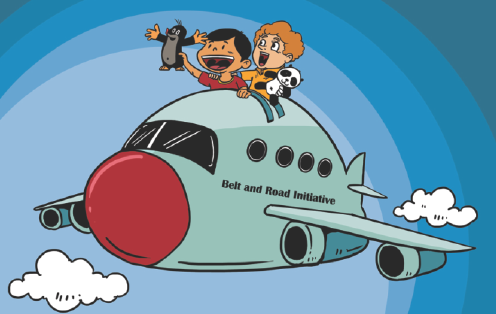
Czech economic experts and businesspeople seem to view the Belt and Road Initiative, the Silk Road Economic Belt and 21st Century Maritime Silk Road, as an ambitious and potentially beneficial strategy worth participating in. But quantitative evaluation of the actual benefits is difficult for lack of implementation details. The differences between the Czech Republic and other countries included in both the Belt and Road Initiative and 16+1 (China and the 16 Central and Eastern European countries) initiative suggest that effects can have different structures.
The Czech Republic's infrastructure is far from perfect. However, its main problem does not seem to be financing, but rather issues related to poor coordination, red tape and even corruption.
We expect most of the effects to be trade-related and they will significantly depend on the effects of the Belt and Road Initiative on third countries, especially those en route from China to the Czech Republic. The initiative can thus create opportunities for Czech companies in China and vice-versa because of lower transportation costs and better transportation, as well as help increase exports and other opportunities induced by economic growth and improved stability in the weaker regions.
The indirect effects could be very positive but remain vulnerable to a number of factors, which include geopolitical risks and significant implementation issues because of corruption. Indeed, finding the right recipe for providing "public goods" in the form of infrastructure financing while avoiding abuse of funds could be the biggest long-term positive contribution of the initiative to global stability.
China can try to reduce the implementation risks by incorporating three basic principles into the initiative. First, it has to lay emphasis on accountability and fighting corruption also at the international level. Second, it has to be aware of the diversity, including political differences, both among and within participating countries. And third, it should be cautious about the outcomes, especially while making the expectations public on either side.
China should be willing to accept even what may appear to be cheeky ingratitude of the participating countries-which after investments of billions of dollars by China may still complain because exaggerated promises led to even higher expectations of faster gains.
The prospects for future relations are bright, but much mutual patience and tolerance for diversity, including diversity of opinions, will be required.
The author is a researcher at Center for Economic Research and Graduate Education-Economics Institute in the Czech Republic.


I’ve lived in China for quite a considerable time including my graduate school years, travelled and worked in a few cities and still choose my destination taking into consideration the density of smog or PM2.5 particulate matter in the region.
Copyright 1995 - . All rights reserved. The content (including but not limited to text, photo, multimedia information, etc) published in this site belongs to China Daily Information Co (CDIC). Without written authorization from CDIC, such content shall not be republished or used in any form. Note: Browsers with 1024*768 or higher resolution are suggested for this site.
License for publishing multimedia online 0108263 Registration Number: 130349