In the West, many scholars tend to compare the Communist Party of China with the Communist Party of the Soviet Union. But one should view the Party in the context of China's thousands of years of civilization and history, rather than its recent history, say, from the First Opium War in 1840 onward.
The development of Chinese civilization in general can be divided into four stages: From 13th century BC to 2nd century AD, when thoughts and thinkers flourished in China; from 3rd century to 10th century, when the introduction of Buddhism influenced the Chinese civilization; from 11th century to 19th century, when neo-Confucianism became mainstream thought; and from the late 19th century to the present, when Western thoughts and cultures flowed into and influenced China.
The Chinese civilization is open, inclusive and adaptive. It has become stronger, not by rejecting foreign influence, but by absorbing it. Unlike religious civilizations, which are monotheistic in nature, the Chinese civilization welcomes the co-existence of different religions.
China is pursuing national rejuvenation. In this pursuit, it should be confident of its own civilization and values, treating Western thoughts as supplementary elements.
Universal values are part of every civilization. But most Western scholars regard China as an "Oriental totalitarian state", as opposed to Western states that trace their philosophical and political origins to ancient Greece.
Former Singapore leader Lee Kuan Yew first propagated Asian values in the 1980s, saying it had been besieged and attacked by the West. Japan's rise before and after World War II has not contributed to Asian values, as its development owes much to its Westernization.
Still, it is not easy for China to claim the supremacy of the "China model", which the West fears the most, for it is not yet infallible. Also, China needs to fully explain the term "Chinese characteristics", which is widely used in official discourse.
It is, therefore, better to discuss the "China model" against the background of Asian values. I think the "China model" is part of the East Asian model, which thrives on Confucianism in China, Japan and on the Korean Peninsula, and in Vietnam and some other Southeast Asian countries.
The success East Asian countries have achieved in national development comes from their inclusiveness. Western theories and systems can be used as tools for economic success and social development. But Asian values should always be the ballast for social and economic transformation, because blindly or completely embracing Westernization will lead to mistakes.
China, like any other civilization, believes in and honors many universal values, a fact which it should widely publicize. China's core values come from its own as well as universal values, and have been influenced by its civilization, history down the ages and its fast economic growth since the late 1970s.
Therefore, Chinese intellectuals should help build a knowledge system, which can better explain the Asian values and the "China model" not only to the outside world but also to the people at home.
The Western media's strong discourse power and communication network and capability are the result of their advanced information technology and efficient management, and more importantly their knowledge system. What they spread is fundamentally the knowledge system and the value it represents.
In this sense, international communication is of vital importance to the spread of the "China model" and Asian values. But we still lack a powerful modern knowledge system. China already has the knowledge; the problem is it has not been built into a powerful system. And China's rise cannot be complete until such a knowledge system is in place.
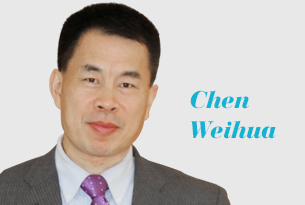
The author is a researcher in politics at the National University of Singapore. This is an abridged version of a speech he delivered in Beijing on April 8 at the launching ceremony of his two new books on Asian values and China's ideology.
(China Daily 04/23/2016 page5)


I’ve lived in China for quite a considerable time including my graduate school years, travelled and worked in a few cities and still choose my destination taking into consideration the density of smog or PM2.5 particulate matter in the region.
Copyright 1995 - . All rights reserved. The content (including but not limited to text, photo, multimedia information, etc) published in this site belongs to China Daily Information Co (CDIC). Without written authorization from CDIC, such content shall not be republished or used in any form. Note: Browsers with 1024*768 or higher resolution are suggested for this site.
License for publishing multimedia online 0108263 Registration Number: 130349