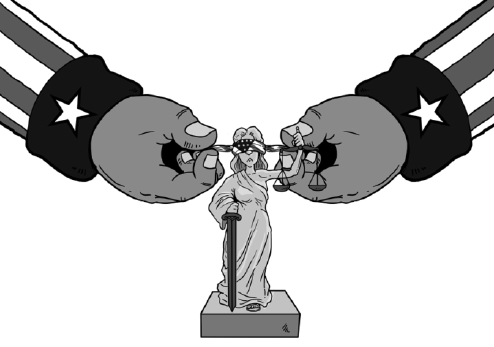
On July 12, the tribunal in the South China Sea arbitration between the Republic of the Philippines and the People's Republic of China will issue its final award. China has made it clear from the outset that it will neither participate in nor accept the outcome of the arbitral proceedings because the subject matter of the arbitration is, in essence, "the extent of China's territorial sovereignty in the South China Sea" and, in particular, its "sovereignty over the Nansha (Spratly) Islands as a whole". The jurisdiction of the tribunal is, however, limited to disputes concerning the interpretation or application of the United Nations Convention on the Law of the Sea, and territorial sovereignty disputes are not governed by the convention.
The final award will build on the tribunal's award on jurisdiction and admissibility of Oct 29, 2015, in which the tribunal rejected China's objection that the disputes in the South China Sea are actually about territorial sovereignty and thus outside its jurisdiction. While the tribunal affirmed its jurisdiction, either outright or conditionally, only in seven of the Philippines' 15 final submissions (deferring the question of its jurisdiction with regard to the remainder to the final award), the tribunal ruled that the Philippines' submissions Nos 1 to 14 did not reflect a dispute concerning territorial sovereignty but constituted a legal dispute concerning the interpretation or application of UNCLOS.
With regard to submission No 15, the tribunal was unable to determine whether a dispute exists because the submission was unclear. The tribunal's award on jurisdiction and admissibility contains some serious flaws and is based on procedural irregularities which call into question the correctness of any final award.
The jurisdiction of the tribunal is not unlimited. The tribunal itself pointed out that the existence of a dispute with regard to each and every submission is "a threshold requirement" for the exercise of its jurisdiction and that such dispute must concern the interpretation or application of UNCLOS.
A dispute in international law is defined as "a disagreement on a point of law or fact, a conflict of legal views or of interests between two persons". For a "conflict of legal views" to exist it is not sufficient that certain incidents occurred between the parties. Such incidents must rather have led the parties "to adopt clearly-defined legal positions as against each other", and the position of one party must be positively opposed by the other. It is for the tribunal to objectively establish the existence of a dispute.
Compared to the International Court of Justice, the tribunal adopted a rather loose standard when doing so. Of the 413 paragraphs of its award only 14 were devoted to the question of whether a dispute existed between the parties with regard to the Philippines' 15 submissions. The tribunal noted that China has "generally refrained from expressing a view on the status of particular maritime features" in the South China Sea.
It was therefore unable to establish a positive opposition by China with regard to the Philippines' claims concerning the status of nine individual maritime features in the Nansha Islands and the maritime entitlements they generate. Unable positively to establish a dispute between the parties over the status of these features, the tribunal set out to "infer" the existence of a dispute over the status of these features. Unlike the ICJ, which inferred the existence of a dispute from a state's silence or its failure to respond to a claim, the tribunal "constructed" artificial disputes over the status of these features in the face of, and contrary to China's explicit legal position.
China has made it clear on numerous occasions that the Nansha Islands are to be treated as a legal and geographical unit and that therefore the status and maritime entitlements of individual maritime features are not an issue. For example, in a note to the United Nations Secretary-General in 2011 China stated that the "Nansha Islands 'is' fully entitled to Territorial Sea, Exclusive Economic Zone and Continental Shelf". While China's claim to maritime entitlements thus relates to the Nansha Islands as a whole ("the Nansha Islands 'is' entitled"), the Philippines' claims relate to individual maritime features within the Nansha Islands.
In order to prove the existence of a dispute with regard to the status and maritime entitlements of individual maritime features, the Philippines referred the tribunal to China's 2011 note but quoted its text as stating that "China's Nansha Islands 'are' fully entitled to Territorial Sea, Exclusive Economic Zone and Continental Shelf". By misquoting the Chinese note-using the verb "are" instead of "is"-the Philippines misleadingly gave the impression of China claiming that "they", that is, the individual features, "are fully entitled" to maritime entitlements while China in fact claims that the Nansha Islands as a unit "is fully entitled" to maritime entitlements. In a move most damaging to its credibility, the tribunal accepted and adopted the Philippines' misrepresentation of China's position that the "Nansha Islands 'are' (instead of 'is') fully entitled" to maritime entitlements and, consequently, inferred a dispute on the status of individual maritime features in the Nansha Islands.


Copyright 1995 - . All rights reserved. The content (including but not limited to text, photo, multimedia information, etc) published in this site belongs to China Daily Information Co (CDIC). Without written authorization from CDIC, such content shall not be republished or used in any form. Note: Browsers with 1024*768 or higher resolution are suggested for this site.
License for publishing multimedia online 0108263 Registration Number: 130349