A green new deal for China and the world?
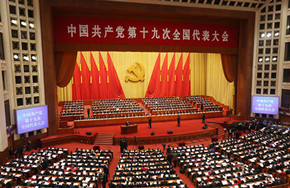
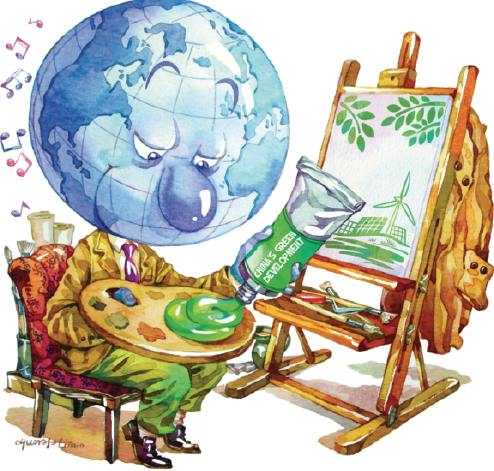
Ahead of the UN climate change conference in Bonn from Nov 6 to 17, global attention was focused on the 19th National Congress of the Communist Party of China, where General Secretary Xi Jinping laid out China's blueprint for "green development", which devoted long chapters to the "environment", "ecology" and "green".
In fact China's emphasis on "green development" is far from new. Earlier this year, Xi defended the 2015 Paris Agreement in a speech at the United Nations, in striking contrast to US President Donald Trump's well-known climate change skepticism (or "climate change denial") and the European Union's ineffectiveness.
Xi raised similar points in his key speech at the World Economic Forum in Davos in January, saying it is important to protect the environment while pursuing economic and social progress to achieve harmony between man and nature, and harmony between man and society.
It is admirable that China is willing and ready to address crucial challenges for both China and the world, and to lead a sustainable model of globalization precisely when the United States is in part retreating and Europe is stuck in its persistent divisions and problems.
On the subject of electric vehicles, China already has some important private producers such as BYD, and combines strong government support with emerging and dynamic entrepreneurship. Electric cars are a priority for China for a lot of reasons. First, their use would help fight pollution, which is still a big issue in China's metropolises. Second, they would put the country at the cutting edge of scientific and technological research in sectors such as renewable energy, new materials and artificial intelligence.
More important, 285 Chinese cities are building themselves up as eco-cities, according to Forbes. Eco-cities (such as Tianjin) are a necessity for a country with a booming urban population and fast-growing energy needs. In addition, they demonstrate a will to plan and "physically" build up a future, which has been missing from Europe for quite a long time.
Curiously, one of Europe's very few "new cities" in recent decades is Poland's Kobylany New City, a 30,000-people development project on the Silk Road Economic Belt which, along with the 21st Century Maritime Silk Road, is part of the China-proposed Belt and Road Initiative. Infrastructure is central to this initiative, which can also promote "green and sustainable infrastructure". The Asian Infrastructure Investment Bank, too, is committed to "green development" and China has supported hydropower, wind power and large solar power projects in countries such as Pakistan.
Massive infrastructure construction can have huge financial and environmental costs, but long ago China made a clear choice about its preferred mode of transport, and it chose the "greenest": the railway. Not by chance China has the largest high-speed railway network in the world (over 20,000 kilometers), larger than those of all the other countries combined.
Interestingly, Europe, too, has a tradition of high-speed rail networks, dating back to Italy's Florence-Rome "Direttissima" (1978) and France's Paris-Lyon TGV (1981). Despite old ambitions, however, Europe has remained behind. Trains are more eco-friendly than airplanes or road vehicles, and widening their networks in both Europe and China could help cement a Euro-Asian partnership and mitigate the effects of climate change at a global level.
Another important terrain where the EU and China could meet is that of "green finance" or "climate bonds". China supported their role at last year's G20 in Hangzhou, capital of Zhejiang province. Several years ago some European politicians had proposed the adoption of "euro bonds" which could have helped the EU to finance large-scale investments, but this didn't materialize. Now would be the right time to return to that project, and promote sustainable investment in the EU and China, as well as cooperation between the two sides.
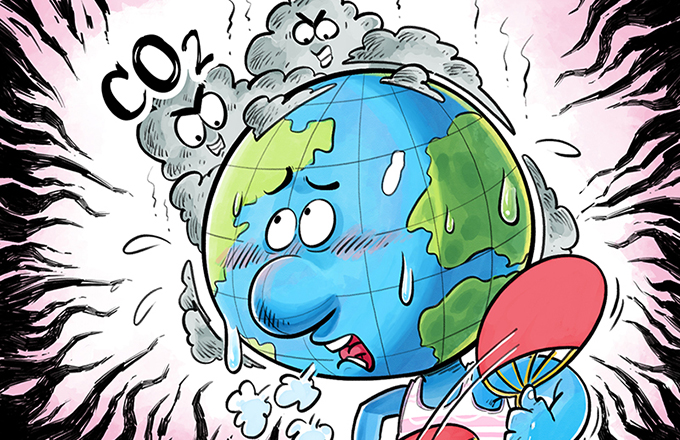
In an age in which the US seems reluctant to take on important responsibilities about the planet's future, cooperation between China and the EU is crucial. Saving the Paris climate accord and our common environment, after all, largely depends on their agreement.
Ernesto Gallo is an honorary research associate at UCL, London, and Giovanni Biava is an energy and gas consultant at Exelen group.
 |