Representatives from 182 countries have been gathered in Johannesburg to take stock on how well we're preventing the planet's endangered animals and plants from going extinct.
It's called the Convention on International Trade in Endangered Species of Wild Flora and Fauna, or CITES for short and they provide varying levels of protection for 35,000 species.
Big on the agenda at this highly anticipated meeting has been African elephants, which are being slaughtered to the brink of extinction for their ivory.
Conservationists and concerned animal lovers have been looking forward to this convention to see if the organization would pull out all the stops and do everything in its to protect elephants.
The results have been mixed, and puzzling. CITES, which was founded in 1973 and kicked into gear in 1975, put all populations of African elephants on its Appendix I - its highest level of protection - in 1989, effectively banning the international trade in ivory.
The protection started to erode in 1997 and 2000 when populations in four African countries (Botswana, Namibia, South Africa and Zimbabwe) were notched down to Appendix II to allow sales of stockpiles to Japan and China in 1999 and 2008.
At the convention today, a proposal to move them (and all elephants) back onto Appendix I was defeated because it failed to get the necessary two-thirds majority.
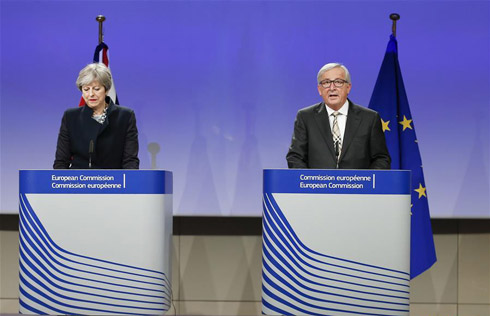
How? The European Union voted as a bloc to block it, setting off a firestorm.
"The European Union's position is shocking," said Vera Weber, president of the Switzerland-based Franz Weber Foundation, which has been campaigning to protect elephants for 40 years. "Their patronizing and colonialist attitude to the vast majority of African elephant range states calling for an Appendix I listing is shameful."
Of the 28 EU member states voting in the bloc, only France argued to protect the elephants. And the UK, according to some sources, fully backed the EU position in contradiction to the country's publicity stunts.
Just last week, for instance, Prince William gave what the Guardian described as "a sometimes passionate speech" before a charity group saying that he was not prepared to be a member of the generation that oversees the extinction of the African elephant.
"When I was born there were 1 million elephants roaming Africa," he said. "By the time my daughter Charlotte was born last year, the numbers of savannah elephants had crashed to just 350,000.
"And at the current pace of illegal poaching, when Charlotte turns 25 the African elephant will be gone from the wild."
Aside from leaving one wondering what kind of poaching is not illegal, the UK not backing the top protection status for all elephants is a puzzlement.
"The failure of the EU to support the proposal from the majority of Africa's elephant range states was a disgrace and totally out of touch with the wishes of EU citizens," said Born Free president and CEO Will Travers OBE. "It was also out of step with much of the world, including big markets for ivory such as China and the USA, which now agree that only a total ban on ivory trade can secure a future for elephants.
"Placing all elephant populations back on the CITES Appendix I would have sent a clear message that ivory belongs to elephants and is not for sale," Travers continued. "The European Union's failure to understand this is unforgivable."
Rosalind Reeve, a senior advisor to the Franz Weber Foundation, took it a step further. "The blood of Africa's elephants is on the EU's hands," she said.
The EU officially stated they opposed the move because the four countries' elephant populations were showing an increasing trend and therefore did not meet the criteria for Appendix I.
"Recognizing the efforts made by Southern African countries to sustainably manage their elephant population and combat poaching, those countries should better be encouraged to pursue their efforts," the statement read.
Robert Hepworth, former chairman of the CITES Standing committee, further blasted the EU decision, accusing them of being "desperate not to offend the host country" and ignoring a million-strong petition and a resolution from the European Parliament.
"The EU's behavior today made me ashamed to have voted to stay in the EU," he quipped.
On a happy note, one of the four countries with Appendix II status - Botswana - said that regardless of the vote, it would treat its elephant population, by far the biggest in Africa, as if they were on Appendix I. So there'll be no ivory coming from there any time soon.
Contact the writer at chrisdavis@chinadailyusa.com.

Copyright 1995 - . All rights reserved. The content (including but not limited to text, photo, multimedia information, etc) published in this site belongs to China Daily Information Co (CDIC). Without written authorization from CDIC, such content shall not be republished or used in any form. Note: Browsers with 1024*768 or higher resolution are suggested for this site.
License for publishing multimedia online 0108263 Registration Number: 130349