Chinese democracy proves itself a viable alternative to West







As China embraces the 40th anniversary of its reform and opening-up, the country is also building unprecedented confidence in its own definition and application of democracy, a word introduced to China a century ago.
China's success story is largely attributed to political stability and vitality under Chinese democracy, which has been highlighted during this year's two sessions.
Today's exercise of power by the National People's Congress contrasts sharply with a century ago when the nation began to learn about democracy, but soon found that Western political models did not work here. Decades of turmoil and civil war followed.
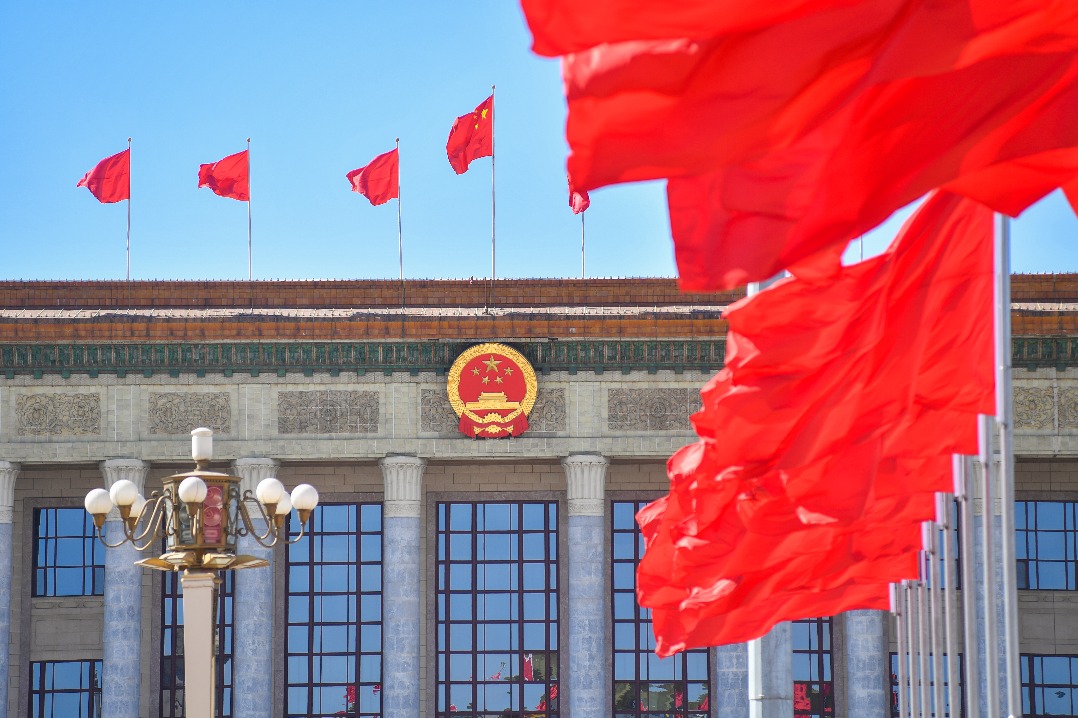
After the founding of the People's Republic of China, the country developed its own style of democracy. The first NPC was convened in 1954, marking the establishment of the people's congress system, the platform for democracy through which the people exercise State power.
The system, led by the Communist Party of China, is fundamental.
Once the right to run the country is ensured, the people's creativity can be sparked. Blessed with more than 1.3 billion people, the nation will play a key role on the world stage, said Xin Ming, a professor at the Party School of the CPC Central Committee.
The top legislature, the NPC and its Standing Committee, have played the leading role in lawmaking.
Over the past five years, the NPC has enacted 25 laws, revised more than 100 laws, and passed 46 decisions or resolutions on legal issues. All these legislative moves focused on key areas of China's development and stability.
NPC deputy Sun Xianzhong, a law researcher at the Chinese Academy of Social Sciences, was proud to participate in compiling China's first civil code - a "must-do" to promote the country's rule of law and modernize State governance.
Unlike the checks and balances on power that frequently result in political stagnation in some Western countries, China's central government, the Supreme People's Court and the Supreme People's Procuratorate answer to the NPC and are supervised by it. This vertical design has the advantages of uniting different forces in governance and avoiding internal friction.
Consultative democracy
Chinese democracy goes far beyond elections by including consultation as a virtue. It occurs in every corner of the country.
There are more than 2,100 political advisers to the 13th National Committee of the Chinese People's Political Consultative Conference, the top political advisory body, which includes representation of all of China's 56 ethnic groups. About 60 percent of these political advisers are not members of the CPC. The list also includes entrepreneurs, artists and scholars.
Before Premier Li Keqiang delivered the Government Work Report to the NPC this month, several rounds of seminars were held to consult representatives from all walks of life on the draft report. Leaders also listened to lawmakers and political advisers' opinions face-to-face before the report was submitted for approval.
Over the past five years, non-Communist parties have launched a series of supervisory investigations on issues such as healthcare, education, regional economic integration and poverty reduction.
The investigative reports often go directly to the CPC Central Committee or the State Council, and many have helped in formulating policies and laws, according to Wan Exiang, chair of the Central Committee of the Revolutionary Committee of the Chinese Kuomintang.
Consultative democracy also includes self-governance at the grassroots level through village committees. Self-governance in rural areas is ensured through elections and other democratic means.
As the rule of law is promoted in rural areas, the country has seen the rise of a new generation of farmers who have a deeper understanding of democracy, said Xu Yong, a professor at the China Institute of Rural Studies at Central China Normal University.
Capable government
Democracy is not a decoration, but a means of solving problems. China has a long political tradition of selecting and appointing talent, establishing a merit-based "selection plus election" system with a special focus on public opinion. Criteria for assessment include but are not limited to economic development, job creation, social security and environmental protection.
The system works. The Chinese government scored highest in a poll of 27 countries on public trust, with about 84 percent of Chinese having trust in the government, the 2018 Edelman Trust Barometer survey found.
The true meaning of people's democracy is finding the best way to coordinate the aspirations and demands of the whole of society and making decisions that serve the long-term interests of the people, said Xu Yaotong, a professor at the Chinese Academy of Governance.
For Li Shimo, an entrepreneur from Shanghai, China's success has shown there is more than one model of democracy in the world that can produce good governance. "China's example shows that alternatives exist," Li said.
Xinhua




- Senior Xi'an official facing probe by China's anti-corruption watchdogs
- Philippines risks creating trouble for itself: China's defense ministry
- Newborn with congenital heart disease receives life-saving surgery in Yunnan
- Hong Kong charity signs diplomatic talent deal with Beijing university
- Aircraft carrier Fujian, commissioned
- Erdos offers 10,000 yuan subsidy for families having third child