China embarking on new phase of opening-up







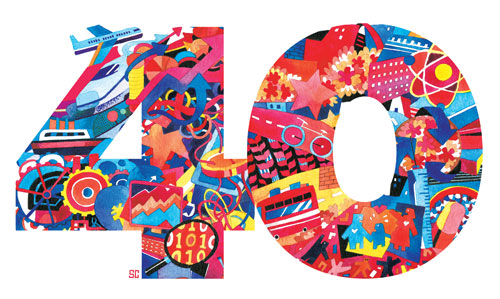
The 40th anniversary of reform and opening-up makes 2018 a banner year for China. The commitments made at this year’s National People’s Congress for a deepening of the “reform and opening up” policy also characterize a “new era” in the development of the People’s Republic of China. While China was opening up to the world, the world was also opening up to China, cautiously at first and initially with an eye to the growing tension between Russia and the West. No one quite knew at the time what this People’s Republic would do, or would be able to accomplish. But the accomplishments have been beyond anyone’s expectations.
China was integrated into the international system as a low-wage producer, a role similar to the one played by other developing countries, providing a “sweatshop” manufacturing center for the world economy. But China differed from other countries in many ways. One difference, of course, was its size — much bigger than other developing countries, though India was not far behind in that respect. Another major difference was the decisive role the Chinese Communist Party played in the governance of the country. This party dominance meant the country could commit to a long-term perspective, which many countries, often with more turbulent and volatile political structures, were unable to do. That perspective involved focusing on areas of scientific and technological importance in order to “leapfrog” entire technological niches and advance to today’s high-quality production path. While this development was not without its ups and downs, and involved a certain amount of uncertain experimentation, it ultimately achieved the goal of bringing China into the 21st Century.
“Opening-up” provided the final element: broader access to the technological advances in the West which had been developed over the previous 30 years. While much of China’s earlier advances in technology had been based on the overseas Chinese who returned to the motherland as well as through vital assistance from the Soviet Union until the withdrawal of Soviet advisers in 1960, China was largely relegated to its own resources. And while it continued to advance at a steady pace, the isolation of the Cold War took its toll. With reform and opening-up, China could once again tap the resources and knowledge bases available in other countries, whether in Asia, Europe or the United States.
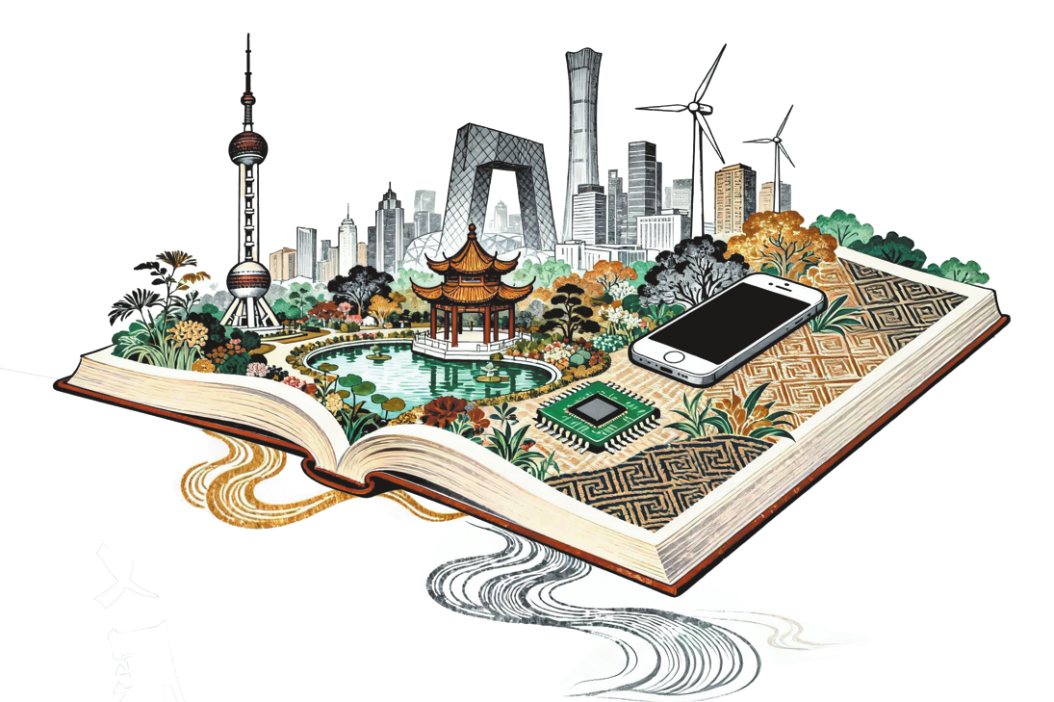
And it was not long before the Chinese were able to utilize these newfound tools and develop them further. While there was much catching up to do scientifically and technologically, there was also a creative utilization of the knowledge acquired, resulting in today’s China, on the verge of becoming an innovation economy.
The development of the Chinese economy has provided a practical lesson for other developing countries in Asia, Latin America and Africa, showing them that through a similarly focused policy of development, they can also overcome the poverty and misery that prevails in most of the world. And, as we have witnessed in the last five years, with the launch of the Belt and Road Initiative, China has now become the major driving force for global economic development.
This has, of course, been met with great enthusiasm by many countries, but a tinge of skepticism by others. And one would not expect otherwise, given the suddenness of China’s emergence as a world power, as well as prejudices that still exist from an earlier period. The task of Chinese diplomacy going forward is to overcome the doubters. And given the country’s clear intent to develop a new form of international relations based on mutual benefit, I am confident the majority of world will rally to this attempt to make a world community, one where there are no losers, only winners.
The author is the Washington bureau chief for the Executive Intelligence Review and a non-resident senior fellow at the Chongyang Institute for Financial Studies, Renmin University of China.