Governance of China an inspiring path







The release of the fifth volume of Xi Jinping: The Governance of China is a significant moment in the codification of contemporary Chinese political thought. What emerges is not merely an anthology of speeches but a sustained effort to articulate Chinese modernization as a theoretical framework with implications for China's future and the wider world.
The book is essential for three reasons. First, it demonstrates continuity: Xi's people-centered philosophy and insistence on competent governance stretch back decades. Second, it shows progression: from practical governance to systematic theorization. Third, it reflects China's changing position: from a cautious participant in global governance to a constructive contributor of new ideas.
In a world where political leadership often relies on short-term slogans and reactive policies, it is refreshing to encounter a body of work that seeks to systematize ideas. Xi's emphasis on developmental statecraft, cooperation and solidarity offers a striking alternative in an age marked by a poverty of ideas, where many leaders beat the drums of war and pursue hegemonic statecraft.
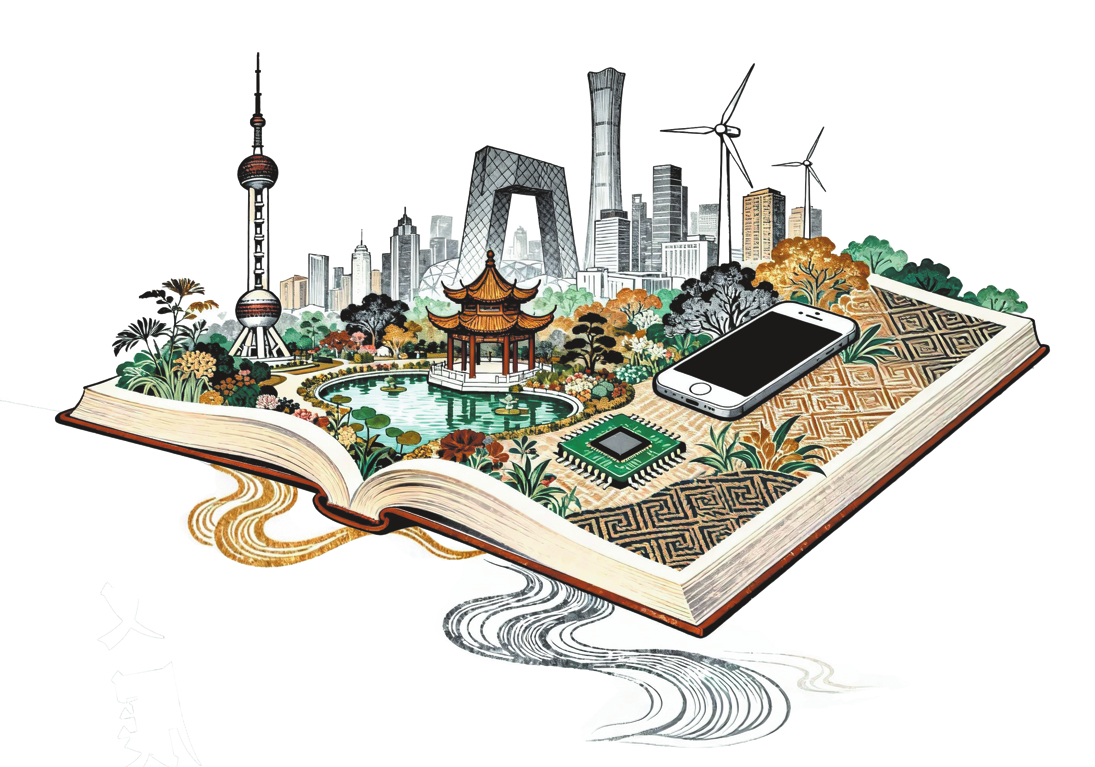
Xi presents the Chinese modernization model as integrating development, political leadership, cultural confidence, ecological protection, security and global engagement into a single intellectual framework. It is no longer about solving problems in isolation but establishing a vision that connects the past, interprets the present and projects the future.
Here, modernization is theorized as a plural concept. China is not following a Western path but has generated its own, one offered as a choice for other countries. Xi describes Chinese modernization as a project whose essence is to meet the needs of the people in all areas of life: education, employment, healthcare, housing, welfare and cultural fulfillment.
This continuity is striking. The young cadre demanding competence from local officials and the national leader presenting a comprehensive theory are motivated by the same obsession: the belief that political legitimacy flows from serving the people. Yet there is also progression. Where once people-centered meant effective local governance, now it means designing a national and even global model. The shift is in scale rather than essence.
Another prominent theme is technological innovation. He argues that innovation is the first productive force and the key to development and security. In the context of intensifying technological rivalry with the United States, he warns that China will remain vulnerable without the mastery of core technologies.
Economic theory is also elaborated. This dual strategy captures both caution and ambition. It is designed to insulate China from external shocks and geopolitical rivalry while projecting influence abroad.
A distinctive feature of Volume V is its explicit claim to innovation in Marxist theory. Xi Jinping Thought on Socialism with Chinese Characteristics for a New Era has started a new stage in the Sinicization and modernization of Marxism. He is presented not only as a leader implementing policies but as a theorist contributing to the evolution of Marxism itself.
Volume V also elevates security to unprecedented prominence. Development and security are presented as inseparable. The sovereignty theme is sharpened, too. Hong Kong, Macao and especially Taiwan are cast as core interests. Xi insists that reunification is essential for national rejuvenation and force will be used if necessary.
The theoretical innovation is to integrate security with development. Development without security is fragile; security without development is unsustainable. By uniting them, he presents a comprehensive answer to what he sees as the contradictions of the present age.
Perhaps the most striking progression in Volume V is the shift in China's global posture. In earlier volumes, China was a responsible country supporting existing multilateral institutions. The tone was reserved and cautious. Volume V highlights China's engagement in shaping global governance through practical ideas and constructive proposals. Xi introduces the Global Development Initiative, the Global Security Initiative, the Global Civilization Initiative and the Global Governance Initiative. These are presented not as diplomatic slogans but as conceptual contributions to humanity's shared challenges.
This statement reveals confidence. It points to China's role as a key participant in the global order. By linking domestic modernization with international initiatives, Xi presents China as both a contributor and a leader. This emphasis on solidarity and cooperation resonates strongly with the Global South. Many countries face development challenges similar to those China has overcome.
From a Global South perspective, Xi's writings can be read as an invitation to partnership. This vantage point shapes my reading. I see in these pages that this is not an attempt at domination but an effort to articulate a developmental statecraft based on mutual benefit, solidarity and respect for different civilizations.
The overarching theme of Volume V is continuity and progression. Progression lies in expanding those principles into a theoretical system that encompasses every sphere of governance and extends to global challenges. Volume V shows him articulating ideas into a comprehensive framework. It reflects a leader confident enough to theorize and offer his thoughts as both a national guide and a global contribution.
Finally, Volume V is a response to the contemporary moment. Xi interprets today's crises as shared human challenges and presents China's path as the answer. This dual vision is characteristic. On the one hand, Xi is defensive, emphasizing sovereignty, resilience and security. On the other hand, he is forward-looking, proposing global initiatives and presenting China as a contributor to international norms. He combines caution with confidence, carefulness with proactive vision. As a reader from the Global South, it is refreshing to read political writings that grapple with the challenges of development rather than defaulting to the language of confrontation.
In a world where many leaders pursue narrow national interests through conflict and hegemony, Xi's focus on growth and cooperation is a reminder that leadership can be defined differently. His writings remind us that ideas matter, that leadership requires thought and action and that developmental statecraft can offer a genuine alternative to militarized power politics.
The author is director of the Centre for Public Policy and African Studies at the University of Johannesburg.
The views don't necessarily represent those of China Daily.
If you have a specific expertise, or would like to share your thought about our stories, then send us your writings at opinion@chinadaily.com.cn, and comment@chinadaily.com.cn.