Never underestimate a single idea







Never underestimate the butterfly effect of a single idea. It can deliver unexpected outcomes. And the implications can reach further than imagined.
That is the importance of people-to-people dialogues. They offer a natural second track toward reducing the possibility of conflict through building bridges and the architecture of fresh designs for shared future for mankind. A future that is both multi-lateral and multi-stakeholder.
When Himalayan Consensus initiated its first inception meeting at Dwarikas Hotel on the eve of the SAARC Summit in 2014, it was an afternoon session, there were only four speakers, and less than thirty-five people attending in the room. At that time, we called for the SAARC to adopt principles of Himalayan Consensus into their own agenda: protecting heritage and identity, through sustainable business and community finance, while prioritizing environmental protection, and preventing conflict at its root rather than effect. At the time, few listened.
This year at the 2018 Himalayan Consensus Summit, we had 74 speakers, packing the conference facility at Himalayan Hotel for two days. This time the region listened. China's mainstream media covered this year's Himalayan Consensus Summit closely, the outcomes of which were reflected shortly thereafter on the Op-Ed pages of India's key newspapers.
The Himalayan Consensus is a process that produces results. By convening environmentalists with business leaders, government with civil society, we are together seeking solutions to challenges and then applying them. Pragmatic solutions collectively represent an evolving economic paradigm that can offer communities economic empowerment and resilience against climate distortion.
As a second track dialogue the Himalayan Consensus calls for greater regional collaboration on a complex matrix of issues from: renewable energy, to digital finance, water management, conservation and smart infrastructure.
Intense preparation work and breakout seminars held in Bhutan, China, India and Nepal, throughout 2017, helped lay the groundwork for this year's Himalayan Consensus Summit that convened on March 24-25, 2018 in Kathmandu.
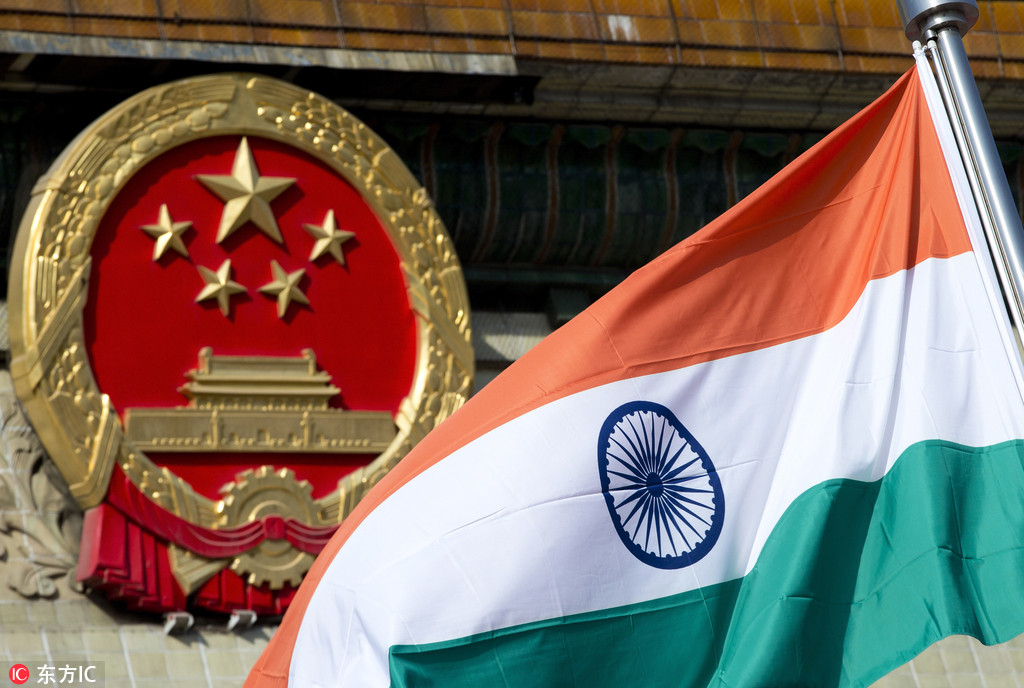
The Himalayan Consensus Summit in turn helped contribute in setting a positive tone of constructive collaboration between China and India, just one month prior to the successful historic meeting of between China's President Xi Jinping and India Prime Minister Narenda Modi in Wuhan on April 27-28, 2018.
In parallel the UNDP China Country Office has initiated the Silk Road Dialogues with the 2018 agenda focusing on improving the China-India relationship. The first round will convene in Beijing this June, hosted by Charhar Institute, and will work on shared topography and environmental concerns. The UNDP Nepal Country Office has launched the Himalayan Consensus crisis mitigation program focusing on preventing conflict at the root rather than effect with emphasis on community resilience against both environmental and economic distortions.
The effectiveness of such efforts as part of the Himalayan Consensus process, convened through think thanks, business, civil society and community thought leaders working in synergy and unison should not be underestimated. Policy dialogues can set a constructive and positive tone while offering clear pathways for collaboration through practical examples, pilot projects, that when proven successful can be scaled as far reaching solutions, and even become national policy prerogatives.
The 2018 Himalayan Consensus Summit offered such examples, by delivering on commitments from the previous 2016 and 2017 Himalayan Consensus Summits. These included the following outcomes:
- Himalayan Consensus green energy fund led by SEB, the Swedish banking institution that helped pioneer the first green bond;
- Himalayan regional earthquake insurance policy with the first pilot being Kathmandu Valley, led by Hong Kong re-insurance group PeakRe;
- Himalayan heritage hotel fund established by Himalayan General Insurance to adopt business models to cultural sustainable development.
These outcomes demonstrate how the financial sector can serve to protect environment, heritage and communities changing the rules of the game. Past general assumptions are that business and finance are in conflict with environment and community or that growth and sustainability are incompatible. These pioneering efforts demonstrate how business and finance can and should be at the forefront of leadership in establishing new and creative approaches at protecting environment and enhancing community livelihoods on the foundations of economic sustainability. Moreover, green energy solutions and community resilience financial services are mega-trends that will pave the way for a new type of future growth.
Other outcomes from the Himalayan Consensus Summit included:
- Fresh emphasis on applying technology and innovation to enhancing financial and business solutions as an overall direction for the process;
- A decision to merge the Himalayan Consensus Youth Forum into the overall Summit in 2019, recognizing the importance of youth innovation leading us forward.
These in turn gave the Himalayan Consensus process a new focus on migration issues and how both community empowerment and environmental resilience are critical in preventing sudden population shifts that can cause social frictions and volatility, as well as addressing the brain and talent drain conundrum many countries of the region now face which directly effects youth and innovation.
Envisioning improved relations between China and India, at this year's Himalayan Consensus Summit, new proposals were put on the table. Former India Foreign Secretary, Nirupama Rao, made an impassioned call for the drafting of a Himalayan Charter in the months ahead, to be presented at the 2019 Himalayan Consensus Summit. ICIMOD's Director General, David Molden, presented a overarching vision of a Himalayan Council, where governments would convene in coordinating responses to climate resilience and community empowerment.
Both Rao and Molden as Himalayan Consensus board members have offered to lead on both respective proposals. A draft Himalayan Charter could pave the way for establishing a Himalayan Council. The UNDP Silk Road Dialogues as part of the Himalayan Consensus process could offer a framework for realizing both. And in the future we could be expecting many more positive meetings between President Xi and Prime Minister Modi.
Laurence Brahm is Founding Director of the Himalayan Consensus and an International Research Fellow at the China Center for Globalization.