Belt and Road Initiative: A unique opportunity to further boost Sino-Italian cultural ties







Italy and China, despite their geographical distance apart, have many things in common. The two countries are influential civilizations, respectively, in Europe and in Asia, with a long history of cultural interaction. Their artistic and natural attractions are renowned in the world, and it therefore comes as no surprise that they have the most UNESCO heritage sites.
It is, in fact, in their cultural richness that the two countries have a lot to cooperate on while contributing to global development. The Belt and Road Initiative, proposed by Chinese President Xi Jinping in 2013, besides being an inclusive initiative that promotes economic openness and global harmony, also “advocates tolerance among civilizations, respects the paths and modes of development chosen by different countries, and supports dialogues among different civilizations on the principles of seeking common ground while shelving differences and drawing on each other’s strengths.”
Italians have historically played a positive role in promoting dialogues among the different civilizations. Marco Polo, for example, the Venetian Silk Road explorer, traveled to China during the Yuan dynasty and provided a detailed account of Chinese culture, economic and social systems to Europe. The Jesuit priest Matteo Ricci, known in China as Li Madou (利瑪竇), was one of the few foreign intellectuals in the Ming dynasty who could read and write classical Chinese and who deeply appreciated Chinese culture and its Confucian values.
Another Italian, Giuseppe Castiglione, or Lang Shining (郎世寧), served as an artist for three Qing dynasty emperors, namely Kangxi, Yongzheng and Qianlong. These are some of the Italians who bridged China and Italy many centuries ago. In the 21st century, Italy has the potential to equally seize the opportunities brought by Sino-Italian cultural interaction to build a strong foundation for deepened cooperation along the new Silk Road.
While paying a state visit to China in February 2017 and addressing the China-Italy Business Forum and Cultural Forum, the President of the Italian Republic Sergio Mattarella firmly praised the Belt and Road Initiative as a vital project to enhance cultural exchanges between Italy and China. Being both cultural superpowers and members of the G20, Italy should further grasp the opportunities brought by China’s opening-up and reform, as well as China’s many global initiatives, including the Belt and Road.
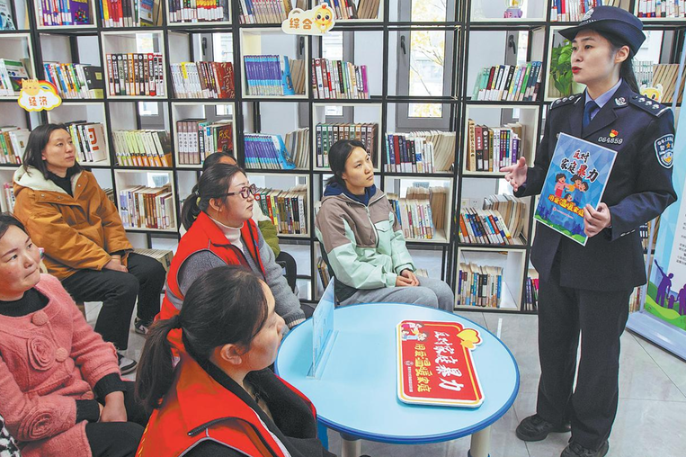
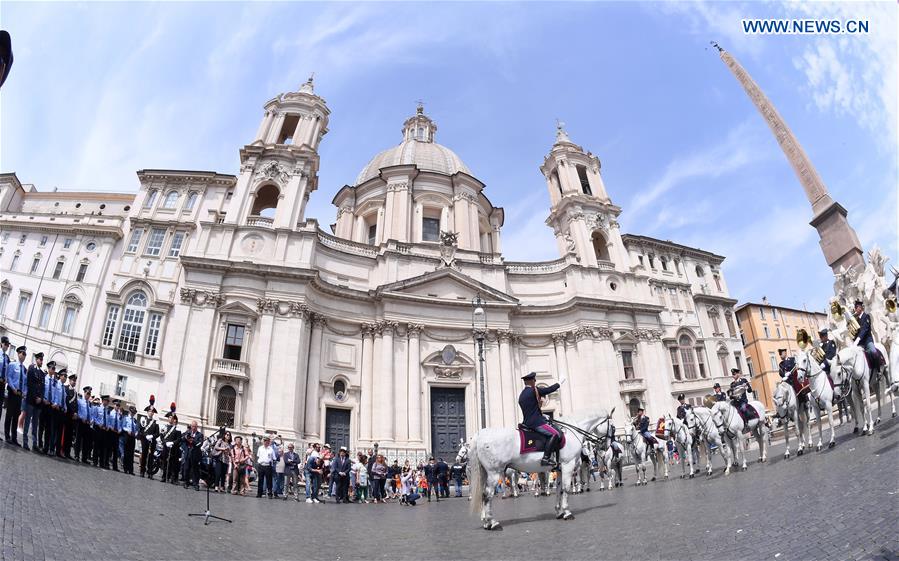
Italy and China have been working on a variety of initiatives to bring the Italian and Chinese peoples and cultures even closer. In a recent message addressed to Italian compatriots for the 72nd anniversary of the Italian Republic, Italian Ambassador to China Ettore Sequi made a comprehensive overview of current Sino-Italian relations. Among the many successes, the strong symbolic values of Sino-Italian initiatives, such as the “China Seismo-Electromagnetic Satellite" project for the study of Chinese and Italian earthquakes from space, the twinning between Verona and Hangzhou's UNESCO sites and the joint patrolling of Italian and Chinese police officers are extremely important signs of healthy relations. The symbolic initiatives Ambassador Sequi mentioned describe well the current state of cultural and people-to-people ties between Italy and China and represent an important stimulus for further boosting Sino-Italian cooperation.
Former Italian Prime Minister Romano Prodi wrote recently that “the ups and downs in relations between the West and China are often the consequence of not recognizing the diversity of our roots and cultures” and that “wise politics is a quest to find the instruments of compromise with the principle of an open cultural dialogue as a priority”. Italy can exploit better its intercultural diversity, starting from acknowledging the crucial role that overseas Chinese in Italy or Italians in China could play in bridging the two civilizations. The new Italian government has an enormous responsibility in this process, because building a unique and comprehensive Sino-Italian partnership also would benefit Italian economic development.
During the opening ceremony of the Belt and Road Forum for International Cooperation in May 2017, President Xi Jinping said that “in pursuing the Belt and Road Initiative, we should ensure that, when it encounters different civilizations, exchange will replace estrangement, mutual learning will replace clashes, and coexistence will replace a sense of superiority.” He further urged the need to “boost mutual understanding, mutual respect, and mutual trust between different countries.”
Being someone who had the privilege of growing up between these two cultures, I am now more than ever persuaded that both countries, with deep cultural roots and strong people-to-people ties, will jointly build an open and inclusive community with a shared future that is founded on mutual learning, mutual understanding and dialogue.
The author is a graduate of China Studies and International Relations at Peking University and the London School of Economics. Currently, he is working in the fields of development and public policy.