How China can sprout new growth in Pakistan’s agriculture sector







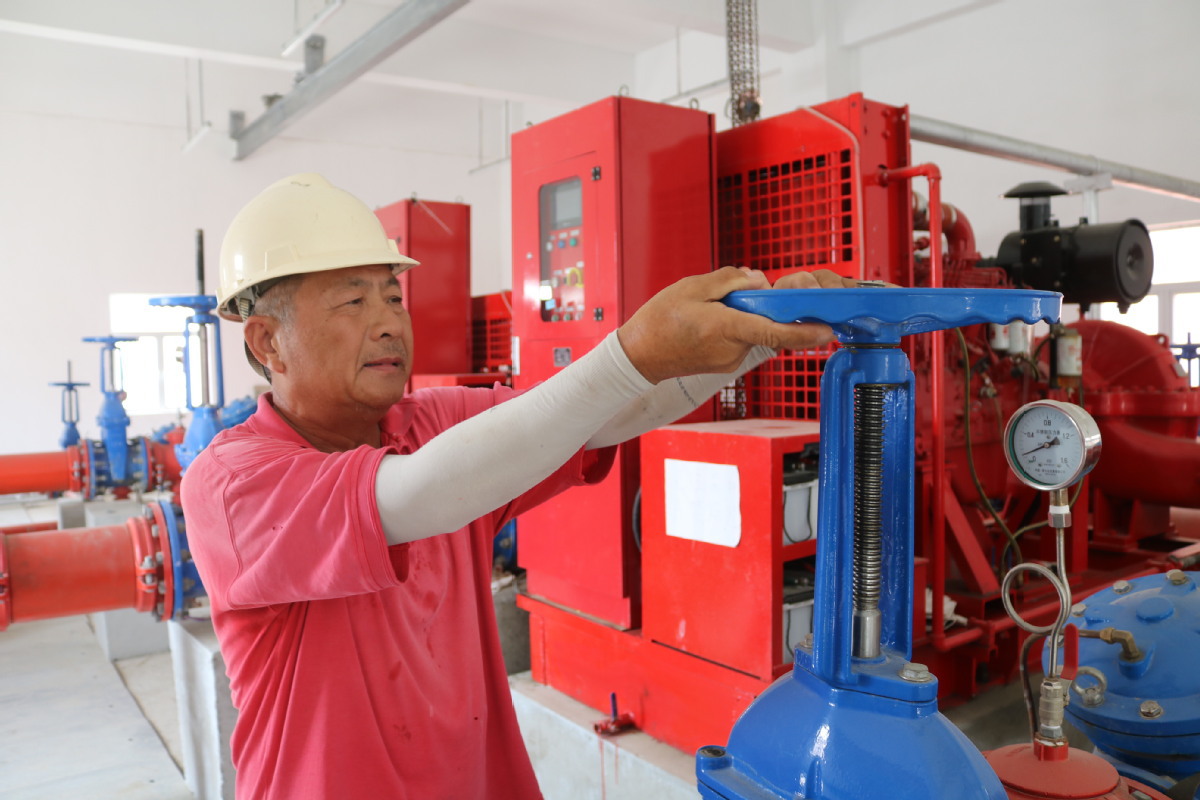
China Pakistan Economic Corridor (CPEC) is a flagship project of the Belt and Road Initiative (BRI). In the first phase, the focus was on power generation and infrastructure development. Most of the projects have been completed. A few are at the advance stage of completion and some are in the pipeline. The fruits of first stage are visible and the people of Pakistan have welcomed them.
However, the next phase - building Pakistan’s economy on sustainable basis - is more important. Both China and Pakistan are planning the next phase with mutual consultation where projects of high economic importance are under discussion. The objective is immediate, sustainable economic growth in Pakistan.
One of the highest priority areas is agriculture. China has a success story of its own with regards to the agriculture sector. During 1978-1984, within 6 years, China uplifted 500 million people from poverty through agricultural reforms. China faced a severe shortage of food in the 1960s, 1970s and 1980s. Due to a big gap in supply and demand, the Chinese government was forced to introduce quota system or food coupons. This exerted a pressure on the growers of agricultural commodities as incentives to grow more.
However, China introduced incentive-based reforms; encouraged the hard work of agricultural scientists to introduce new varieties and modern techniques that would produce higher yields; and increased the motivation of farmers by letting them keep the yield that was in excess of the set quota. In this way, China not only overcame the food shortage, but was able to export excessive produce, earning huge amounts of foreign exchange.
The rate of economic growth that originated due to agricultural advancement has in fact been 3.5 times more effective in reducing poverty in China. This figure is relatively unprecedented in the modern world and can be contributed largely to the household responsibility system.
Pakistan is an agricultural country; the economy is based mainly on agriculture, and boasts a 21 percent share of national GDP, whereas 60 percent of export earnings are from agriculture sector. This sector constitutes a major share of employed workers, where 44 percent of the workforce is engaged in the agricultural sector. Though Pakistan has made some achievementss:
Several of agricultural products are in the global top with regards to world production. This includes chickpea, the third-highest production in the world Cotton, milk, and mango occupy the fourth spot in global production while wheat and rice are at seventh and 11th spots, respectively. Even the dairy sector has managed to bag the 4th position in terms of production. Pakistan’s value-added crops include wheat, rice, cotton, and sugarcane accounts for 30 percent in the overall agriculture accompanied with 6.3 percent share of the GDP.
Agriculture in Pakistan is blessed due to an excellent climate; the range of temperatures across varying regions results in the presence of areas that have temperatures 50 degree Celsius below zero, as well as areas where the temperature can rise to 50 degrees Celsius above zero. The largest man-made water irrigation system is also present in Pakistan. Although it has been present since colonial times, the channels are still functional, although some upgradations are in order to keep the channels up and running at optimum capacity.
Pakistan’s is home to a wide range of topography, from high altitudes in the northern parts of the country with the second highest peak in the world, the K2, being situated in the northern highlands. The deserts in the south, plain plateaus in central part of Pakistan, and costal area of 1,200 km in the south.
A variety of climate and topography enables Pakistan to produce a diverse range of agricultural produce. Plenty of rain and good canal system vital for irrigation is the country’s strength. The people of Pakistan are hard-working and attuned to working in various climates, which lends additional strength to Pakistan’s agriculture sector.
Pakistan also has good educational programs that focus on agricultural advancements such as the development of crop varieties that are resistant to harsh weather condition (like drought), and varieties that focus on higher yields. Universities and research infrastructure are present in almost all parts of Pakistan, which enables the nation to produce requisite human resource and necessary back-up.
However, there is still a lot of untapped potential that can boost agriculture in Pakistan. Growth and development through the agriculture sector has been empirically proven to be at least twice as effective in reducing poverty as compared to GDP growth that occurs outside of the agricultural sector. By boosting productivity, and sustainability of small-holder farming, Pakistan can forge a path that has the potential to lead the country out of poverty.
In this regard, the help Pakistan is getting from Chinese companies through collaborations can result in improvements in the following priority areas:
High-quality seeds, new varieties, hybrid crops, biotechnology, mechanization, post-harvest technologies, preservation, food processing, packaging, cold storage, refrigerated transportation, etc.
Keeping this in mind, the government of Pakistan has introduced multiple incentive-based, attractive, and flexible policies. With cheaper labor cost and cheaper raw material cost, Chinese investors can avail this opportunity and engage in Pakistan’s agriculture sector for win-win cooperation.
Zamir Ahmed Awan, Sinologist (ex-diplomat), Non-Resident Fellow of CCG (Center for China and Globalization), National University of Sciences and Technology (NUST), Islamabad, Pakistan.