FOCAC: Prioritize agriculture along with infrastructure







Pundits are in agreement that infrastructure will continue to feature prominently in talks between China and Africa in the forthcoming seventh Forum on China-Africa Cooperation (FOCAC), scheduled to be hosted by President Xi Jinping in Beijing, China, early this week.
Indeed, the sector has proven to be a convergence point between the two partners. China has stood out as a partner who intimately understands the needs of the continent and deftly aligns its assistance along these priorities. Africa is working hard to shore up its infrastructure deficit. But with limited budgets and other competing priorities, the governments have favored China's willingness to not only offer financial but also technical assistance in putting up modern infrastructure. The partnership has been beneficial. Modern infrastructure is visible in Africa and already contributes significantly to the national economies. Clearly, the partnership trend in will continue with additional loans and investments expected during the 2018 FOCAC.
But while infrastructure continues to grab the spotlight, there is an urgent need to prioritize agriculture as well. Of course, modern infrastructure has a direct effect on the sector, especially in enabling farmers to access markets while subsequently lowering the cost of doing business. But agricultural productivity has been on a serious decline over the last decade, while it is growing considerably in developing regions including East Asia. This has entrenched poverty, especially among smallholder farmers, who are the major shareholders. Accelerating growth and overcoming bottlenecks is therefore crucial not only for achieving food security but also powering Africa's industrialization ambitions.
The need clearly informed discussions in previous FOCAC meetings. It’s noteworthy that, during the 2006 forum, the Agriculture Technology Demonstration Centers (ATDCs) were launched, partly to increase grain production, improve agricultural technology and enhance the food security of the recipient countries, while also spearheading research and capacity building.
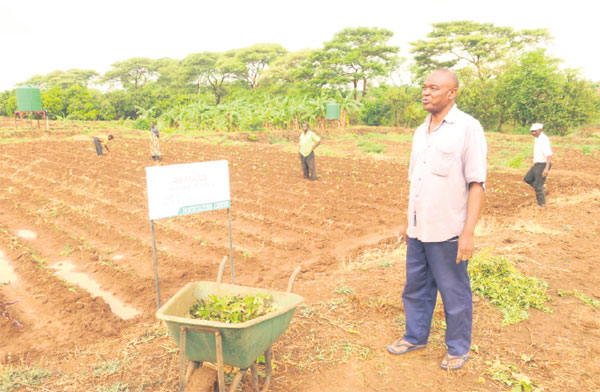
At least 23 centers have been rolled out across Africa to date, including in Malawi, Zambia, Liberia, South Africa, Mozambique and Ethiopia. They seek to be sustainable using the public-private partnership model, where they teach modern agricultural techniques and technologies to boost productivity while promoting commercial interests.
Sadly, the benefits accruing from these centers have yet to create a ripple effect in the national economies. In Malawi, for example, challenges include farmers’ inability to reach the center due to the transportation costs of $1. This may seem low, but the crippling poverty in Salima district in Central Malawi, about 98 kilometers from Lilongwe, the capital city, has handicapped their capacity.
Interestingly, during its initial years, when the government assisted 430 farmers who reached the center, the area recorded an abundance in yield that tripled the amount of the previous year. This was because of the simple, yet smart, suggestion from the Chinese experts to use organic fertilizer, as opposed to the expensive, hard-to-access inorganic fertilizer that had damaged the area’s soil fertility.
But the good news was closely followed by bad when the farmers faced difficulties in accessing markets for their crops. Over time, many farmers were forced to witness their harvest going to waste due to poor storage facilities, as the government sought regional markets including East Africa, which was undergoing food shortages due to prolonged drought.
Nevertheless, the commercial arm of the center is flourishing. The demonstration center gave farmers improved cotton seeds, in addition to other inputs, which resulted in yields being immediately bought and semi-finished products being exported – an example of win-win cooperation.
Therefore, it is imperative that the third FOCAC summit comes up with creative and achievable strategies that will stimulate the sector. President Xi has already committed to agriculture commercialization during the 2015 FOCAC summit. Plans therefore need to revolve around increased private participation where there will be an injection of finances, technology and professional expertise by Chinese firms. On one hand, farmers will gain from knowledge and market access for their produce. On the other hand, African governments will benefit from stronger food security and robust economies.
Farmers should enter into lucrative agreements with Chinese firms to achieve win-win partnerships, in addition to developing enabling policies to encourage more investments, such as mechanization that would boost productivity and mitigate climate change. Regional integration would also be imperative to widen markets.
Ultimately, the China-Africa partnership would shore up Africa's food security.
The importance of infrastructure in Africa cannot be overstated. But with the laying down of roads and railways, there is an urgency in building ecosystems around them. Talks are rife of these systems being special economic zones to attract foreign investors eyeing cheaper labor to make their products globally competitive. However, the niggling challenge of developing supply chains will bedevil these businesses and thus the need for discussions and more investments poured into agriculture.
The writer is a senior researcher in Smartcomm Communications, a think tank based in Kenya.
The opinions expressed here are those of the writer and do not represent the views of China Daily and China Daily website.