Public-private collaboration drives China’s industrial IoT innovation







The industrial internet of things is the key to China’s future economic growth. Rising labor costs, an aging population, hypercompetitive markets and widespread environmental challenges require industrial solutions that both stimulate economic growth and support the sustainable development of China’s economy and society. The Made in China 2025 strategy re-emphasized the critical role of manufacturing in China’s economy and the need to fully integrate informatization and industrialization.
It is widely believed that adoption of the industrial IoT will reshape the way the global economy operates. Integration of the physical world of manufacturing – factories, devices, vehicles – with information systems will result in new business models, improved productivity, product innovation and more efficient use of natural resources. In particular, China has prioritized applications that integrate cloud computing and IoT-generated big data across the entire industrial chain from R&D and design to manufacturing, logistics, management, sales and service. However, the awareness gap between technology providers and users has slowed widespread adoption. This gap exists due to the wide variety of technologies and industry standards that technology users must assess when planning an industrial IoT solution.
China is successfully driving industrial IoT adoption by combining the long-term vision of the public sector with the entrepreneurialism of the private sector in public-private collaborations. China's national leadership is among the most proactive in the world at planning for industrial IoT technology innovation. Moreover, the private sector has wholeheartedly adopted digital technologies. Chinese companies such as Alibaba and Baidu are global leaders in developing cloud-based applications for data analytics. And the Chinese people have proven to be extremely open to adopting digital technologies and the new ways of working that they enable. The European Chamber of Commerce in Beijing together with Roland Berger argue in their Business Confidence Survey 2018 that China’s innovation competitiveness is rapidly increasing and has eclipsed that of European firms in the areas of go-to-market and business model innovation. China’s distinct approach of state planning in combination with entrepreneurialism is driving industrial IoT innovation.
The Industrial Internet Consortium (IIC) has recognized the importance of Chinese innovation and is holding its membership meeting in China for the first time in November 2018 in partnership with the China Academy of Information and Communications Technology (CAICT) and through support by Huawei. The IIC has over 250 international member organizations and companies and was formed to accelerate the development and adoption of IoT systems that integrate operational technology with information technology. One of the IIC’s key approaches is to use test beds to experiment with and demonstrate the implementation of real-world industrial IoT solutions.
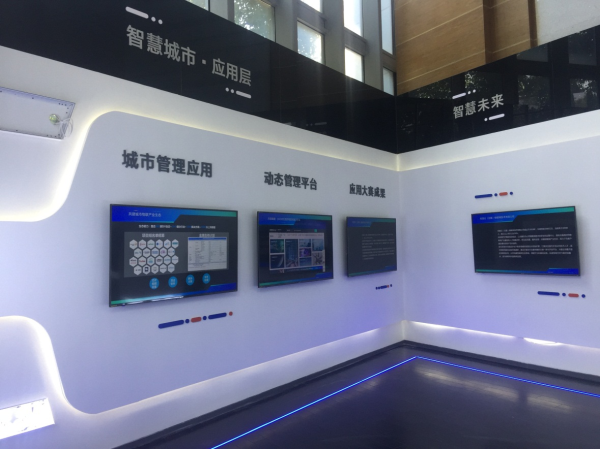
The IIC is already working with Chinese companies and local governments to develop innovation test beds in China. For instance, in the city of Qinzhou, Guangxi province, the Water and Process Group, Thingswise and Chinese Academy of Information and Communication Technologies (CAICT) work together with the Qinzhou City Water Management Authority to build an intelligent urban water supply management cloud service. Key benefits include increasing water safety and quality, reducing disruptions to the water supply and improving the cost efficiency of water utility management. The test bed includes innovations in system architecture, analytics technologies and the utility management business model.
Another example is the manufacturing quality management (MQM) test bed. Huawei Technologies, Haier Group, China Academy of Information and Communications Technology (CAICT) and China Telecom are collaborating to improve product quality standards and reduce defect rates. While China continues to build new factories, it is crucial to retrofit existing factories with aging and unconnected equipment. The MQM solution uses wireless sensor networks to provide data in an analytics engine that measures the quality of welding and flags potential issues with a high degree of accuracy. The newly generated data also allows Haier to test and improve production processes. Haier’s target is to increase productivity by 15 percent while lowering operating costs by 27 percent compared with the status quo according to the IIC.
China’s decades of economic reform and growth have always been characterized by a practical central government that provided leeway for local governments to experiment with new economic approaches. Based on a solid foundation of digital technology, manufacturing supply chains and an entrepreneurial private sector, the government engages in strong public-private collaboration to drive industrial IoT innovation in China. The test beds and deep involvement of the IIC show the success of China's model of public-private collaboration to drive innovation in new technology domains.
Mark Greeven, professor of innovation and strategy and research fellow at the Center for China and Globalization; Erik Walenza-Slabe, founder of IoT ONE, the world’s largest public database of industrial IoT solutions.
The opinions expressed here are those of the writer and do not represent the views of China Daily and China Daily website.