Deepening economic integration and cooperation in Asia-Pacific







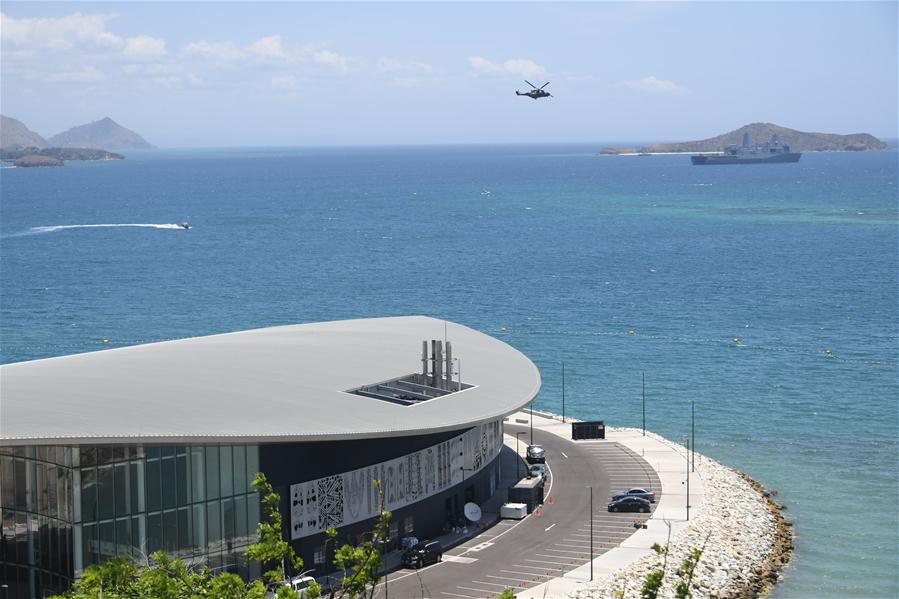
With the threat of protectionism increasing from some quarters, what the world needs to deepen economic integration and cooperation in the Asia-Pacific is action in these areas:
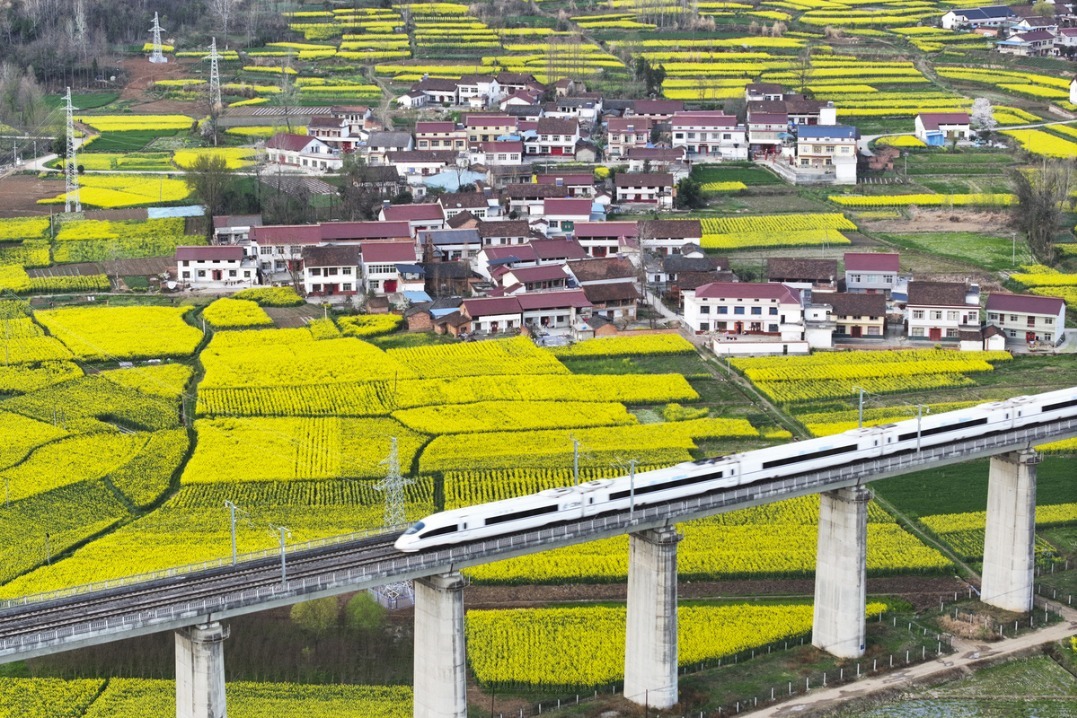
First, countries need to improve their physical infrastructure, such as roads, railways, ports, airports, to make movement of goods and people easier, cheaper and faster. For this, major investment and financing is needed and China’s Belt and Road Initiative can offer an alternative to solve this problem. China itself is an example of how having good connectivity in physical infrastructure has helped the country to achieve higher rates of economic growth and lifted hundreds of millions of people out of poverty.
Second, small and medium companies should be supported by governments through the promotion of e-commerce that allows them to conduct business in an inexpensive way and reach more buyers easily. In this sense China offers a good example and can help other countries to develop their own e-commerce platforms, by the action of its big companies like Alibaba, JD.com, and Jumore, to name some of them. The creation of a digital economy needs an adequate infrastructure of communications so everybody could enjoy its benefits, individuals and companies alike.
Third, support for multilateral organizations like the World Trade Organization is needed instead of countries embracing unilateralism. Bigger countries should not impose their will on small ones, so multilateral organizations like the WTO should be strengthened. The world trade should be governed by common rules respected by all, and the fortification of the WTO should imply adapting it to the new reality of world trade where, for example, services are increasing its importance related to goods, and also e-commerce is replacing the old ways of doing trade.
Fourth, organizations like APEC should continue promoting the creation of a free area of trade and investment but also economic cooperation. Bigger economies should help smaller ones to reap the benefits of globalization that is allowing many countries, like China and Vietnam, to achieve that. These two countries took advantage of foreign investment not only to produce goods using their abundant labor force and sell them in the external markets, but have also advanced the upgrading of their industries to produce higher valued goods.
Fifth, the promotion of cooperation agreements in innovation of science and technology is essential of countries in the region to advance from producing low value added goods to high value added goods. In this way also a deep economic integration can be achieved by way of the formation of global value chains, where different countries can produce different parts of a good. In this regard the East Asia offers a good example and its model should be extended to the rest of the Asia-Pacific.
Sixth, regional agreements like the Regional Comprehensive Economic Partnership should advance in the conclusion of an agreement among its members, and together with the TPP11 work toward the completion of a free trade area of the Asia-Pacific. In fact, this is the final objective of APEC. The TPP11 will enter into effect on December 30, as more than half of its members, 7 in total, have already ratified it. In the case of the RCEP an agreement was not reached on its last meeting and it is hoped is that this could be achieved next year. Here China and India, as two of the big economies, have a special responsibility in helping to achieve that.
Carlos Aquino is director of the Asia Study Center (CEAS) of San Marcos National University.