Takaichi hollowing out pacifist constitution







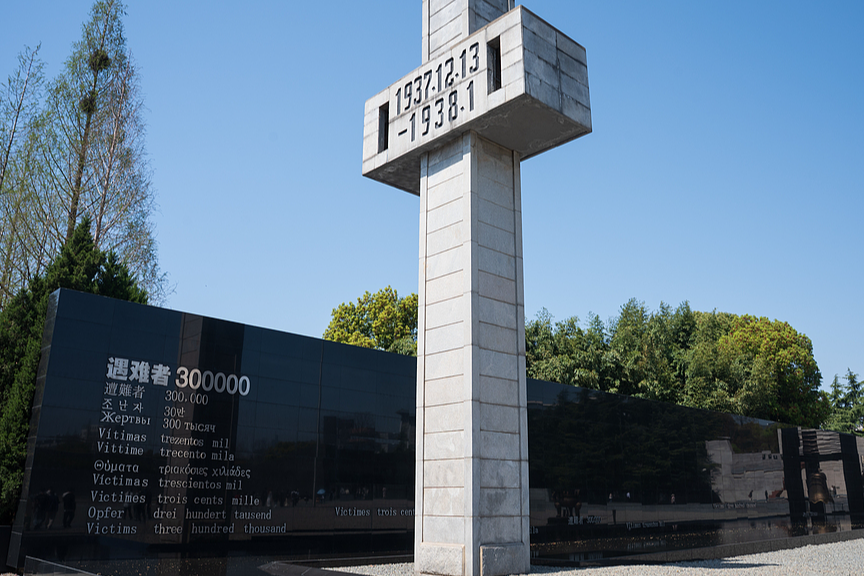
On the 12th national memorial day for the victims of the Nanjing Massacre on Saturday, the Chinese people mourn the 300,000 lives lost to the slaughter committed by Japanese invaders in Nanjing 88 years ago, during the World Anti-Fascist War. This day not only commemorates the victims and underscores China's commitment to safeguarding peace, it also serves as a stark reminder to the world that the resurgence of militarism must never be allowed.
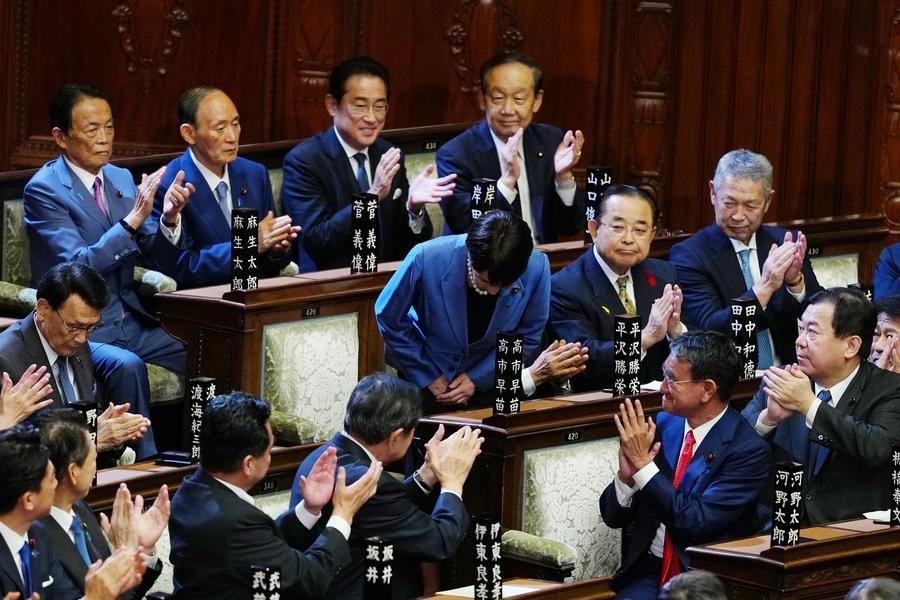
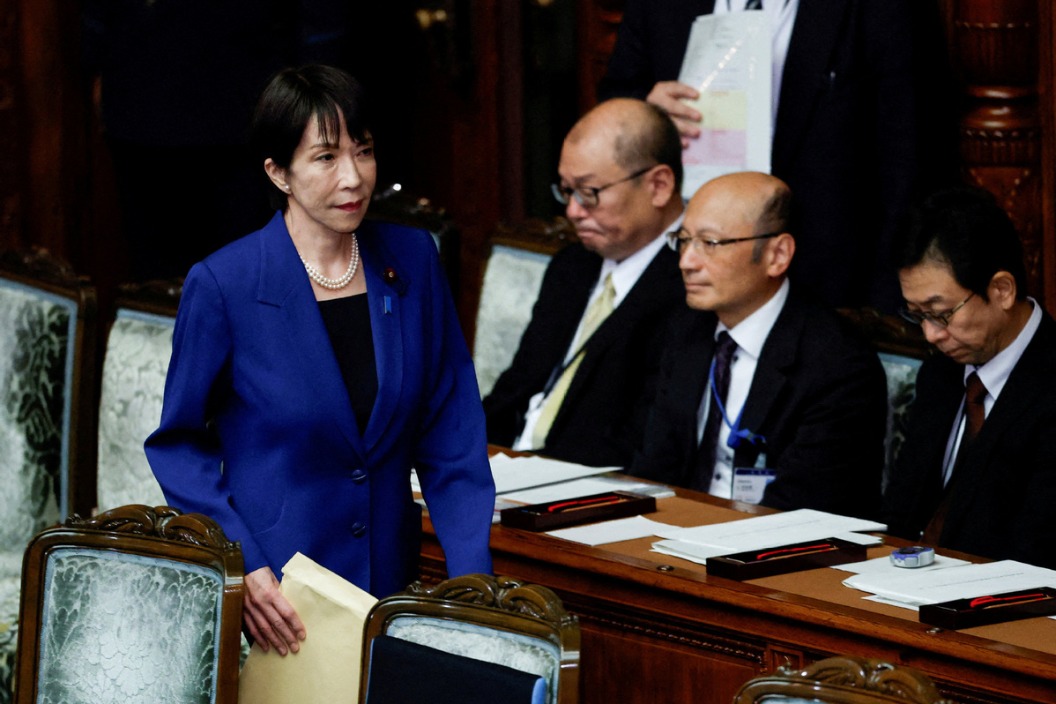
Recently, Japanese Prime Minister Sanae Takaichi has crossed the red line of China by linking a "contingency" involving China's Taiwan island to a "survival-threatening situation" for Japan and implying potential military intervention in the Taiwan Strait. In doing so, she is becoming the first postwar Japanese prime minister to issue a clear threat of force to China.
Such statements violate the one-China principle and blatantly venture into China's core interests. Despite solemn representations and protests by China and widespread condemnation at home and abroad, Takaichi has not retracted her egregious remarks. Instead, she asserted that Japan had renounced all rights under the so-called "Treaty of San Francisco" and therefore was not in a position to recognize Taiwan's legal status.
A dyed-in-the-wool ultraright politician, her words and actions are rooted in her deep-seated historical perception intertwined with Japan's geopolitical anxieties and "strategic overreach".
Denying and distorting history has long been a tactic of Japanese right-wing forces. Although Japan's militarist system was dismantled after World War II, the remnants of that ideology were never fully removed. With the tacit support of the United States, many war criminals got influential positions in postwar Japan, escaping responsibility for their war crimes while whitewashing the country's history of aggression.
As a representative of Japan's right-wing forces, Takaichi has openly glorified Japan's aggressive past, visited the infamous Yasukuni Shrine and portrayed the aggression following the Sept 18 Incident as "self defense". Her remarks on Taiwan reveal this distorted perspective of history.
Tokyo's strategic anxiety about China's development and rise has worsened the political climate. For much of modern history, Japan viewed China as a large but weak neighbor that could be invaded and plundered. However, the international landscape is different now. China has achieved remarkable progress, while Japan has faced economic stagnation and decline in its national strength. By late 2024, China's GDP was approximately five times that of Japan. Confronted with the loss of competitive advantages, an aging population and a widening gap in national strength, Japan's anxiety over strategic imbalances has intensified, leading to a shift toward right-wing politics. In recent years, Japan has repeatedly provoked China over its core interests, including the Taiwan Strait and the Diaoyu Islands. Japan's National Security Strategy describes China as an "unprecedented and greatest strategic challenge".
Japan has committed "strategic overreach" in its bid to become a major military and political power. Article 9 of Japan's pacifist constitution renounces the use or threat of force, prohibits the maintenance of armed forces, and stipulates that the state's right of belligerency will not be recognized. However, the prolonged conservative regime in Japan has consistently sought to break free from these constraints of its constitution and postwar framework to establish itself as a major military and political power.
Amid intensified strategic competition among major countries, Washington has relaxed the restrictions on Tokyo, effectively using Japan as a pawn to maintain regional hegemony. Seizing this opportunity, Japan has cited external "threats" to expand its arsenal, revise its constitution and "normalize" its Self-Defense Forces.
Takaichi's erroneous remarks disregard the outcomes of the victory in World War II and the postwar international order. She has highlighted the illegal "Treaty of San Francisco" while disregarding documents such as the Cairo Declaration, the Potsdam Proclamation and the Japanese Instrument of Surrender. These documents explicitly state that Taiwan's return to China is an outcome of the victory in the World Anti-Fascist War. Besides, the United Nations Charter and the basic norms governing international relations also prohibit the use or threat of force and interference in the internal affairs of other countries.
In the 1972 China-Japan Joint Statement, China reiterates that Taiwan is an inalienable part of China.
Japan on its part stated that it fully understands and respects this fact and firmly maintains its stand under Article 8 of the Potsdam Proclamation, which affirms Taiwan's restoration to China as stipulated in the Cairo Declaration.
Since then, successive Japanese governments have upheld this position. But Takaichi's erroneous remarks and her attempts to breach the legal foundation established by the four China-Japan political documents have eroded political mutual trust and severely undermined the basis of bilateral relations.
History offers stark reminders of how Japanese militarists used so-called external "threats" as an excuse to justify expansion, as seen in their staging the Sept 18 Incident and the attack on Pearl Harbor. Today, linking a Taiwan "contingency" to Japan's "survival-threatening situation" follows the same dangerous logic to justify the country's military buildup.
In recent years, Japan has adjusted its security policies significantly. Its defense budget has increased for 13 consecutive years. The country has developed offensive capabilities under the guise of "counterstrike capabilities", revised its "three principles on arms exports" to sell lethal weapons abroad and intends to amend its "Three Non-Nuclear Principles" to pave the way for nuclear weapons. These actions clearly exceed Japan's exclusively defense-oriented policy.
Represented by Takaichi, Japan's right-wing forces are hollowing out the country's constitution to advance military expansion, emerging as a new source of tensions in regional security and posing a systematic challenge to regional peace and stability.
The Taiwan question lies at the core of China's interests, and brooks no external interference. Should Japanese right-wing forces persist with their reckless and provocative actions on this matter, they will face firm and strong countermeasures.
The author is an associate professor at the National Defense University of the People's Liberation Army.
The views don't necessarily represent those of China Daily.
If you have a specific expertise, or would like to share your thought about our stories, then send us your writings at opinion@chinadaily.com.cn, and comment@chinadaily.com.cn.