New technologies and frontiers: Sustainable floating cities for China's coastlines and BRI








Maimunah Mohd Sharif, UN Under Secretary-General and Executive Director of UN-Habitat said for the first time in history, they are bringing leading visionaries, innovators, explorers, scientists and business leaders to share cutting-edge ideas on the potential of future cities to redefine the way we build, live, and work.
Top architect Bjarke Ingels, who together with Collins Chen designed the city for 10, 000 residents said, "OCEANIX CITY is a blueprint for a modular maritime metropolis anchored in the Sustainable Development Goals".
Currently there is a technology race to build the first green floating city for people to live sustainably on the ocean. Singapore is cooperating with Norway on ambitious floating projects. In Europe, Norway is putting the weight of its state-owned enterprise Equinor (formerly Statoil) into exploring this new space and building strategic alliances. Norway is conducting workshops on floating cities.
The Netherlands, in cooperation with the United Nations, recently announced the creation of the Global Center on Adaptation to be housed in floating offices in Rotterdam. This center will be led by several luminaries, including former UN Secretary-General Ban Ki-Moon, business leader Bill Gates and CEO of the World Bank Kristalina Georgieva.
Collins Chen, one of the pioneers and leading experts in sustainable green floating cities, established his own company OCEANIX Ltd, based in Hong Kong. He hopes to leverage the technology edge offered by being in the Greater Bay area and expecting to build the first prototype for a floating city in China. He said his decision to establish OCEANIX in Hong Kong was very much inspired by policies from China for comprehensive "smart, green and blue" infrastructure integration.
China's Belt and Road policy seeks to integrate smart, ecological infrastructure among developing countries to facilitate trade, investment and communications while achieving the United Nations Sustainable Development Goals of reducing poverty and protecting the environment. China's policy of the "ecological civilization" prioritizes environmental protection through technology application to enhance green energy and the development of ecological cities. Protection of the oceans and water systems is a priority of the "ecological civilization".
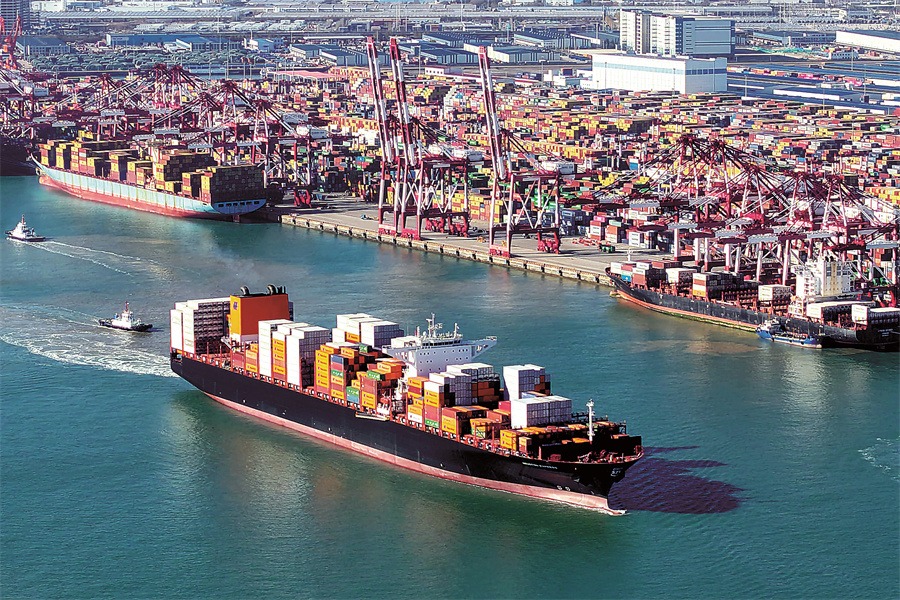
The Belt and Road follows the historical Silk Road and includes the historical Maritime Silk Road. This covers a vast oceanography involving many sea-lanes for transport and many island areas. Some island archipelagos and many coastlines are threatened by rising ocean levels. To prevent a migration crisis, it will be necessary to support increasing populations on the island states and coastlines that will be lost to rising seas. This will require new, technologically smart and environmentally sound infrastructure. The floating city concept hopes to address this need.
"China is in the perfect position to take leadership in this burgeoning industry of sustainable floating cities and lead humanity into an era of abundance," Collins Chen explained. "Exponential technology in the fields of 3D printing, modular construction, generative design, nanotechnology, renewable energy, artificial intelligence and materials science would revolutionize how China builds on the ocean."