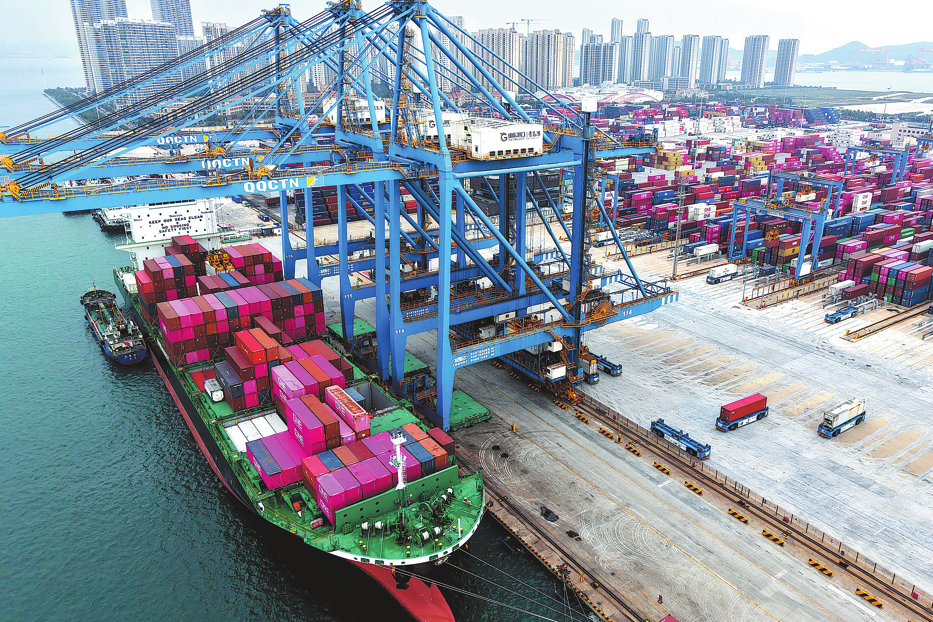
China's openness and the future of global governance







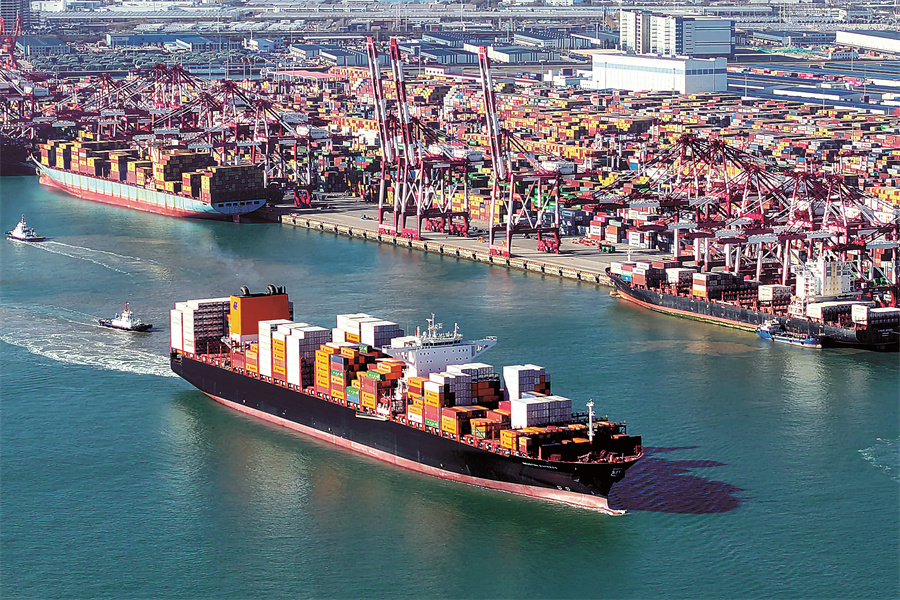
At a time when parts of the world are retreating into protectionism and sharpening bloc-based rivalries, China is charting a different course, one defined by wider opening, deeper integration, and more proactive participation in global governance. This is more than an economic stance; it is a strategic signal about the kind of international order China envisions.
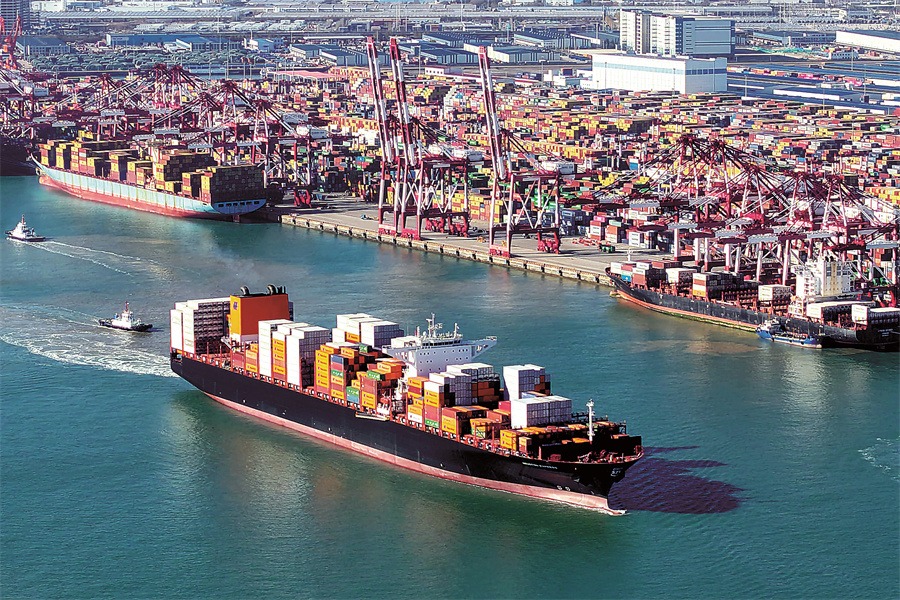
China's vast market is not being kept behind barriers; it is being offered as a global public good. This approach sharply contrasts with the emerging sentiment in some Western capitals, where economic ties are increasingly treated as strategic weapons rather than bridges to shared prosperity. China's recent move to grant zero-tariff treatment to least-developed countries further underscore this commitment, demonstrating how Beijing is using market access not as leverage but as a tool to support equitable global growth.
Volatility in the global economy is no longer driven solely by market forces; it is now amplified by geopolitical maneuvers. Tariff battles, technology blockades, sweeping sanctions, and deliberate supply-chain disruptions often defended as "security" imperatives have become routine tools of statecraft. The United States and several of its allies have been at the forefront of these actions, creating levels of uncertainty and fragmentation unseen in decades.
Yet amid this turbulence, China has remained a stabilizing force. Its economic fundamentals — scale, resilience, and a capacity for rapid adaptation — continue to support global demand and buffer against systemic shocks. While some external observers forecast stagnation, the reality is more nuanced: domestic consumption is expanding, industrial upgrading is accelerating, and the Chinese economy retains the structural strength necessary to sustain global growth. This steadiness is not incidental; it is strategic.
Just as significant is China's readiness to disseminate knowledge and technology from green development solutions to open-source AI as global public goods. This stands in stark contrast to the stance of many Western economies, where comparable innovations are frequently locked behind paywalls, patents, and commercial licensing regimes.
As the West debates "de-risking" from China, Beijing is doubling down on modernizing its industrial system, making it more intelligent, green, and digital, while simultaneously inviting international partners to participate in a more efficient, interconnected global supply-chain architecture.
China's premise is clear: technological progress and industrial upgrading do not have to culminate in geopolitical confrontation. Competition and cooperation are not mutually exclusive, unless countries choose to weaponize supply chains. Development should not be the privilege of a few wealthy countries, but a right accessible to all, anchored in the vision of a shared future for humanity.
China's approach to deepening industrial cooperation with a broad circle of states offers an alternative logic: the world's most pressing challenges, from the energy transition to digital infrastructure gaps, cannot be solved through exclusive clubs or politicized trade barriers.
For China, support for the United Nations system and multilateral institutions is not an exercise in abstract diplomacy. It is a direct response to the rising tide of unilateralism that threatens to paralyze global governance. China's proposed Global Governance Initiative offers clear evidence of this commitment, underscoring its effort to strengthen multilateral cooperation and promote a more inclusive international order.
The rise of multilateral alliances and security-driven economic groupings signals a broader move away from inclusive rulemaking toward narrower, interest-led coordination. For many developing countries, this trend is unsettling, shrinking their policy space and widening existing imbalances in the global system.
China's advocacy for its global initiatives and its consistent call for genuine multilateralism serve as a counterweight to this fragmentation. It argues that global governance should neither be reshaped by coalitions of convenience nor dominated by a single geopolitical center. Instead, it must reflect an increasingly polycentric world one that is equitable, orderly, and truly multipolar.
While Western powers increasingly approach the developing world through the lens of strategic competition, Beijing has been deepening partnerships there for decades. Crucially, many in the Global South view China's engagement not as a bid for unilateral gain, but as a vision aimed at shared development rather than zero-sum competition.
Infrastructure financing, manufacturing cooperation, digital economy partnerships, and renewable energy deployment are not merely slogans they are structural investments that reshape development trajectories. Together, they reinforce a fundamental point: China views the Global South not as a battleground for great-power rivalry, but as the backbone of a more balanced and inclusive global economy.
China's continued opening-up is not a passive exercise in market liberalization. It is a strategic effort to reinforce global economic cooperation at a moment when political forces elsewhere are moving in the opposite direction.
Through stronger domestic demand, greener and smarter development, and broader industrial cooperation, China is emerging as both an economic center and a stabilizing presence. The core point is simple: the world can have both integration and security, both prosperity and sovereignty, if major powers stop using economic ties as leverage.
The question now is whether other nations will respond to China's commitment to openness with openness of their own or continue sliding into zero-sum thinking. In a century defined by deep interdependence, their choice will shape not just the global economy, but the very structure of geopolitics.
Maya Majueran is the Founding Director of the Belt and Road Initiative Sri Lanka, a pioneering organization dedicated to research, dialogue, and engagement on China's Belt and Road Initiative.
The views don't necessarily reflect those of China Daily.
If you have a specific expertise, or would like to share your thought about our stories, then send us your writings at opinion@chinadaily.com.cn, and comment@chinadaily.com.cn.