Patriotic education still a necessity







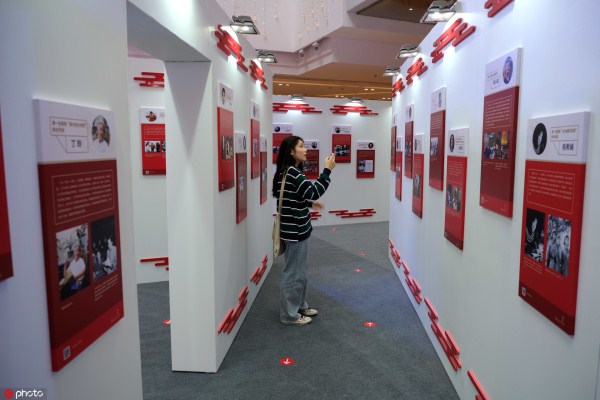
Patriot refers to one who loves, supports and defends one's country. Patriots contribute their strength, talents and ideas to the betterment of their country. And patriotism refers to one's love and devotion to one's country and the concern for its defense. Patriotism is the spiritual power mainly demonstrated in individuals' respect for and faith in the country-and personal sacrifice, even of their lives, for the good of the country, say, in times of war.
In the new era of socialism with Chinese characteristics, patriotism remains the core of the national spirit and a necessity for youth's education.
Cultivating the sense of patriotism among youths has always been part of Chinese tradition and ethics. As President Xi Jinping said on the 100th anniversary of the May Fourth Movement four months ago, patriotism runs in the blood of the Chinese people. It cannot be removed, broken or eliminated. It is a strong spiritual driving force for the Chinese people and the Chinese nation to safeguard the independence and dignity of the people. "As long as the banner of patriotism is being held high, the Chinese people can unleash great powers in the endeavors to transform China and the world."
From Su Wu, a diplomat during the Western Han dynasty (206 BC-AD 24), who tended sheep in remote areas for 19 years, to Wen Tianxiang, a statesman during the Southern Song Dynasty (1127-1279) who sacrificed his life for the country, to Lin Zexu, a scholar-official during the Qing Dynasty (1644-1911), who was opposed to the import and sale of opium, many Chinese have demonstrated patriotism in their own way.
Ancient Chinese laid much emphasis on educating youths in patriotism. And patriotism remains as important as ever. Indeed, patriotism is a sense of national responsibility-not frenzied outbursts of emotions, but the tranquil but strong dedication of a lifetime to the country.
Patriotism still has enormous value; it remains a powerful spiritual driving force in the construction of socialism with Chinese characteristics in the new era. First, it could unite the Chinese people at a time when the country faces many difficulties. Only the power of patriotism can help lift the spirit of the Chinese people, consolidate national unity and tap into the huge potential of the country as a whole.
Second, patriotism can help overcome and correct many mistakes. Given the multiple ideological trends and political tendencies seen in the country, especially the dangerous moves of some "secessionist" forces in Hong Kong and Taiwan, patriotism has to be upheld in order to unite the people and isolate the insurrectionists. Compatriots in the Hong Kong and Macao special administrative regions and Taiwan, and overseas Chinese, too, should hold high the banner of patriotism to confront secessionism. Patriotism acts as spiritual nourishment and a source of energy for Chinese youth.
Thanks to the internet, young Chinese could easily be influenced by false and misleading information. To such youngsters, patriotism can provide beneficial guidance and spiritual strength. And since patriotism is above personal gains, it could enrich Chinese youths' mental and spiritual development.
Besides, patriotism could provide a standard of values for young people surrounded by conflicting thoughts and interests, and help them to tell right from the wrong.
Thus patriotic education is a necessity even today, but its implementation is a massive and complex project that requires the involvement of various platforms and entities in various forms, such as videos and books. As such, China should stay on high alert against the US playing the "democracy" and "freedom" cards on Taiwan and Hong Kong issues.
Patriotic education should cover people of all age groups. Only extensive patriotic education can make the Chinese people believe in the spiritual strength of patriotism, which is necessary to realize the great rejuvenation of the Chinese nation.
The author is a professor at the Department of Literature and History, Party School of the CPC Central Committee. The views don't necessarily represent those of China Daily.