Work of epidemiologists reduces spread of disease







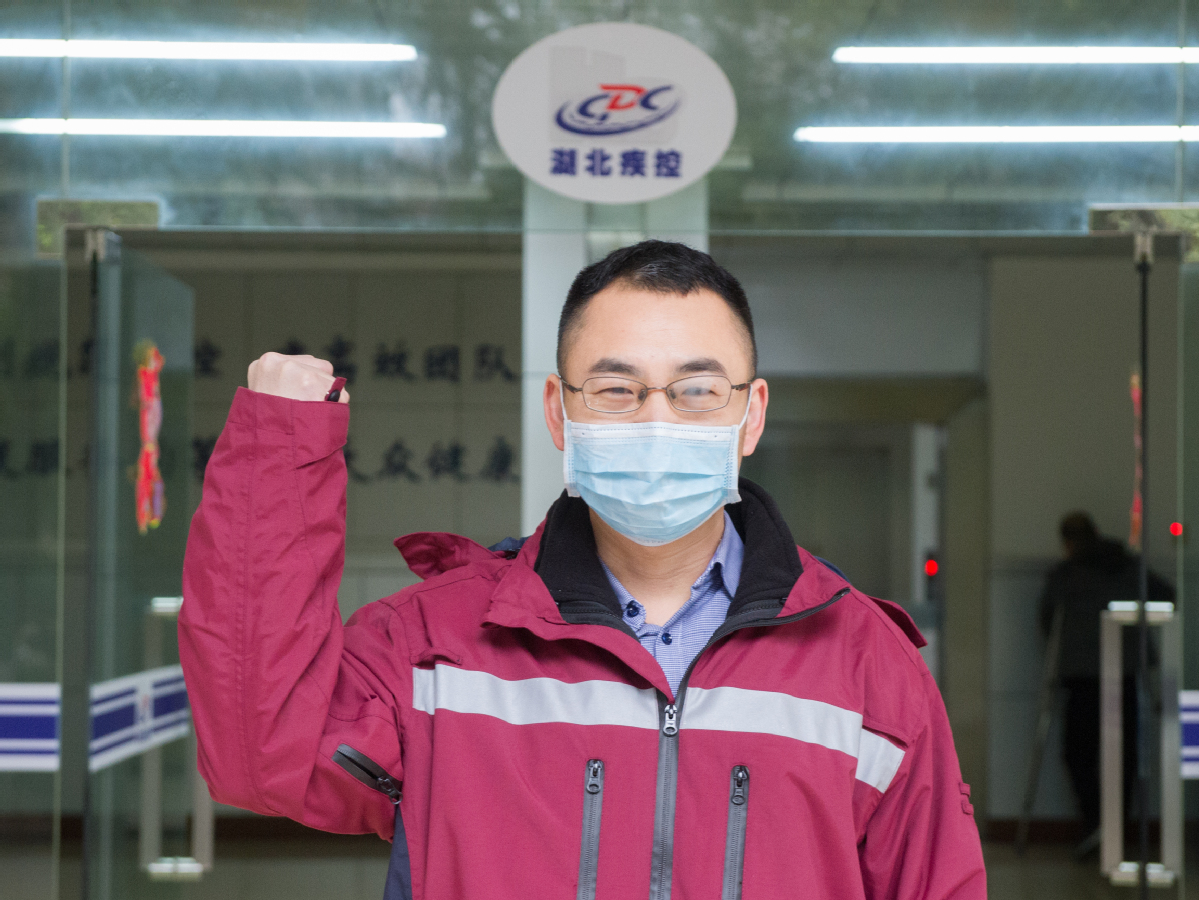
When the novel coronavirus began to spread in mid-January, Wang Siquan entered an isolation ward for patients wearing a thick protective gown, mask, shoe covers and gloves to investigate the possible source of infection and the close contacts of the patient.
The subject was a native of Wuhan, Hubei province, who was about 50 years old and became sick after a trip to the Guangxi Zhuang autonomous region. He had been sent to Wuhan Jinyintan Hospital, a hospital specializing in infectious diseases.
After talking for about half an hour, Wang, an epidemiologist at the Hubei Provincial Center for Disease Control and Prevention, found more than a dozen people had close contact with the patient before he was sent to the hospital-including several passengers sitting near him on the train.
Having written down all the information on a paper questionnaire, Wang showed it to his colleague outside the isolation ward, who took a photo of it through the glass. Then Wang destroyed the paper before leaving the ward to prevent spreading the virus.
"My colleagues immediately set out to find the close contacts and put them in isolation for medical observation to prevent further spread of the disease," Wang said.
"Unlike doctors in hospitals who try to cure patients during an epidemic, we try to ease the increase of patients to bring the epidemic under control by means such as isolating potential sources of infection and cutting virus transmission," he said.
After the outbreak of COVID-19 started to pick up in Wuhan, Wang and his colleagues kept busy tracing every patient within hours of getting a report and locating their close contacts as quickly as possible.
"Sometimes I would get a call at midnight and rush to a hospital to investigate a new patient," he said.
However, with the rapid rise in the number of patients in late January, Wang and his colleagues at the Hubei CDC were unable to cope with all the cases, and many other public health doctors, including those sent from across China to help combat the epidemic, took part in epidemiology work.
Although Wang had been engaged with similar tasks involving other infectious diseases before the COVID-19 outbreak, fighting on the front line of the highly infectious disease has been more challenging and risky, he said.
"In the beginning, we had little knowledge of the disease, including how infectious it may be and how it spreads, but as usual we always carry out high-grade self-protection measures when facing a new virus," Wang said. "Many patients we visited were very ill and had difficulty talking, so sometimes we had to put our ear right on their mouths to hear what they said."
Lu Xingxing, Wang's colleague and another epidemiologist, said effectively communicating with patients is crucial in her work.
"Some patients do not have any knowledge of the epidemiological investigations and are unwilling to talk to us," she said. "So we have to be very patient when talking to them and keep comforting them if needed."
"Because we have to go into details, sometimes patients may feel bothered or like their privacy is being intruded on," Lu said. "We hope the public can be more understanding and support our work, as it is really important for disease control and prevention."
Although Wang and Lu do not rescue patients directly, they are proud of their efforts to help contain the COVID-19 outbreak in Wuhan.
"CDC doctors, including epidemiologists, are like heroes behind the curtain," he said. "If we only rely on hospitals to save individual patients but ignore wider disease prevention and control measures, the number of patients will only keep increasing."


- Guangdong urged to drive high-quality development
- Shanghai hosts 6th intl 3E talent fair
- Xi's special envoy attends inauguration of Bolivian president
- Countdown to 15th National Games: On-site warm-up entertains audience
- Eight missing after cargo ship collides with fishing vessel near Shandong
- Investing in people: a worthwhile investment