Space station module to be lofted in first half of 2021







China will launch the core module of the country's first space station in the first half of 2021, Zhou Jianping, chief designer of China's manned space project, said on Friday.
The space station is expected to be completed around 2022. All testing of its core module has been completed, and the Long March 5B rocket, a heavy-lift launch vehicle that made its maiden flight in May, is also in its final stages of testing, he said.
After the core module enters into orbit, China will launch the cargo spacecraft Tianzhou 2 and manned spacecraft Shenzhou XII. The astronaut crew will remain in space for several months before the launch of Tianzhou 3 and Shenzhou XIII, which will send the second crew into space, Zhou added.
"During this period, we will carry out comprehensive verification of the new technologies of the space station, including astronaut spacewalks, robotic arms and energy technologies," he said.
When all the verification work is finished, the researchers will be able to begin construction work on key technological components, during which two more cargo spacecraft and two more manned ones will be sent into space.
"All this work will last for about two years, so the entire Chinese space station is expected to be completed around 2022. After that, it will enter operation and we will be able to use it to engage in space science research," he said, adding that a lot of very important scientific results can be expected.
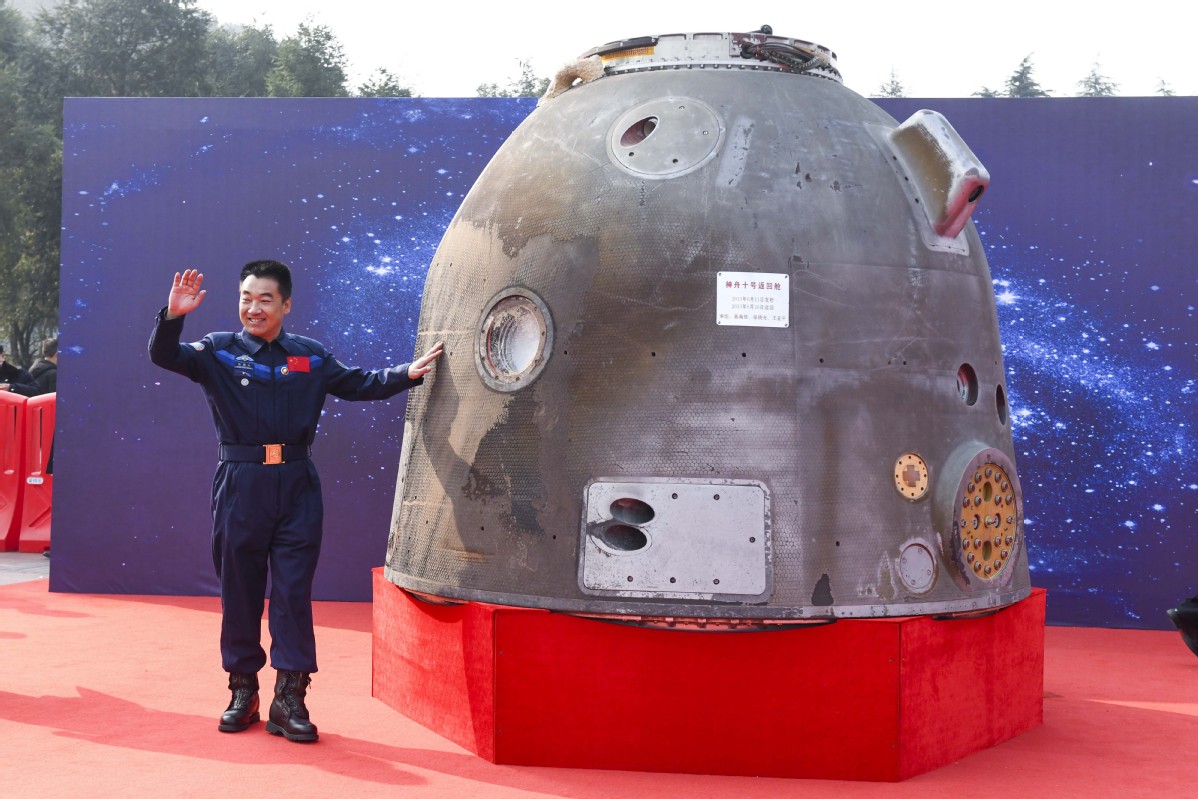
Zhou unveiled details of the space station during a ceremony in which the reentry capsule of China's manned spacecraft Shenzhou X was given to the Hunan provincial government. It will be permanently exhibited at the Mao Zedong Memorial Museum in Shaoshan, Chairman Mao's birthplace.
Zhou said exhibition of the Shenzhou X reentry capsule is meant to honor the forerunners of China's aerospace industry and integrate the spirit of space exploration into the revolutionary culture of Chairman Mao's hometown.
The handover also came after the China National Space Administration said it would send some of the lunar samples collected by Chang'e 5 to Shaoshan to commemorate Chairman Mao.
Zhou, also an academician of the Chinese Academy of Engineering, said he was very happy to see the Shenzhou X reentry capsule displayed at the museum.
Shaoshan is the birthplace of "red culture", which embodies revolutionary spirit, and the Chinese space program is also an important successor, product and contemporary representative of this culture, he said.
Placing the reentry capsule in Shaoshan also symbolizes Chinese people's courage, determination and ability to develop the space industry, explore space and the unknown and contribute to the development of human civilization, he said.
As part of a popular attraction visited by more than 20 million tourists a year, the capsule exhibition also is a good way to spread space culture, popularize space knowledge and promote the integration of space and society, he added.
He said 2020 also marked 50 years since Mao approved China's first crewed spacecraft, Shuguang I, meaning "dawn" in Chinese, laying an important foundation for the development of the country's manned space program.
Since Shuguang I, China has advanced greatly in space exploration, as shown in the Shenzhou series of successful crewed spaceflight missions, the Chang'e lunar exploration program and Tianwen 1, an interplanetary mission to Mars.
Shenzhou X was launched on June 11, 2013, carrying three astronauts, Nie Haisheng, Zhang Xiaoguang and Wang Yaping. It returned to Earth on June 26 in the Inner Mongolia autonomous region.
During the 15-day orbital flight, it successfully completed automatic docking with the Tiangong I space laboratory, and on June 20, the astronauts also gave a live space lecture on Tiangong I to more than 60 million primary and secondary schoolchildren across the country.
The reentry capsule of the spacecraft is about 2.6 meters high, 2.4 meters in diameter and weighs more than 2 metric tons. It has previously been on public display at a number of important exhibitions.
At the ceremony, Zhang Xiaoguang unveiled the capsule to the audience. He said it was an unforgettable moment in his life that reminded him of his stay in space.
"Displaying the reentry capsule of Shenzhou X demonstrates that it was the growing, comprehensive power of our nation that created the Chinese space industry of today. In fact, every successful space mission is a tribute to Chairman Mao and the old revolutionaries," he said.





- Guangdong urged to drive high-quality development
- Shanghai hosts 6th intl 3E talent fair
- Xi's special envoy attends inauguration of Bolivian president
- Countdown to 15th National Games: On-site warm-up entertains audience
- Eight missing after cargo ship collides with fishing vessel near Shandong
- Investing in people: a worthwhile investment