'Barefoot doctors' safeguard health of villagers







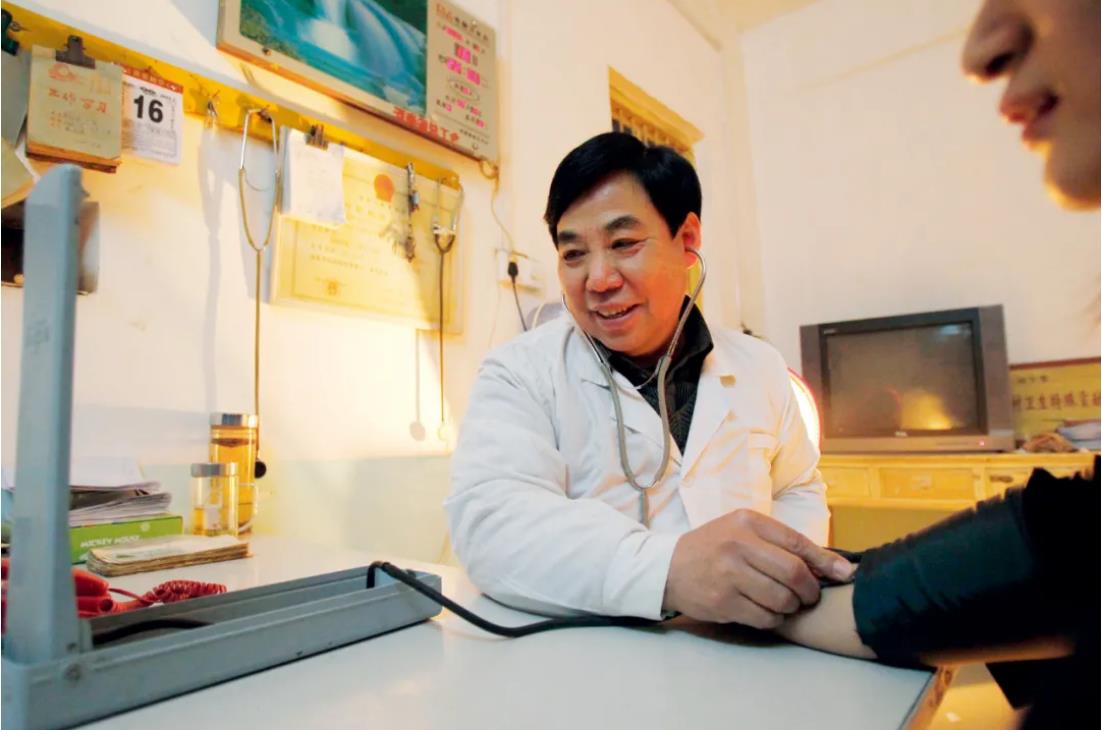
After serving as a rural doctor for 54 years, Ma Wenfang still prefers to be called a "barefoot doctor".
Barefoot doctors were healthcare workers trained to attend the basic medical needs of China's vast rural population from the 1960s to 1980s.
"Back in the 1950s and 1960s, there was no doctor in our village," Ma, who is from Liuzhuang village in Tongxu county of Central China's Henan province, was quoted as saying by China Newsweek.
For the villagers with minor ailments, it was common for them to carry on and wait for the diseases to recede, according to Ma. For those with severe conditions, the well-off ones could go to see doctors at urban hospitals and the poor could only wait for death.
Ma's mother died of typhoid at the age 32. His 8-year-old younger brother also succumbed to the disease in less than two months.
Having witnessed his beloved ones die in succession, Ma made up his mind to become a doctor.
The country was then beset with acute shortage of trained doctors and medicines. And health workers were disproportionately concentrated in urban areas.
Statistics show that in 1964, about 70 percent of the nation's senior health workers were based in cities – where 10 percent of the national population lived – while 30 percent of the medics worked in the countryside, where over 90 percent of the population resided.
After the founding of the People's Republic of China in 1949, the nation started exploring a rural healthcare system suitable for its conditions. On top of building clinics in the countryside, the health authorities also sent mobile medical teams from urban hospitals to bring health services to rural residents.
For quite a long period of time, however, these medical visits were organized on an irregular basis, and there was no systematic healthcare network in the vast rural areas.
In 1965, Chairman Mao Zedong, who was unhappy about the disparity in healthcare services between urban and rural areas, ordered the health authorities to "shift the focus of medical and health work to the countryside" and "cultivate a large group of physicians affordable to rural areas to serve the peasants."
In 1965, a pilot program to cultivate rural health workers was launched in Jiangzhen Commune of Shanghai. Commune was the highest of the three administrative levels of China's rural areas from late 1950s to early 1980s. The 4-month-long training course produced the country's first batch of "barefoot doctors", a name derived from the fact that these health workers also worked in the fields in addition to treating illnesses.
The pattern quickly spread nationwide. By the end of 1975, the country's "barefoot doctors" numbered more than 1.5 million.
After graduating from a junior middle school in 1967, Ma Wenfang went to receive medical training as a "barefoot doctor". He learned both Western medicine, including anatomy and physiology, as well as traditional Chinese medicine such as the use of medicinal herbs and acupuncture.
During the era of the People's Commune, rural residents earned work points, instead of cash payment, a measurement of how much they contributed to the production brigade – the administrative level lower than the commune – they belonged to.


- Photographer captures wild mandarin ducks in Guizhou
- Infrared cameras and drones record Tarim red deer in Xinjiang
- Beijing issues alerts for snowstorms and road icing
- Beijing district recovers nearly 100 million yuan in scam losses
- China's immigration hotline adds French language support
- Zootopia 2 fans fuel hazardous trend in online snake purchases