US move to disrupt supply chains will worsen trade conflicts







Economic globalization has facilitated trade liberalization, and laid a solid foundation for global economic development and prosperity. But trade protectionism, which the United States has been resorting to since the subprime mortgage crisis erupted in 2007, has been threatening not only global economic development but also globalization itself.
In an effort to distract American people from the serious economic problems plaguing the US, the Joe Biden administration has enacted domestic laws which compel multinational giants such as Intel and Walmart to boycott products from the Xinjiang Uygur autonomous region.
The US' baseless accusations of forced labor in Xinjiang have sandwiched multinational enterprises between the world's two largest economies, forcing them to choose sides. Such moves will only disrupt the global supply chains, because they will reduce the multinational enterprises' scope in either the Chinese market or the US-led Western markets.
At a time when Sino-US trade conflicts are yet to be resolved, the US, by fabricating rumors about Xinjiang and indulging in other dirty games, is further undermining the global economy, which is already creaking under the impacts of the pandemic.
For long it has been the US' policy to blame China for its own failures once it realizes China is moving ahead in trade. It tries all sorts of tricks, from stirring up trade disputes to resorting to unilateralism and protectionism, to make China accept its demands. No wonder the Biden administration has been claiming right from the time it took office that China's industrial policy has put many US industries at a disadvantage.
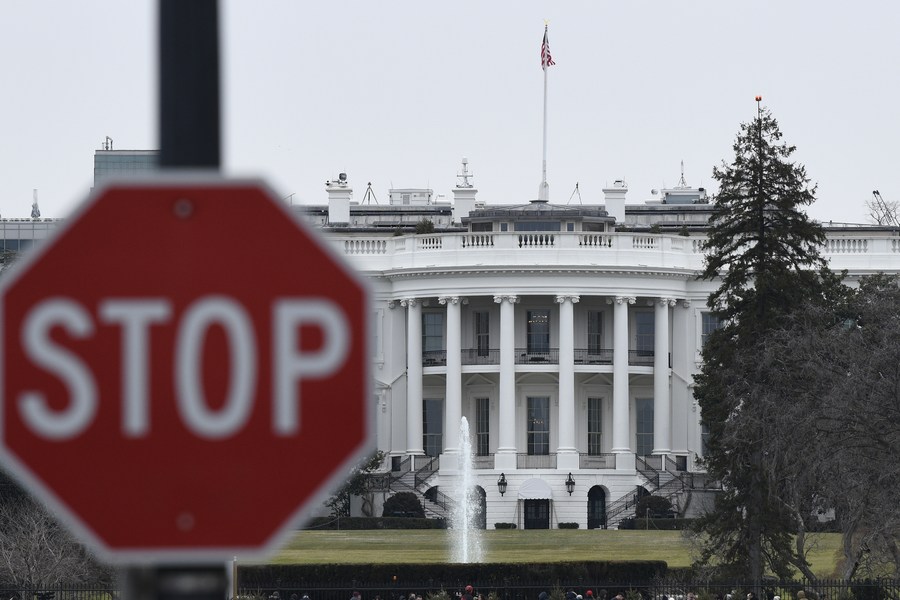
And disregarding the fact that the US' trade deficit with China is a result of the international division of labor, the White House has been hyping up the loss it suffers while being mum on the benefits it gains from global trade.
To maintain its global hegemony and maximize its economic interests, the US has not only been triggering trade disputes with China but also using diplomatic, political, and economic means to coerce Beijing into giving up its competitive edge in some industries.
Besides, since inflation in the US is the highest in four decades, the Biden administration is taking more protectionist measures in the name of reviving or boosting domestic industries with the aim of hindering the development of some high-end industries in China.
Using its economic heft, high-tech advantage, and influence in international organizations, Washington has been trying to come out on top in trade disputes with China, which has long been at a disadvantage when it comes to trade competition with the US, because it is dependent on the US in some commercial fields.
With the US increasingly viewing globalization as a zero-sum game, the economic competition between the world's two largest economies will further intensify. The US is highly vigilant of China's rise, because it hates being replaced as the world's largest economy and only superpower.
Also, since it regards Beijing as its main strategic rival, Washington will intensify its efforts to curb China's rise, and if it doesn't succeed in its designs, it will use its global influence to delay the process.
In an attempt to ease the political and economic pressure building up at home, the Biden administration has been demanding that China follow the international trade rules that the US has set and accept the US' economic hegemony.
Such moves are bound to fragment the global supply chains, block the industrial chains, and distort the value chains around the world, aggravating the imbalance in global trade and the international division of labor.
Biden, despite the US economic recovery, is well aware that his foreign and trade policies are against globalization, and aimed at retaining the US' power to set the new global trade and economic rules and continue dominating Sino-US trade ties. However, such moves will eventually backfire.
The author is a researcher at the Chinese Academy of International Trade and Economic Cooperation, the Ministry of Commerce.
The views don't necessarily represent those of China Daily.
If you have a specific expertise, or would like to share your thought about our stories, then send us your writings at opinion@chinadaily.com.cn, and comment@chinadaily.com.cn.