Massive tax cuts to bail micro and small businesses out of hard times







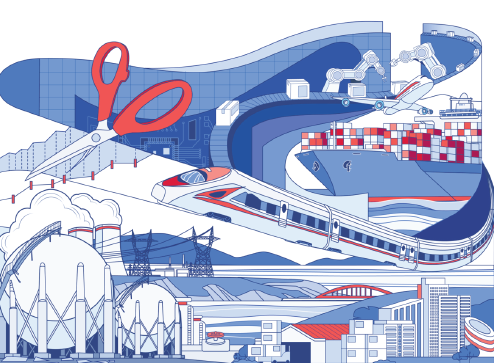
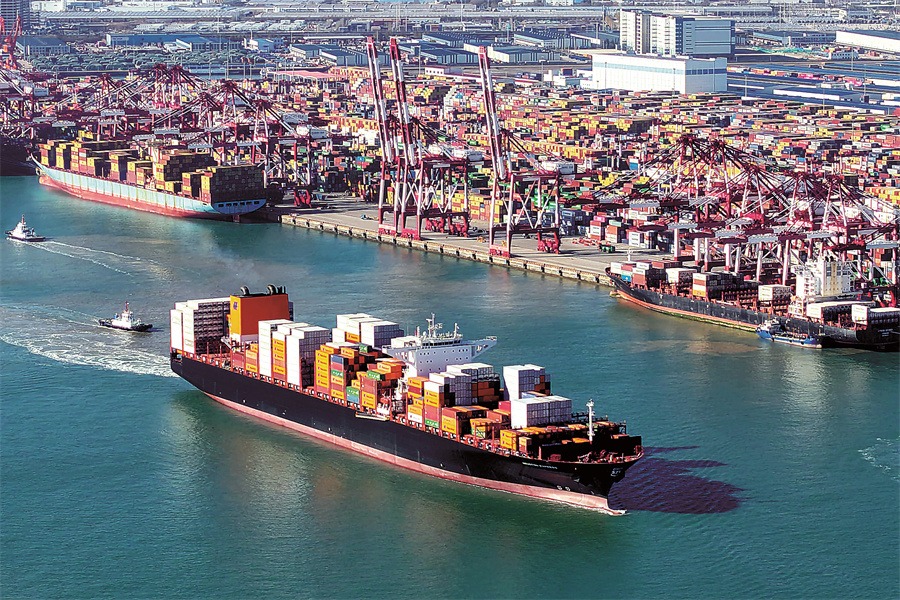
The massive tax rebate policy has been implemented nationwide since April 1. The record-high scale of this round of tax and fee reductions is a measure of China's economic capability and political determination to overcome the impacts of the COVID-19 pandemic and meet the challenges of a new round of geopolitical competition.
This year's Government Work Report proposes a new tax and fee support policy that combines phased measures with institutional arrangements, and emphasizes tax and fee reduction and tax refund-which are expected to total 2.5 trillion yuan ($392.51 billion), including 1.5 trillion yuan of credit refund. The support policy will be weighted more heavily toward enterprises.
The policy also reflects the Chinese economy's resilience, and the government's commitment to support the micro, small and medium-sized enterprises (MSMEs). In other words, the policy is aimed at helping stabilize market expectations, which is essential for maintaining stable and long-term economic growth.
To begin with, the latest government policy is more focused in that it is especially focused on helping SMEs, which have been severely hit by the pandemic and the resulting global economic downturn.
Since China is a developing country with 150 million market entities, it needs to continuously adjust its macro-control policies to ensure sustainable economic growth. And the tax and fee reduction policies implemented in recent years, regardless of scale or magnitude, has been designed to benefit the market players the most.
Likewise, this year's tax and fee reductions are targeted more toward SMEs, individual businesses, manufacturing and science and technological enterprises, because apart from being the key links, they are also the weak links in the industrial and supply chains.
The government will not only reduce taxes and fees for MSMEs so they can save money but also take measures to ensure they have access to financing, in order to alleviate their cash shortage problem.
Also, the new tax and fee reduction policy, which will be more scientifically implemented, includes both phased measures and institutional arrangements; reduction, exemption and holdover rebate measures; universally applicable burden-reduction measures and special assistance in specific areas; continuous arrangements and new deployments; and taking long-term impacts into consideration.
Although the policy will reduce the government's fiscal revenue, it will provide the impetus for the government to further streamline institutions, reduce expenditure and downsize capacity, if necessary.
However, public expenditure, which is necessary to boost people's sense of happiness, gain and security, will not be reduced. In fact, in 2022, China's general public expenditure is expected to reach 26.71 trillion yuan, an increase of 8.4 percent compared with 2021.
To save the fund and make the expenditure more sustainable, this year the central governmental departments' expenditure is expected to decrease by 2.1 percent after deducting the defense and armed forces expenditure, interest payments on the issuance of national debt, and reserve expenditure.
Besides, the latest policy's evaluation process will be more dynamic and comprehensive, especially because the tax reduction policy is a huge and complex project, which involves many other policy projects, different types of taxes and fees, and a large number of enterprises.
While implementing the policy, government departments will conduct strategic evaluations of the policy's implementation, devise operational guidelines, strengthen supervision and assessment, and incorporate policy implementation into the performance evaluation system.
There is also a need, however, to establish a whole-process, dynamic tax reduction policy evaluation system to monitor the situation and make adjustments according to the changes in the situation, and analyze performances in terms of policy implementation.
And as far as evaluating the policy implementation is concerned, it should include social, environmental, ecological and other factors on the basis of economic indicators, so as to make implementation more efficient.
The large-scale tax and fee reduction policy is aimed at helping MSMEs to overcome the lingering impacts of the pandemic and in line with China's concept of promoting high-quality development, boosting the economic recovery, and strengthening the national economy.
The author is deputy director of the Department of Strategic Philosophy, the Party School of the Communist Party of China Central Committee.
The views don't necessarily represent those of China Daily.
If you have a specific expertise, or would like to share your thought about our stories, then send us your writings at opinion@chinadaily.com.cn, and comment@chinadaily.com.cn.