"Chinese Debt Trap" in Sri Lanka an unfounded accusation







The so-called "Chinese Debt Trap" theories are certainly exaggerated, as only 10% of Sri Lanka's debt is held by the Chinese government. China’s contribution to Sri Lanka’s current crisis is marginal.
According to the External Resources Department of Sri Lanka, in 2019, by far the largest proportion of debt (almost 50%) was owed to international sovereign bond (ISB) holders, mainly US-based funds and banks. Japan, China and India held 10%, 10% and 2% respectively of Sri Lankan debt, and the remaining part was owed to others, including multilateral banks including the Asian Development Bank and World Bank.
Another relevant factor is the payment structure of bonds, which can pose a challenge to a debt distressed country, especially when payments have to be re-negotiated to avoid default – both the periodic debt service and the principal at the time of maturity. ISB repayments, which make up around a quarter of Sri Lanka’s annual debt servicing, are the most problematic, because unlike bilateral and multilateral debt, they cannot be easily renegotiated or restructured.
We can easily deduce from a closer look at Sri Lanka's current debt crisis that the country's economic dysfunction has multiple reasons-not only external, but also internal.
Externally, Sri Lanka's debt crisis was worsened by high global inflation and economic contraction linked to movement of the US dollar. Sri Lanka’s success in graduating from low-income to lower-middle-income status in 2009 pushed the country to wean itself off multilateral and bilateral concessional loans, and access costlier international capital markets for its fiscal needs. This caused greater USD exposure and, hence, greater exchange rates risk. Currently around two thirds of debt is USD denominated. As discussed in Q1, ISBs have grown to be the country's single largest and most expensive debt burden. Chronic external balance of payments deficits and internal budget deficits, coupled with excessive printing of money to bridge deficits have all contributed to the recent severe depreciation of rupee – during the past six months (Dec. 2021 to May 2022), the value of the Sri Lankan rupee (LKR) has almost halved against the USD.
Internally, strategic mistakes by the Sri Lanka authorities have also led to the debt crisis. Unlike China and India, whose rapid growth resulted in large trade surpluses, huge foreign reserves and investments, Sri Lanka’s growth from low to middle income status was accompanied by massive trade deficits, inadequate foreign reserves, large scale borrowing, high fiscal deficits, unproductive public investments, increases in public debt and heavy debt servicing costs. Sri Lanka failed to invest proactively in manufacturing and high-end exports while foreign borrowing has been mainly used to close the gaps in the country’s trade deficit and cover public expenditure. High-interest financing has gone into funding the welfare state, public infrastructure, and a 30-year war, as well as consumption (lifestyle-based) driven by markets and advertising -- thus exposing the country to greater exchange rate risk. All these factors have weakened long term growth prospects.
In the short term (since 2020), bad policy decisions were also made like seeking to change to organic fertilizers overnight (that collapsed domestic agriculture), huge tax concessions to the wealthy (that reduced domestic resource mobilization), and overusing foreign borrowings for domestic essential consumption (rather than productive investments). This drastically reduced our macroeconomic resilience, just at the very moment the global economy weakened due to external shocks like Covid-19 and the Russia-Ukraine conflict. Beyond the usual “middle income trap”, Sri Lanka appears to be in a “middle income debt-trap”, partly of her own-making!
Nevertheless, Sri Lanka has been a success story in the developing country context for maintaining high standards of human welfare indicators (approaching developed country levels), through its spending on free education and health care. The failure was in building on this platform of educated youth and healthy population, to transition to a more productive economy based increasingly on manufacturing and high-value export earnings. As Sri Lanka takes strong measures to restore the economy, protecting the poor must remain a high priority, while we strive to maintain the balance between welfare and support of growth-oriented, market mechanisms.
As a scholar from Sri Lanka, I am optimistic about the nation's future growth. With improved governance, better political stability and help from friendly countries like China, the macroeconomic situation can recover within 1-2 years, because the underlying Sri Lankan economy has proved to be quite resilient even during past crises. In that context, the Belt and Road Initiative (BRI) is important for recovery from the current crisis and for promoting future growth and sustainable development prospects. The Presidential Expert Commission (PEC) that prepared the 2019 report on “Sustainable Sri Lanka 2030 Vision and Strategic Path”, warned about the impending debt crisis, recommended sound remedial measures, and pointed out a long term, comprehensive recovery strategy based on balanced inclusive green growth (BIGG), including the BRI. Implementing such recommendations will help to reverse many years of neglecting planning and ensuring policy consistency, as well as lack of ground-level implementation. It is indeed a hopeful sign that there is a strong professional-youth-student-based movement, supported by a major proportion of the Sri Lankan population, which is pushing for sensible, systemic reform and good governance.
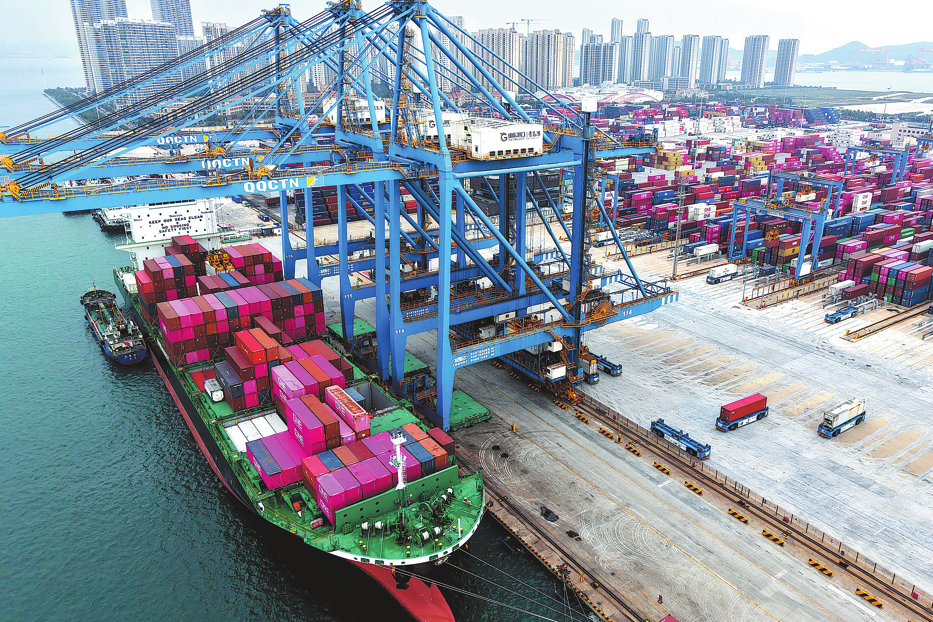
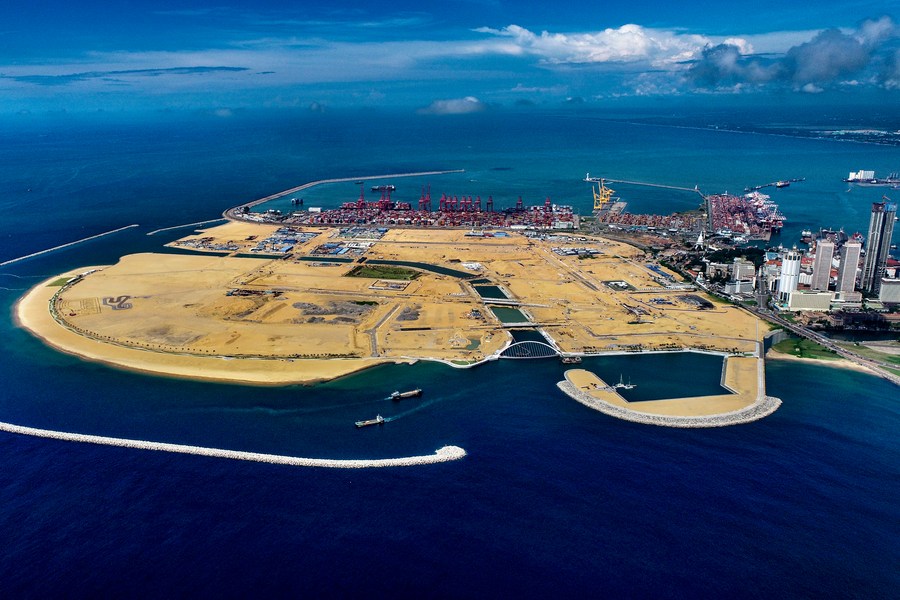
In the current shifting geopolitical landscape, where a multipolar world order is emerging, Sri Lanka can benefit from, and encourage greater global reliance on soft economic power (versus hard military interventions), and shift to multiple global currencies (away from USD dominance). Given our serious economic problems, Sri Lanka must seek the right balance in foreign policy, following our traditional non-aligned path (friend of all, foe of none). This will help us obtain help from all our friends, including China who has been a steadfast supporter since the famous 1952 Rubber-Rice Pact between the two countries (which was opposed by the USA, at that time). There are ongoing BRI-related projects, like the recently completed Colombo Port City project, which have the potential to attract FDI, boost growth, and restore our economy. There are lessons to be learned also from the Hambantota Port project, which has fallen short of expectations. If we manage our recovery successfully and follow the balanced inclusive green growth (BIGG) path, the BRI can make a very positive overall contribution.
Mohan Munasinghe is the recipient of the 2021 Blue Planet Prize, and former vice chair of the UN Intergovernmental Panel on Climate Change that shared the 2007 Nobel Prize for Peace. He is also chairman of the presidential expert commission on the Sustainable Sri Lanka 2030 Vision, and distinguished guest professor at Peking University, China.