Economic restructuring key to coping with risks in China's economy







Just over two years after the COVID-19 pandemic caused the deepest global recession since World War II, the global economy continues to face a series of acute shocks. The war in Ukraine has not only led to a humanitarian crisis but is also having substantial effects on commodity markets, trade flows, inflation, and financial conditions which have deepened the slowdown in global growth.
As a result, the world economy is expected to experience its sharpest deceleration following an initial recovery from global recession in more than 80 years, as highlighted by the World Bank's "Global Economic Prospects" report published on June 7. Global growth is projected to slow down from 5.7 percent in 2021 to 2.9 percent in 2022 with activity declining markedly in the eurozone, which has closer economic links with Russia, and US growth slowing to less than half of 2021, reflecting sharply higher energy prices, tighter financial conditions, and persistent supply disruptions.
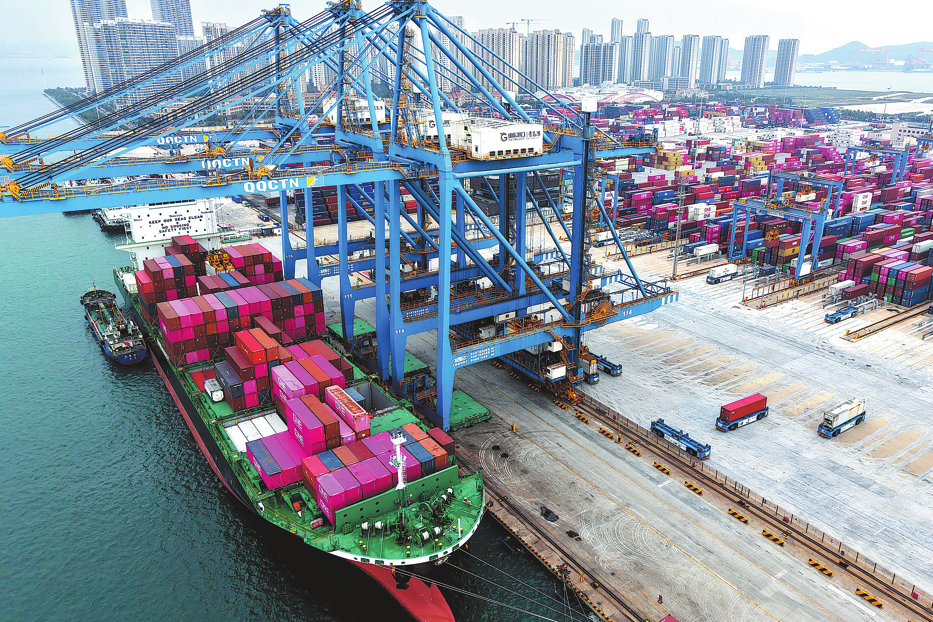
The global context will also weigh on China's outlook in 2022, by sharply reducing export growth and dampening confidence amid heightened geopolitical tensions. This is expected to exacerbate the slowdown caused by recurrent COVID-19 outbreaks in some places and related lockdowns in parts of China which have disrupted supply chains and significantly weakened household and business activity. Following a strong 8.1 percent rebound in 2021, the World Bank expects China's growth to slow to 4.3 percent this year. This rate of growth is below the economy's potential-the sustainable growth rate of output at full capacity.
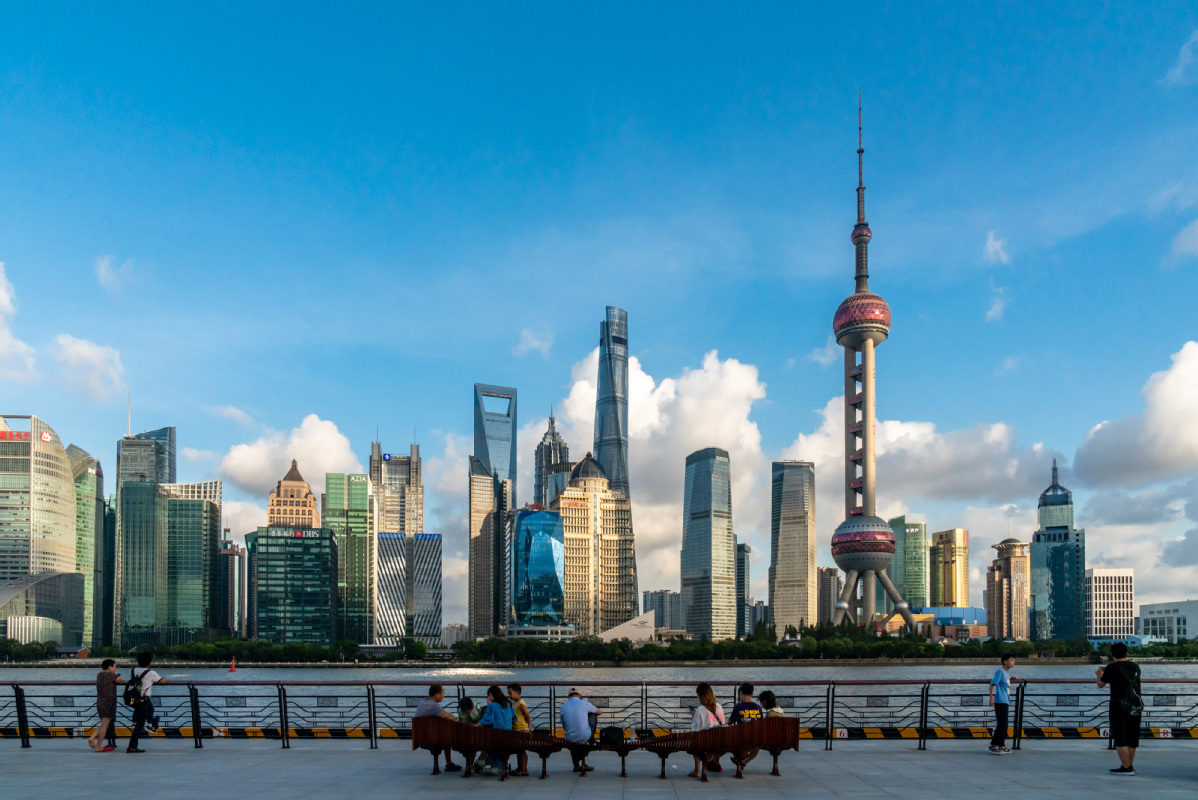
Our forecast reflects the sharp deceleration in activity in the second quarter of 2022 that took place despite policy actions to cushion the economic slowdown. With the easing of pandemic controls in Shanghai and Beijing, and barring any major COVID-19 outbreaks, growth momentum is expected to rebound in the second half of 2022, helped also by additional policy stimulus announced by the State Council, China's Cabinet, last month. The normalization of domestic demand conditions, however, is expected to be gradual and will only partly offset the economic damage caused by the pandemic in the earlier part of the year.
While China has the macroeconomic policy space to react to domestic and external headwinds, our latest "China Economic Update" argues that policy makers face a dilemma between keeping COVID-19 under control and supporting economic growth. Indeed, stimulus policies are less effective in places where pandemic restrictions remain in place. Yet letting COVID-19 spread would likely hurt growth even more.
Over the medium term, greater efforts are needed to shift away from the old playbook of investment-led stimulus to boost economic growth because high levels of indebtedness of corporations and local governments will limit the effectiveness of policy easing and increase financial stability risks.
To address these balance sheet constraints, policymakers could shift more of the stimulus onto the balance sheet of the central government. They could also direct public investment toward the greening of infrastructure. Recent announcements seem to go in this direction.
Also, fiscal support could shift beyond tax relief for enterprises to target measures to encourage consumption directly. For example, the wider use of consumption vouchers could lift consumer spending in the short term in places where COVID-related restrictions have been lifted. Reforms to strengthen automatic stabilizers such as unemployment insurance and other social safety nets could also help increase consumption, particularly among the poor and vulnerable that have a lower propensity to save.
China's housing market downturn in the midst of the recent global deceleration exemplifies the limits to past stimulus efforts. For over two decades, China's real estate sector has grown at a remarkable pace and become a principal engine of economic growth. As of end-2021, total real estate investment stood at 13 percent of GDP, compared with 5 percent in OECD member states. If one takes into account inputs along the supply chains, the real estate sector drives around 30 percent of China's GDP. A disorderly adjustment in the real estate sector would thus have major economic consequences.
Our report provides specific recommendations for dealing with these risks. In the short term, ensuring adequate liquidity and carefully monitoring the health of the financial sector to avoid spillovers remain key. Over the medium term, several structural reforms would put the real estate sector on a sounder footing.
China's inner cities could be made denser, more productive and more livable through changes to urban planning that move away from the past extensive model of urbanization. This would need to be implemented in conjunction with fiscal reforms to expand the revenue base of cities beyond land sales.
At the same time, financing options for real estate developers would need to be broadened through the expansion of project-based financing or the greater participation of institutional investors such as "Real Estate Investment Trusts". In addition, a robust and predictable framework for debt resolution and corporate insolvencies would help reallocate capital from troubled developers.
Finally, further liberalization of the financial system would expand the range of investment options for households and reduce the propensity to buy and hold empty properties as investment vehicles.
Despite the current challenging environment, China's economic policies to support a rapid recovery should remain geared toward tackling the country's structural challenges. Rebalancing demand toward consumption, improving capital allocation and labor mobility, and greening China's development model would help ensure that future growth is stable, inclusive and sustainable.
Ibrahim Chowdhury is World Bank senior economist for China; Ekaterine T. Vashakmadze is World Bank senior country economist; and Yusha Li is a World Bank economist. The views don't necessarily reflect those of China Daily.
If you have a specific expertise, or would like to share your thought about our stories, then send us your writings at opinion@chinadaily.com.cn, and comment@chinadaily.com.cn.