China and India must jointly seek climate justice







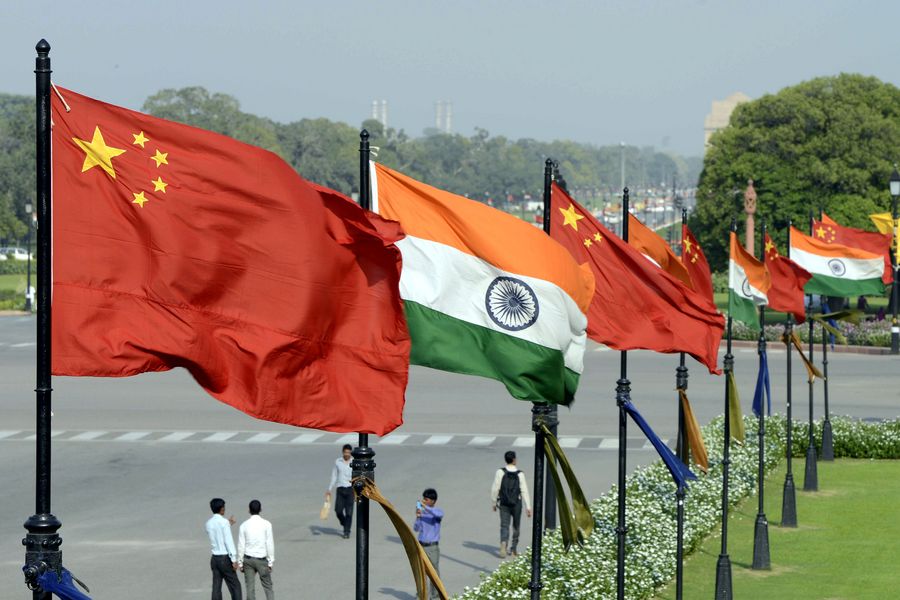
India's permanent representative to the United Nations, T.S. Tirumurti, delivered a cross-regional joint statement on climate change, themed "Global Net Zero", on behalf of 10 countries, including China, on World Environment Day on June 8.
"We need a clear recognition that developing countries will need much longer beyond 2050 to reach Net-Zero given their overarching goals of poverty eradication and development and will peak after the developed countries do. They will need to be given additional time-frame to peak and go towards Net-Zero, which will be beyond 2050," the joint statement said.
"We, therefore, call on developed countries to do a Net-Negative in 2050 in order to vacate the space in 2050 for developing countries to grow till they too reach Net-Zero. We call on them to do a Net-Zero much earlier than 2050, so that the world does not, in effect, move farther away from achieving the Paris (Agreement) targets," the statement added.
India has, on several occasions, called for a global climate justice transition, including when the Indian prime minister said at the UN Climate Change Conference in Glasgow last year that, "Justice will truly be served if pressure is put on those countries that have not lived up to their climate finance commitments."
In addition, India's call for a change from "phasing out" to "phasing down" coal use before the final terms of the Glasgow climate pact were finalized is also an expression of its advocacy for "climate justice". And China and India have maintained close communication and cooperation within the BASIC countries and BRICS frameworks.
Climate justice now a scientific concept
In 1992, the United Nations Framework Convention on Climate Change adopted the principle of climate justice, which says "the Parties should protect the climate system for the benefit of present and future generations of humankind, on the basis of equity and in accordance with their common but differentiated responsibilities and respective capabilities. Accordingly, the developed country Parties should take the lead in combating climate change and the adverse effects thereof".
Since then, climate justice has received increasingly more attention and gradually developed into a scientific concept, revealing the resource gap between the rich and the poor in the field of climate change, identifying the fair principle of sharing benefits and consequences, and providing a value reference for the design of the international climate governance system.
However, amid the changing economic and political landscape of countries around the world and the multilateral process of combating climate change worldwide, developed countries speak in different voices on the positioning and obligations of developing countries, stressing that major emitter-countries should bear greater responsibility for reduction of global emissions. They also try to play down the principle of "common but differentiated responsibilities", which could trigger disputes between developing and developed countries.
In the process of climate governance, developing countries need to unite and reach a solid consensus in order to uphold the principle of climate justice. In particular, as the two largest developing countries actively responding to climate change, China and India should continue to jointly safeguard the reasonable rights and interests of developing countries under the UNFCCC and Paris Agreement frameworks.
The negotiations on implementation rules reached at the Glasgow climate conference laid the foundation for the comprehensive and effective implementation of the Paris Agreement. Both China and India have put forward their carbon neutrality goals in line with their respective national conditions, and are making serious efforts to achieve them. But the two countries will face unprecedented challenges in completing the low-carbon transition process within 40-50 years compared with 50-80 years the developed countries took to reach the goal.
Developed countries should shoulder their responsibilities
The two neighbors need to peak their carbon emissions and then make the leap to carbon neutrality while developing their economies, improving people's livelihoods and addressing a series of other major issues. China and India are still in the process of industrialization and urbanization, and are located in regions that are severely impacted and damaged by climate change (World Meteorological Organization, 2021), so they need to allocate more climate adaptation funds to cope with the increasing climate risks.
At the Major Economies Forum on Energy and Climate Ministerial Meeting earlier this year, India's Minister of Environment, Forests and Climate Change Bhupender Yadav expressed concern over climate finance and technology support from the developed countries, as they have failed to fulfill their promise of contributing $100 billion as annual climate finance by 2020.
In addition, research and development and large-scale application of their results are key to achieving deep de-carbonization and carbon neutrality. But the game between major powers and the increasing complexity of the global political and economic landscape have created barriers to international cooperation and transfer of advanced low-carbon technologies.
As such, developed countries must step up their efforts in terms of financial and advanced low-carbon technology support to accelerate the global promotion and popularization of low-carbon technologies, or else the global carbon neutrality process would be delayed.
The world, especially the developing countries, is struggling to recover from the effects of multiple challenges, including the COVID-19 pandemic, the energy and food crisis, and the struggle to achieve the UN Sustainable Development Goals.
And the latest UN Intergovernmental Panel on Climate Change report (AR6) emphasizes that "climate justice" and "equity" are important elements to support climate adaptation, and that China and India should adhere to the concept of "climate justice", take the lead as developing countries and work together to contribute their best efforts to secure the support needed for a just energy transition of developing countries, and implement the Paris Agreement in an accurate, balanced and comprehensive manner.
Also, the developing countries should urge the developed countries to take the lead in enhancing climate mitigation actions, fulfilling their climate finance commitments, and respecting the right to development and policy space of developing countries and economies in transition.
Moreover, global climate justice must be earnestly upheld by opposing the politicization of climate issues, including the use of climate agenda to adopt restrictive trade and investment measures, and erecting new green trade barriers, such as the imposition of Carbon Border Adjustment Mechanisms, which violate the multilateral rules of the World Trade Organization.
Li Zheng is a professor at, and executive vice-president of the Institute of Climate Change and Sustainable Development, and director of the Laboratory of Low Carbon Energy, Tsinghua University; Hu Bin is an associate professor at the Institute of Climate Change and Sustainable Development, Tsinghua University; and Yang Xiu is an associate professor at the Institute of Climate Change and Sustainable Development, Tsinghua University.
The views don't necessarily reflect those of China Daily.
If you have a specific expertise, or would like to share your thought about our stories, then send us your writings at opinion@chinadaily.com.cn, and comment@chinadaily.com.cn.