Older persons also as agents of development







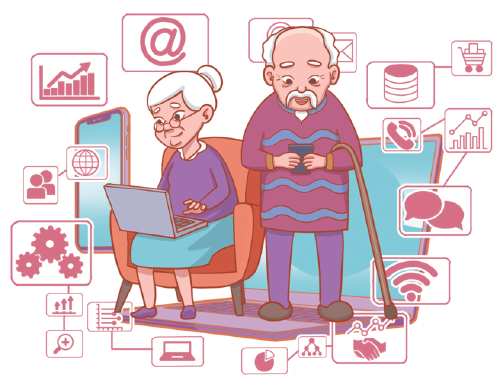
Older persons are highly visible across Asia and the Pacific: they work in agricultural fields producing our food, peddle their wares as street vendors, drive tuk-tuks, and buses, exercise in our parks, lead some of the region's most successful companies and form an integral part of our families.
Indeed, population aging is one of the megatrends greatly affecting sustainable development. People now live longer than ever and remain active because of improved health. We must therefore broaden the narrow view of older persons as requiring our care to recognize that they are also agents of development.
With many parts of the Asia-Pacific region rapidly aging, we can take concrete steps to build an environment in which our elders can live safely, securely and in dignity while contributing to societies.
To start with, we must invest in social protection and access to universal healthcare throughout the life-course. Currently, it is estimated that 14.3 percent of the population in Asia and the Pacific are 60 years or older. That figure is projected to rise to 17.7 percent by 2030 and 25 percent by 2050.
Moreover, 53.1 percent of all older persons are women, a share that increases with age. Therefore, financial security is needed so older persons can stay active and healthy for longer periods. In many countries of the region, less than one-third of the working-age population is covered by mandatory pensions, and a large proportion still lacks access to affordable, good quality healthcare.
Such protection is crucial because older persons continue to bolster the labor force, especially in informal sectors. In Thailand, for example, a third of the people aged 65 years or above participate in the labor force; 87 percent of the working women aged 65 or above work in the informal sector, compared with 81 percent of working men in the same cohort. This general trend is seen in other countries of the region, too.
Older persons, especially older women, also make important contributions as caregivers to both children and other older persons. This unpaid care enables younger people in their families to take paid work, often in metropolitan areas of their own country or abroad.
Older persons should also have lifelong learning opportunities. Enhanced digital literacy, for example, can close the gray digital divide. Older women and men need to stay abreast of technological developments to access services, maintain connections with family and friends and remain competitive in the labor market. Through inter-generational initiatives, younger people can train older people in the use of technology.
We must also invest in quality long-term care systems to ensure that older persons who need it can receive affordable quality care. With the increase in dementia and other mental health conditions, care needs are becoming more complex. Many countries in the region still rely on family members to provide such care, but there may be less unpaid care in the future, and care by family members is not always quality care.
Finally, addressing age-based discrimination and barriers will be crucial to allow the full participation of older persons in economies and societies. Older women and men actively volunteer in older persons' associations or other organizations. They help distribute food and medicine in emergency situations, including during the COVID-19 pandemic, monitor the health of neighbors and friends, or teach each other how to use digital devices.
Older persons also play an active role in combating climate change by sharing knowledge and techniques of mitigation and adaptation. Agism intersects and exacerbates other disadvantages, including those related to sex, race and disability, and combating it will contribute to the health and well-being of all.
This week, countries in the Asia-Pacific will convene to review and appraise the Madrid International Plan of Action on Aging on its 20th anniversary. The MIPAA provides policy directions for building societies for all ages with a focus on older persons and development; health and well-being in old age; and creating enabling environments. The meeting will provide an opportunity for member states to discuss progress on the action plan and identify remaining challenges, gaps and new priorities.
While several countries in the region already have some form of policy on aging, the topic must be mainstreamed into all policies and action plans, and they must be translated into coherent, cross-sectoral national strategies that reach all older persons in our region, including those who live on remote islands, or in deserts or mountain ranges.
Older persons are valuable members of our societies, but too often they are overlooked. Let us ensure that they can fully contribute to our sustainable future.
The views don't necessarily reflect those of China Daily.
The author is an under-secretary-general of the United Nations and executive secretary of the Economic and Social Commission for Asia and the Pacific.
If you have a specific expertise, or would like to share your thought about our stories, then send us your writings at opinion@chinadaily.com.cn, and comment@chinadaily.com.cn.