Can tourism gather steam during summer vacation?








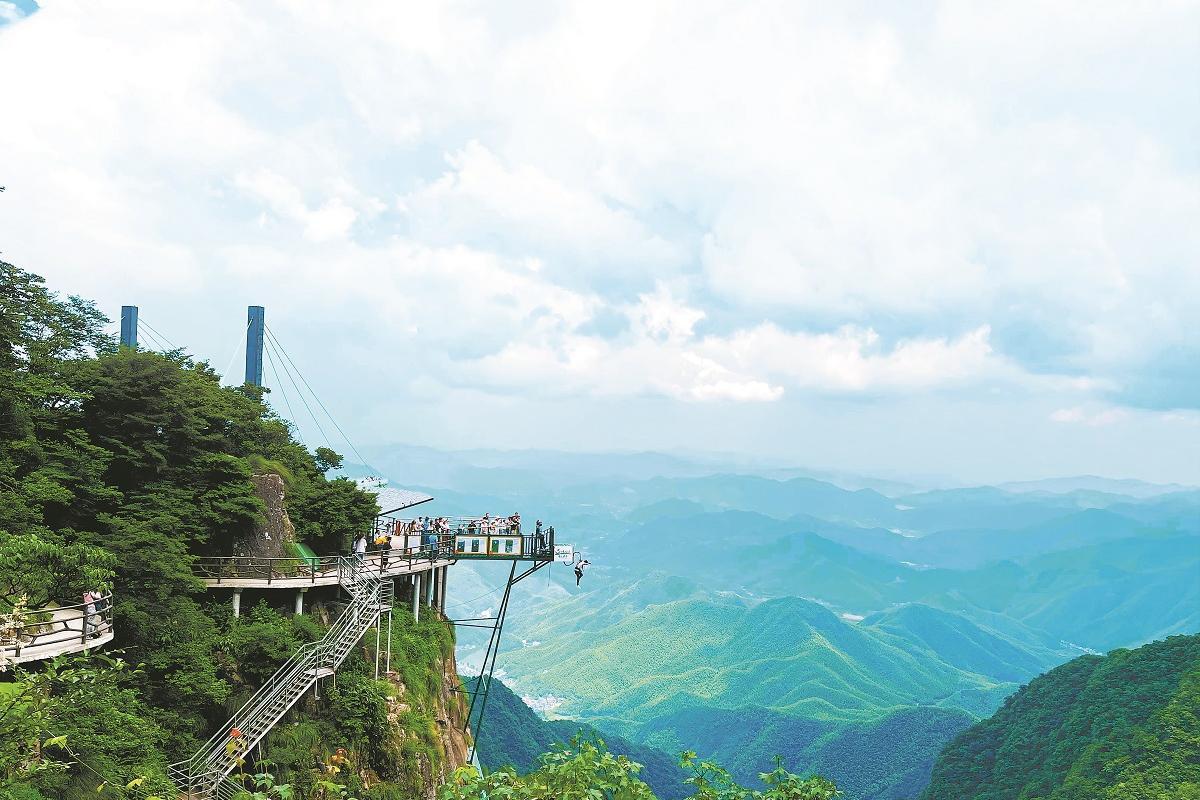
Summer has always been a great time to travel in China. That's why the domestic tourism industry, which experienced a "cold winter" due to the pandemic, expects a robust recovery during summer. That the authorities are issuing more supportive policies to help the market overcome the challenges has added to the tourism industry's hopes.
For example, the higher authorities have removed the cautionary asterisks marking all travel codes, and the Ministry of Culture and Tourism has allowed the resumption of "train tourist tours" to boost cross-provincial travel. And many places have come up with preferential policies including discounts on tickets or free entry to scenic spots. As a result, the sales of flight and train tickets, as well as hotel reservations have drastically increased, suggesting a robust peak summer tourism market.
Five trends characterize this year's summer tourism market. First, tailored trip packages for graduates and families are in great demand, and party-friendly hotels and water parks more popular.
Second, the demand for private group tours, self-driving tours, RV(recreational vehicle) tours and camping has grown significantly compared with pre-pandemic times.
Third, an increasing number of travelers are now more likely to go on longer-distance and trans-provincial tours. And the adjustment of the circuit breaker mechanism in many places has further raised people's travel aspirations.
Fourth, natural scenic spots and historically and culturally important sites are attracting more tourists, with many enjoying camping, engaging in non-team, non-organized sports, or music and education tours.
And fifth, more and more tourists are favoring destinations such as Yunnan, Sichuan and Shaanxi provinces and the Xinjiang Uygur autonomous region as well as tropical islands in South China.
But to ensure the tourism industry achieves robust recovery, local governments and tour operators have to address certain problems. They should ensure that the tourism industry's recovery does not come at the cost of pandemic prevention and control measures which could increase COVID-19 infections, because the strict anti-pandemic measures and the overall impact of the pandemic, rather than the travelers' budgets, tourism products and services, will decide the timing, speed and scale of recovery.
So the tourism industry should follow the strict anti-pandemic measures and require tourists to book tickets in advance, and yet local governments should refrain from restricting transprovincial travel or adopting harsh anti-pandemic policy which would deter tourists.
High-quality and diversified products and services will help the tourism industry to recover faster. And since people's preferences and expectations in tourism have undergone remarkable changes over the past two years, tourism enterprises and tourist sites need to improve the quality of their products and seek new avenues for business expansion. Imitation of products and services can never be a sustainable competitive advantage for a business.
For family tours, for example, tourism enterprises need to introduce customized products and services to integrate education, sports and travel together in a bid to offer diverse choices. They should also optimize services to meet different age groups' demands for food, accommodation and duration of tour.
Since tourists today attach increasing importance to the environment and hygienic conditions of washrooms and facilities at tourist sites, insurance coverage, free cancellation and emergency management, tourism enterprises and tourist sites have to use innovative means to meet their needs and demands, which would place higher requirements on them.
Also, the tourism industry should pay more attention to the consumption demand of the tech-savvy "Generation Z" (people born between the mid-1990s and early 2010s) and offer new tailor-made products to them. According to official data, the population of China's Gen Z in 2021 was about 264 million, accounting for about 19 percent of the country's total population, so their choices make a huge difference for all sectors.
They prefer private tours with friends to joining tour groups. And cloud tourism is a new fad among young people who search for travel information on the internet. Besides, Gen Z pays more attention to price, convenience and safety while traveling, which the travel industry should take special note of.
It is worth noting that the central government this week issued a new outline of its approach to unleash the potential of the tourism and entertainment sectors, including introducing modern leisure concepts, guaranteeing tourism leisure time, and developing modern leisure formats. In particular, the outline emphasizes the need to optimize arrangements of festivals, establish more urban green spaces and community leisure services and facilities, develop new leisure business formats and new digital leisure consumption formats.
Governments at all levels, industries, enterprises, tourists, indeed people from every walk of life, have a part to play in boosting the tourism market. However, the onus is on local authorities and enterprises to create a healthy leisure environment and provide quality services as this is the fundamental way to develop the tourism industry.
The summer has come. Only with multiple efforts and coordination can the winter that has gripped the tourism industry melt away.
The author is director of the Tourism Research Center, Chinese Academy of Social Sciences. The views don't necessarily represent those of China Daily.
If you have a specific expertise, or would like to share your thought about our stories, then send us your writings at opinion@chinadaily.com.cn, and comment@chinadaily.com.cn.