Balancing epidemic fight and development








The population flow among cities and that between urban and rural areas have increased significantly, thanks to the summer vacation, with more and more migrant workers returning home and students traveling to meet friends and family, heightening the pressure on epidemic prevention and control work.
The Chinese authorities have reiterated that COVID-19 outbreaks still should be dealt in a very timely way, in order to stabilize the economy and minimize the development risks.
As such, the authorities need to strike a balance between anti-pandemic measures and socioeconomic development, which is all the more important because the international environment has become more complex this year and China has struggled to contain the sporadic COVID-19 outbreaks in many places, which affected economic recovery.
The anti-pandemic measures should be effective and fast enough to check the spread of the novel coronavirus, especially the Omicron variant, and cut off the chains of transmission, so socioeconomic development projects can progress smoothly. For example, nucleic acid testing should be fast-paced and regular in affected places to facilitate effective tracing and community management.
The relationship between anti-pandemic measures and socioeconomic development should be fully understood and one-size-fits-all approaches and measures avoided. For instance, once the outbreak in a place is contained, a series of measures should be implemented to stabilize the local economy, including policies to bail out market entities, create more jobs, remove the hurdles in the upstream and downstream logistics and industry chains, and help enterprises to resume and, if possible, increase production.
That China is trying to strike a balance between anti-pandemic measures and economic development does not mean it has relaxed its COVID-19-containment efforts. Instead, it means China aims to improve overall planning and balance epidemic control with socioeconomic development.
Since March, China's economic development has withstood the most severe test since the battle against the COVID-19 pandemic began in early 2020. And despite the multiple challenges, China has achieved an economic growth of 2.5 percent in the first half of 2022, according to the National Bureau of Statistics. Yet it will be difficult, if not impossible, to achieve 5.5 percent growth, set in the Government Work Report, for the whole year.
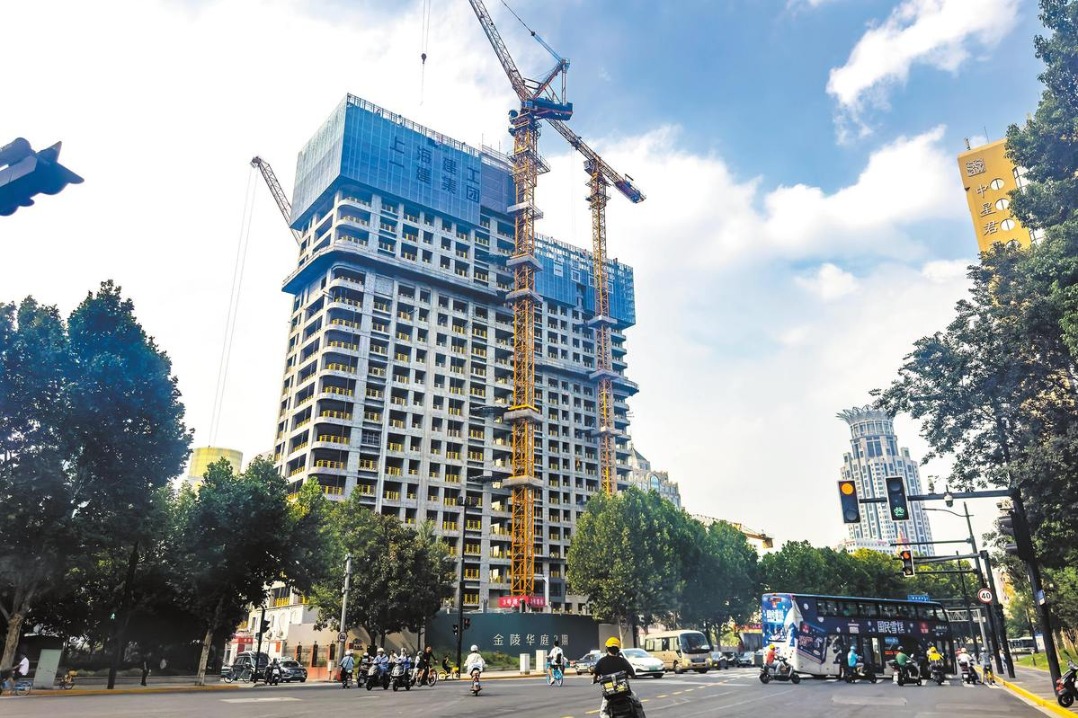
Given these facts, China should strive to contain the spread of the virus at the least cost of development. It should, for example, use unconventional tools and measures to stabilize the economy by facilitating the full resumption of economic activities, and helping boost investment in infrastructure construction and stimulate domestic demand.
Moreover, it should better coordinate anti-pandemic measures and economic development by, for example, implementing anti-pandemic measures in strict accordance with the Novel Coronavirus Pneumonia Prevention and Control Plan (Ninth Edition) that the Joint Prevention and Control Mechanism of the State Council, China's Cabinet, issued in June to optimize the epidemic prevention and control work.
In addition, the higher authorities should prevent local governments and communities from taking excessive policy steps and one-size-fits-all measures to contain outbreaks while making full use of modern technologies such as big data and artificial intelligence to strengthen information sharing and mutual recognition of anti-pandemic tools. Also, all regions and departments should strictly implement the policies and measures for stabilizing the economy issued by the State Council.
Moreover, it is imperative that the authorities boost research and investigation, help market entities, consumers, and make efforts to ensure measures to stabilize the economy are effective.
The author is an associate professor of public management at the China National Academy of Governance.
The views don’t necessarily reflect those of China Daily.
If you have a specific expertise, or would like to share your thought about our stories, then send us your writings at opinion@chinadaily.com.cn, and comment@chinadaily.com.cn.